
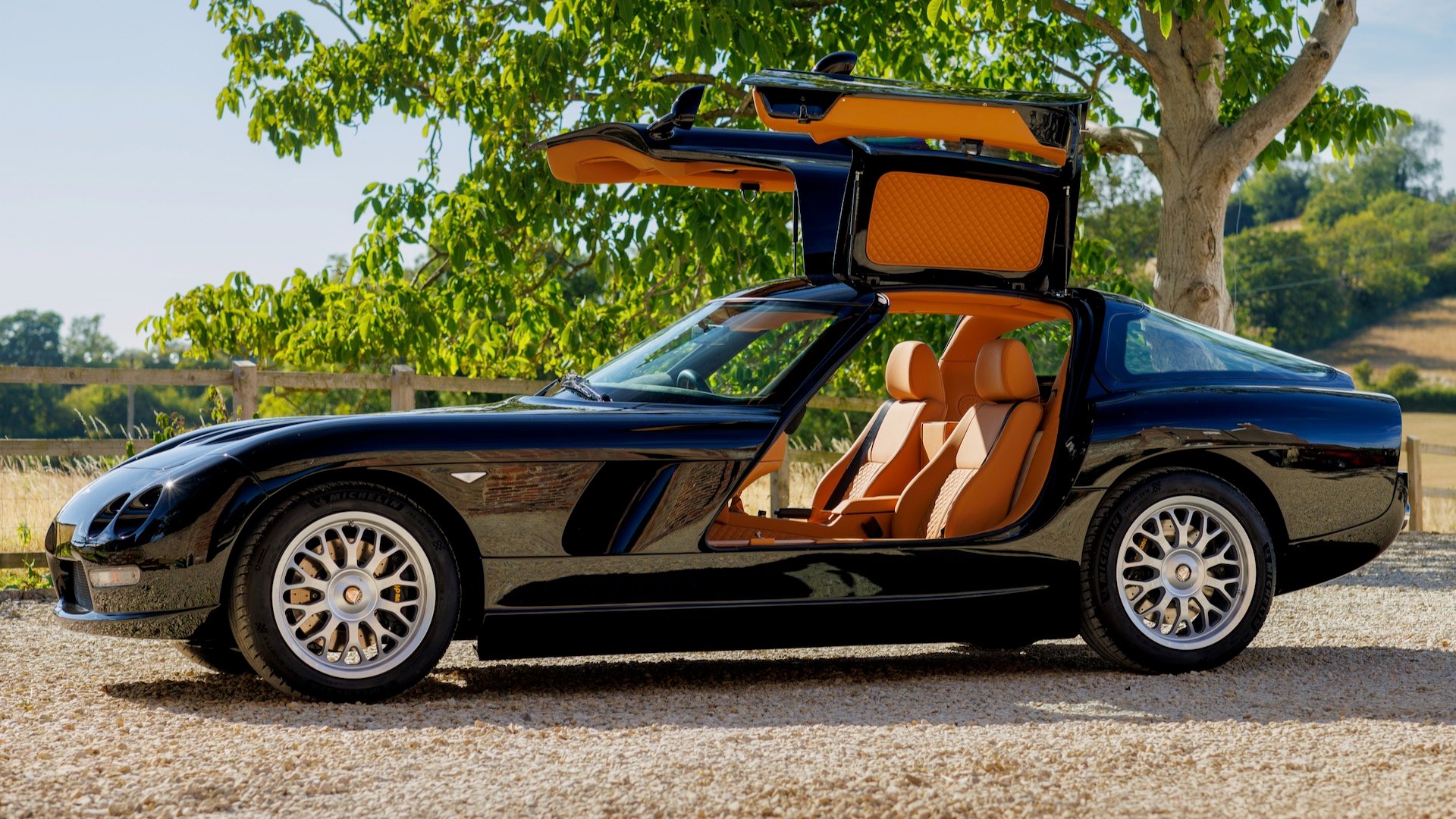


Five unfinished chassis sat in storage for over a decade. Now Bristol Cars is bolting Dodge Viper V10s into them, and the result might be the last new V10-powered car you can buy.
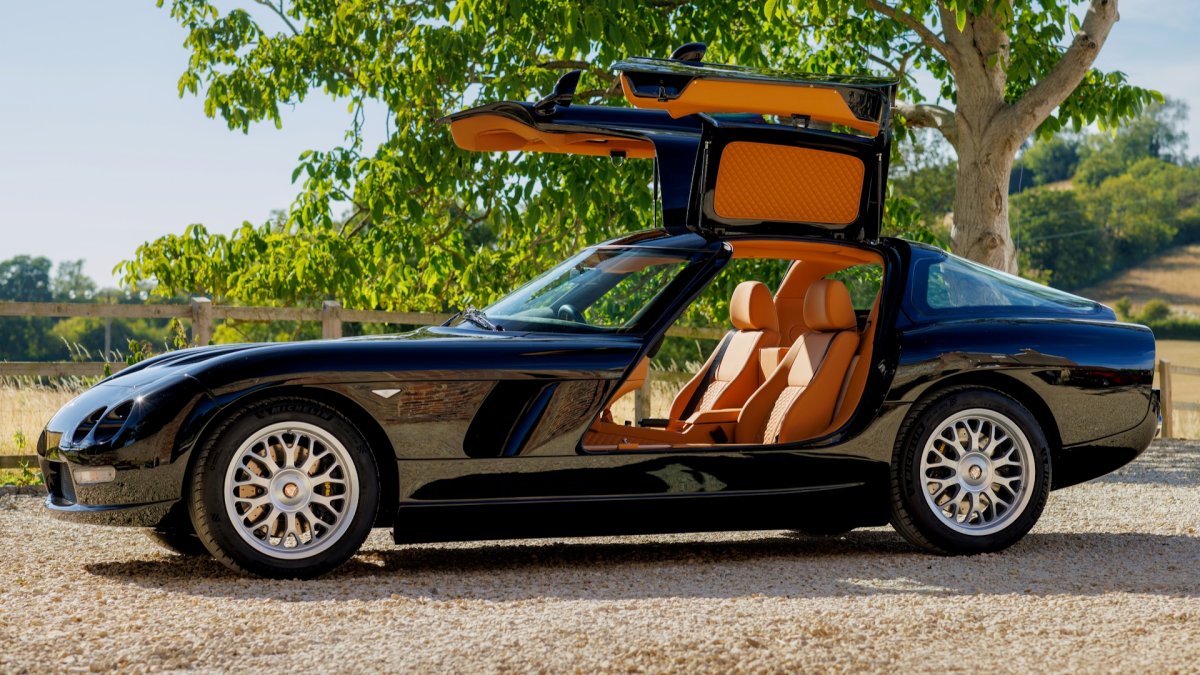
Bristol Cars Group Ltd. recently unveiled the first of these completed machines at Salon Privé in the U.K., reviving a nameplate that most people forgot existed. The Fighter, a gull-wing supercar roughly the size of a 911 but packing an 8.0-liter American V10, originally ran from 2003 to 2011. Only about 15 were ever built, and when Bristol ceased manufacturing, five bare chassis were left behind like orphans.
The story of how a Viper engine ended up in a tiny British coupe stretches back to World War II. Bristol began life as the automotive arm of the Bristol Aeroplane Company, which needed peacetime work for its factory hands after 1945. The first car, the Bristol 400, borrowed its chassis and inline-six from prewar BMW designs.
Those German sixes defined Bristol for years and also powered the AC Ace. When Bristol switched to Chrysler V8s in 1961, AC had to find its own engine source, eventually linking up with Carroll Shelby to create the Cobra. Bristol, meanwhile, quietly stuffed American muscle into elegant coupes for four decades.
The Fighter was something else entirely. It crammed 525 horsepower into a compact body with gull-wing doors and a claimed 210 mph top speed. A hotter version made 600 hp. By any rational measure, the Fighter should have been a cult hit, but Bristol managed roughly 15 cars before folding.
What followed was a long, messy period of ownership changes and false starts. A model called the Bullet surfaced in 2016 and went nowhere. But those leftover chassis and their crated Viper V10s survived every corporate reshuffling.
Now a new entity, Bristol Cars Group Ltd., is assembling the remaining five cars. The company is also planning a twin-turbocharged variant called the Fighter T, claiming 1,012 horsepower from the same basic V10. That figure, if real, would put the Fighter T in hypercar territory from an engine Dodge discontinued years ago.
Bristol says the newly completed cars will qualify for Show or Display importation to the United States. That federal exemption allows vehicles that don’t meet standard safety and emissions rules to enter the country, provided they’re driven fewer than 2,500 miles annually until they reach 25 years of age. It is a narrow door, but it is a door.
The timing carries its own irony. Stellantis has no interest in resurrecting the Viper. Lamborghini just dropped its V10 for a twin-turbo V8 in the Temerario, and Ferrari’s V10 era ended long ago. There is a legitimate possibility that one of these five Fighters becomes the last new V10-powered car sold on American soil.
Bristol’s full plans remain vague. The company frames these five cars as a first step toward a broader comeback, though Bristol has promised comebacks before. The Bullet proved that announcements and production are very different things.
Still, the engines exist. The chassis exist. And someone is finally turning wrenches. Whether Bristol can build anything beyond these five leftover relics is a question nobody can answer yet, least of all Bristol itself.

Share this Story