
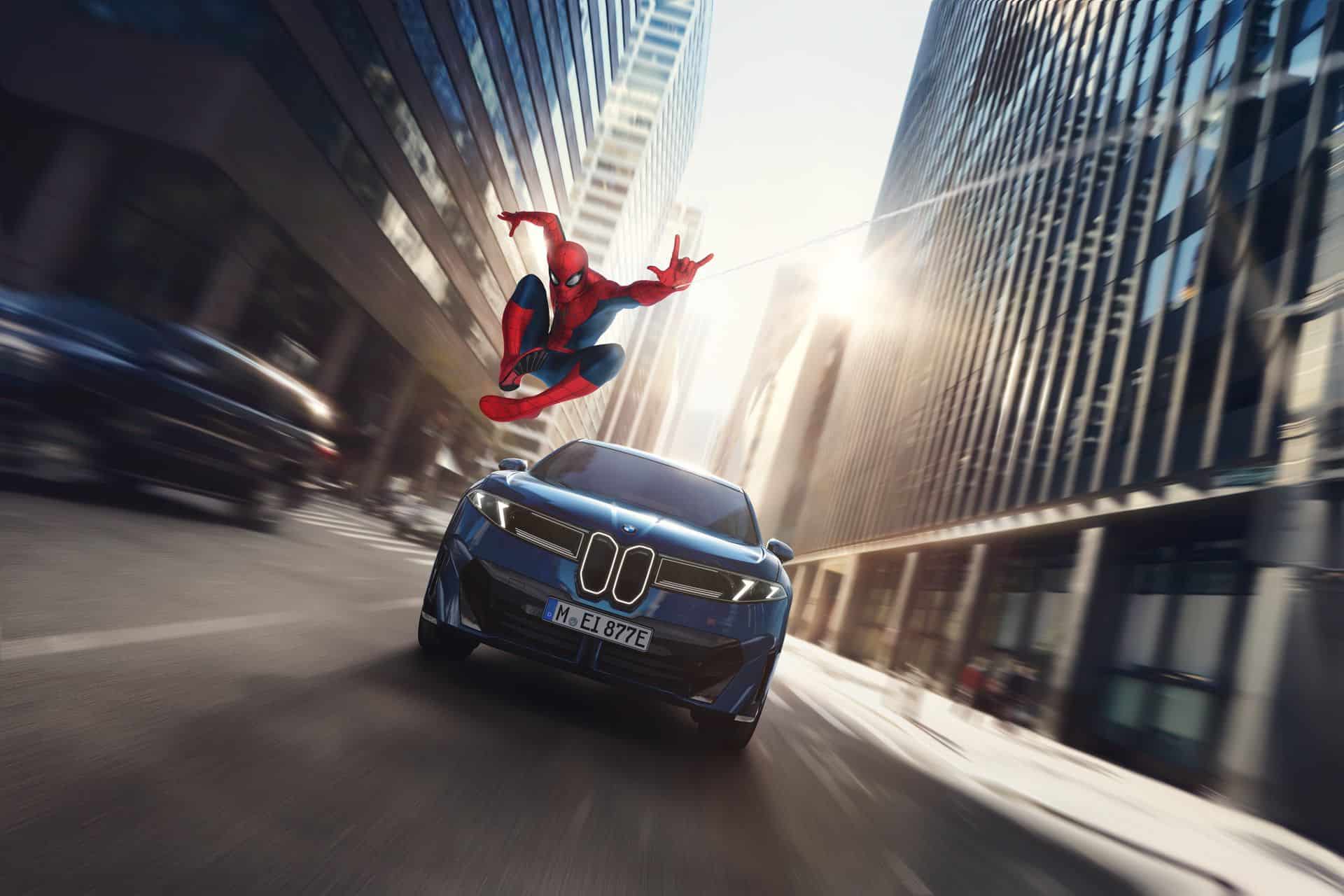


In late July 2026, BMW owners in more than 70 countries started their cars and found a full-color promotional banner for Sony’s “Spider-Man: Brand New Day” glowing on their iDrive screens. Nobody asked for it. Nobody opted in. And for a company that once called the dashboard “a private space,” the backlash was swift and predictable.
BMW delivered the promotion through an over-the-air update to vehicles built after July 2020 running iDrive Operating Systems 7 through X. The Spider-Man graphics and animations were loaded into BMW’s “Festive App,” a feature normally reserved for seasonal greetings. This time it greeted owners with a movie plug tied to a broader marketing deal between BMW and Sony/Marvel that included product placement in the film and a special-edition iX3 rolled out at the Los Angeles premiere.
The campaign was scheduled to run through August 10. The UK, Ireland, and Australia were reportedly spared. Everyone else was fair game.
Reddit threads and YouTube clips showing the pop-up in action drew thousands of angry comments. The fury wasn’t really about Spider-Man. It was about the screen itself, the one owners stare at every time they turn the key on a car that cost them $50,000 or more.
A pop-up ad on a phone is annoying. A pop-up ad on a dashboard you already paid for feels like a violation of an unspoken contract.
BMW made that contract explicit in December 2023, when Stephan Durach, the company’s senior vice president for connected company development, told an industry roundtable the dashboard was not for sale as ad space. He described it as private. Owners remembered.
They also remembered the heated-seats fiasco. BMW had tried charging a monthly subscription to unlock seat heaters that were already physically installed in the car. Executives later admitted publicly it was “probably not the best way to start,” though the practice never fully went away.
The Spider-Man banners felt like the next logical step in a pattern: using software connectivity to squeeze revenue from customers long after the sale closed.
BMW’s official response was to deny the whole thing was advertising. A spokesperson called it “a fun experience which celebrates that our vehicles are featured in the new movie,” emphasizing that the content only appears when the car is stationary and requires the driver to actively open the Festive App. The company said it has “no plans to introduce advertising into its vehicles.”
That distinction, between a branded promotional pop-up and an advertisement, is one only a marketing department could love. If it carries a movie logo, promotes a commercial product, and exists because of a paid partnership, calling it a “fun experience” doesn’t change what it is. Owners can see through the semantics, which is precisely why the backlash was so fierce.
Some coverage treated the episode as a tone-deaf miscalculation rather than a deliberate strategy shift. And there is something to that. BMW’s Fourth of July animations in the same Festive App never triggered this kind of response.
But those animations weren’t selling anything. The Spider-Man tie-in was a commercial arrangement, and it landed on dashboards already primed by years of subscription controversies.
BMW says it remains committed to keeping owners in control of their in-vehicle experience. The OTA infrastructure that pushed this promotion to millions of screens in a single update suggests the opposite. Control, in a software-defined car, belongs to whoever holds the update pipeline, and right now that is BMW.

Share this Story