
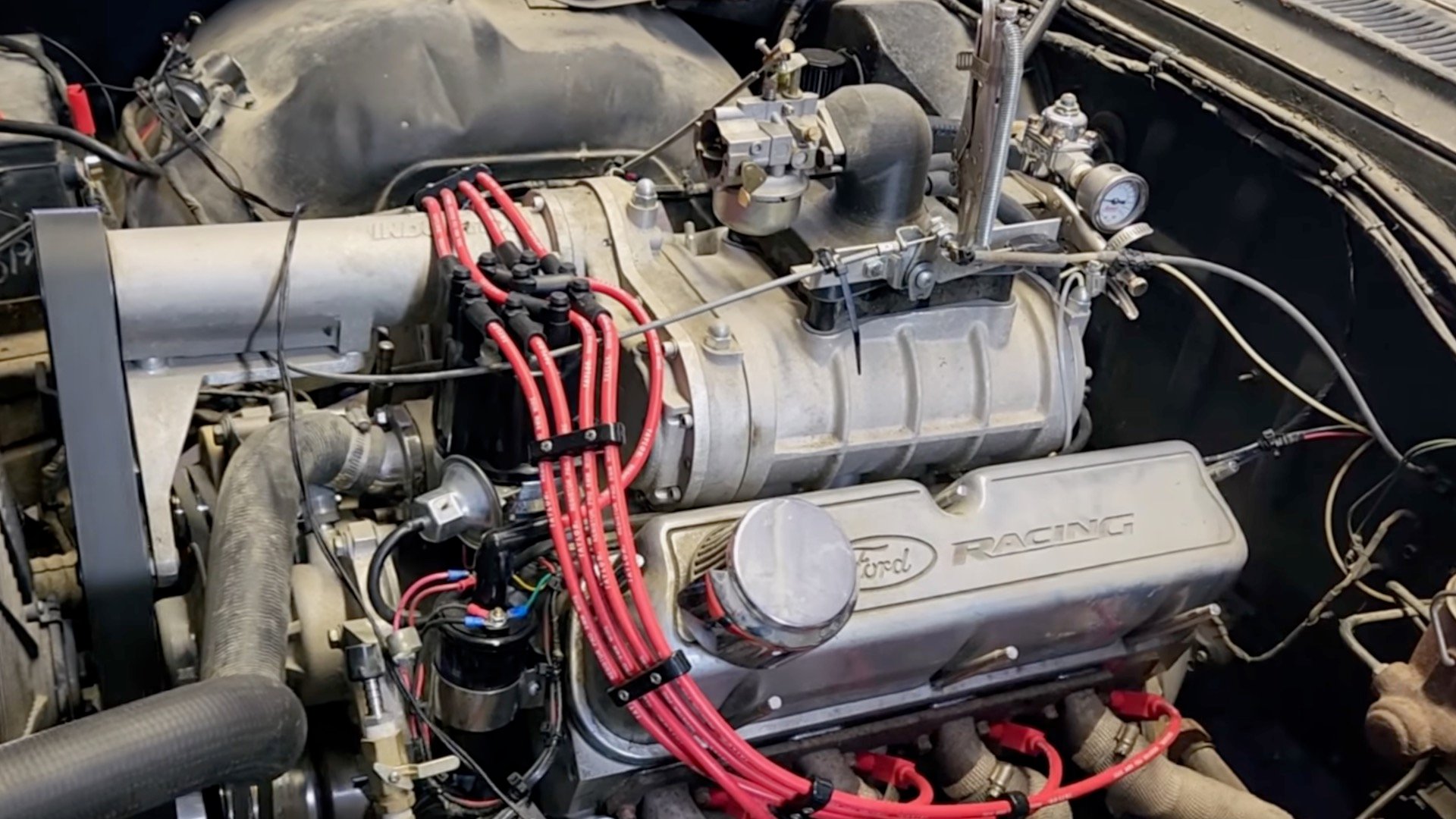


A supercharged Ford Fairlane sat collecting dust for ten years. One missing part was all it took. Then a YouTuber bolted on a lawnmower carburetor and brought the V8 back to life, proving that desperation and ingenuity sometimes look exactly alike.
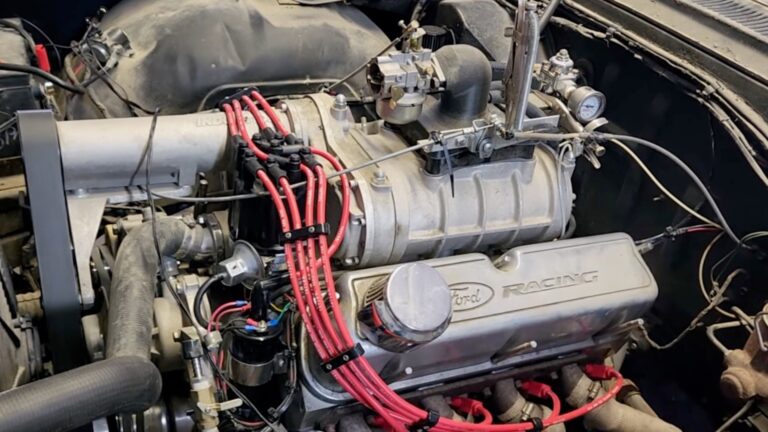
Luke, who runs the ThunderHead289 YouTube channel, has made a hobby of strapping tiny lawnmower carburetors onto full-size car engines. He’s been at it for a few years. So when he finally decided to resurrect his long-dormant Fairlane, the solution was already sitting on his workbench.
The mismatch here borders on absurd. A lawnmower carb is designed to feed a single-cylinder engine turning a blade through grass. Luke asked it to supply a V8 with a supercharger bolted on top, which is like watering a wheat field with a garden hose.
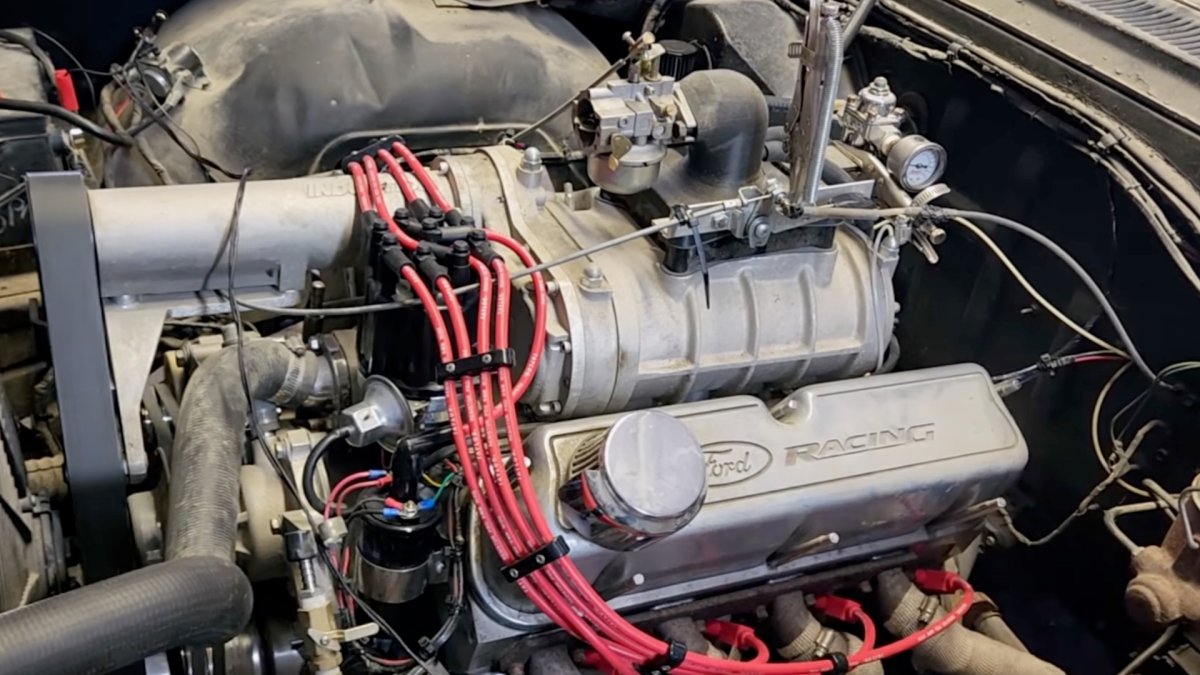
Making it work required serious improvisation. The carb was built for gravity-fed fuel delivery, but a car engine needs at least some pressure behind the fuel. Luke rigged a temporary fuel system with a regulator choking supply down to about 1.5 to 2 psi, the maximum the tiny carb could handle without flooding.
The fuel tank sat in the front passenger footwell. So did the battery. A fire extinguisher rode along too, because putting a fuel source and a potential spark that close together in a moving vehicle is the kind of decision that separates project car people from everyone else.
The engine fired right up. At idle, it ran smoothly, monitored through the Carb Cheater app. Luke could watch the air-fuel mixture in real time and the numbers held steady while the car sat still.
Driving was another matter entirely. The carb simply could not move enough air to keep the engine happy at speed. The supercharger, starved of the airflow it needs to build boost, became dead weight adding drag that made the undersized carb’s job even harder. The Fairlane rolled under its own power, but it wasn’t exactly tearing up the road.
None of this should surprise anyone. A carburetor sized for a Briggs and Stratton was never going to unleash the potential of a blown Ford V8. But the fact that it ran at all is a testament to how forgiving old pushrod engines can be.
They don’t need sophisticated engine management or precise fuel mapping. Give them spark, compression, and something vaguely combustible, and they’ll usually cooperate.
Luke has done this before with better results. A previous project, a Ford Maverick, got a more carefully engineered lawnmower carb setup with custom-fabricated parts that made the car closer to daily-drivable. The Fairlane was always meant to be a proof of concept, a way to move a stalled project off dead center.
And that might be the real story here. Every project car graveyard, every barn, every backyard with a tarp-covered hulk sitting on flat tires, exists because of one missing part, one unsolved problem, one excuse that calcified into permanence. Ten years is a long time for a car to sit.
Luke’s solution isn’t pretty, isn’t permanent, and barely works under load. But the Fairlane moved. After a decade of nothing, the engine turned, the wheels rolled, and the car drove.
The proper carburetor is presumably next. Whether it takes another ten years is the only question left.


Share this Story