



The camouflage is thinning. New spy footage of BMW’s electric M3, internally coded ZA0, shows prototypes running with noticeably less disguise than previous sightings. That’s a reliable signal that BMW is closing in on a reveal.
What the thinner wraps expose is a car that tracks closely to the M Concept Neue Klasse show car from 2025. The central hood vent survives. The split rear spoiler stays. But the concept’s wild rear diffuser, the kind of thing that looks like it escaped from a GT3 paddock, has been dialed back to something a human being could live with over a parking garage lip.
That tension between concept aggression and production reality runs through the entire car.
BMW has confirmed the ZA0 will not use carbon fiber for its roof or mirror caps. Instead, the M division is going with flax-based natural-fiber composites developed with Swiss firm Bcomp. The company says these materials deliver weight savings comparable to carbon fiber with a smaller carbon footprint in manufacturing.
On the concept, the front splitter, rear diffuser, and structural elements of the bucket seats also used the material. How much of that carries over to the production car remains an open question.
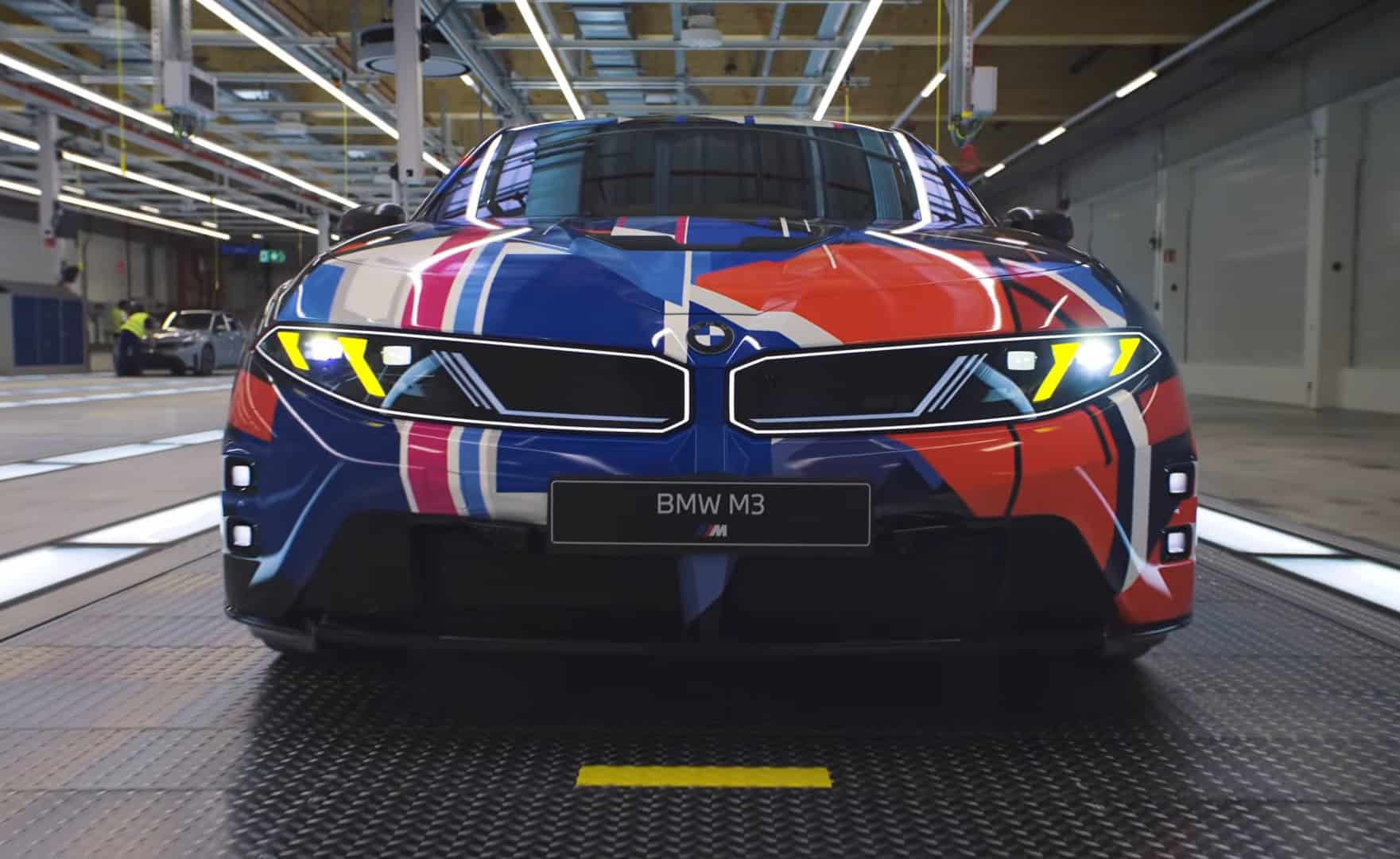
Weight is the elephant in the room. BMW has confirmed a battery pack north of 100 kWh, and no amount of flax-based composite paneling is going to make this sedan feel like the 3,800-pound G80 M3. The gold brake calipers visible behind 20-inch wheels on the test mules hint at carbon-ceramic brakes on the options sheet.
BMW M has long used gold calipers as its visual signature for carbon-ceramics. With the mass this car will carry, offering that level of stopping hardware isn’t a luxury. It’s a necessity.
Under the body sits a quad-motor powertrain, one motor per wheel, built on the Neue Klasse platform. Output has not been officially confirmed, but BMW has pointed toward more than 800 horsepower. Four motors also mean torque vectoring capability that no mechanical differential could match.
Whether that translates to a car that actually feels like an M3 rather than a 5,000-pound physics experiment will depend on chassis tuning and software calibration. Those are the things that don’t show up in spy footage.
BMW plans to pull the covers off the ZA0 in 2027 and put it in customer hands before that year ends. That timeline is aggressive but tracks with the prototype’s current state of undress.
Here is where it gets interesting. The ZA0 is not replacing the combustion M3. BMW is simultaneously developing the G84, a gasoline-powered successor expected in 2028, likely retaining the S58 twin-turbo inline-six with mild-hybrid assist bolted on.
Two M3s, two powertrains, running in parallel. It’s a hedge, and a frank admission that BMW’s customer base is split down the middle on electrification.
The electric version sits above the i3 M60 in BMW’s hierarchy, positioning it as the flagship performance sedan rather than an experiment. The G84 will cater to buyers who want the mechanical engagement, the exhaust note, the ritual of a combustion sports sedan.
BMW M is betting it can serve both audiences without diluting either car. The ZA0 will be the first real test of whether the M badge can carry the same emotional weight without six cylinders screaming behind the front axle. Spy footage can show us body lines and brake calipers, but it cannot answer that question.


Share this Story