
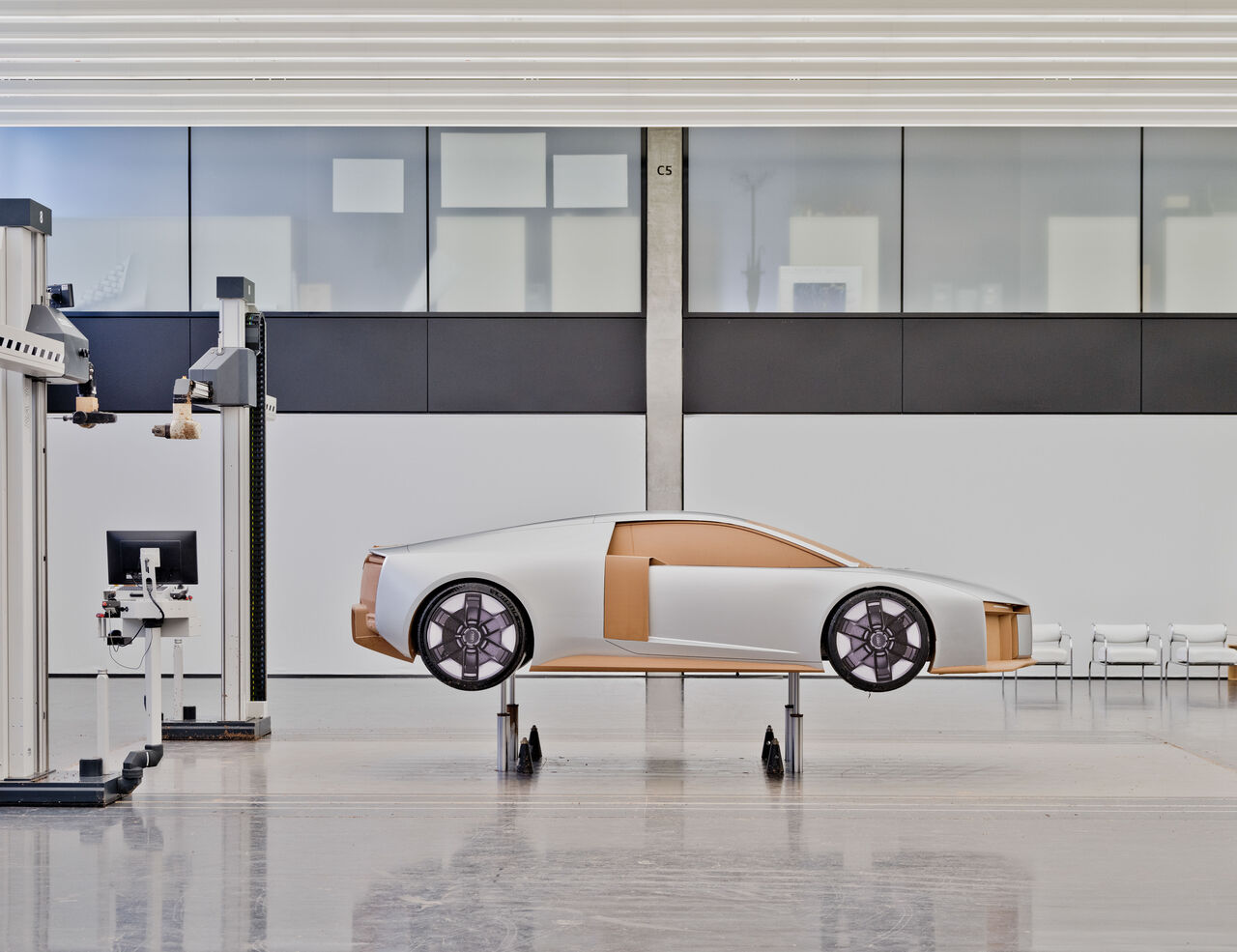


Four hundred and five days. That is the time Audi claims elapsed between the first sketch of the Nuvolari 1 and a drivable prototype rolling under its own power. The car debuted June 4 in Antibes, then made its public road debut at the Monaco Grand Prix.
For a company that spent the better part of a decade figuring out how to get its F1 program off the ground, that timeline is either a genuine breakthrough or a very well-curated narrative.
The Nuvolari 1 is Audi’s fastest and most powerful road car ever, packing more than 1,000 PS from a plug-in hybrid powertrain. Preliminary fuel consumption figures show 11.3 liters per 100 km in combined weighted driving, climbing to 14.7 liters with a depleted battery. CO2 emissions land at 270 g/km, earning the car a Class G rating, the worst category on Europe’s efficiency scale.
Nobody buys a supercar for its carbon footprint, but those numbers put the Nuvolari 1 squarely in the combustion age even as Audi markets electric sedans and SUVs to the masses.
CEO Gernot Döllner frames the project as proof of concept for a new way of working inside the company. An autonomous team of designers, aerodynamicists, powertrain engineers, and chassis specialists operated with short decision chains and minimal bureaucracy. Chief Creative Officer Massimo Frascella said the car was delivered “without making any compromises,” a bold claim for a vehicle still described as a “near-production prototype” with preliminary specs.
The development map reads like a European grand tour. Initial design work happened in Ingolstadt. Cold-weather testing used technology demonstrators in Lapland.
Lightweight construction took place in Neckarsulm, home of Audi Sport. Wind tunnel sessions returned to Ingolstadt. Suspension tuning was done in southern Spain.
High-speed runs happened at the Nardò Technical Center in Italy, where Audi Formula 1 Team driver Gabriel Bortoleto took the wheel.
Bortoleto’s verdict: “The car is extremely quick.” His teammate Nico Hülkenberg tested the Nuvolari 1 on a track in Neustadt an der Donau and called the acceleration “a real statement.” Using your F1 drivers as shakedown pilots is smart marketing.
It also lets Audi draw a straight line between its road car ambitions and a Formula 1 program that has yet to race a single lap in anger.
The Nuvolari 1 already picked up the “Design of the Year” trophy at the UK-based CAR Genius Awards. Judges praised its restraint and clarity, qualities Audi has struggled to project consistently across its lineup in recent years. The car is the first production model to carry what the company calls its new design language, which means every Audi that follows will be measured against it.
The real question is whether the speed of this project can be replicated across the rest of the portfolio. Audi’s core business, the A4s and Q5s that pay the bills, still moves on conventional product cycles. Building one halo car fast with a handpicked team is different from rewiring how a 90,000-employee company develops vehicles at scale.
Döllner clearly wants the Nuvolari 1 to be a cultural artifact as much as a machine, a symbol that Ingolstadt can still move quickly when it chooses to. The 405-day clock makes for a great documentary beat. But the harder clock is the one ticking on Audi’s broader transformation, where deadlines keep shifting and the competition is not waiting around for a making-of video.
Production details, pricing, and volume remain undisclosed.
Share this Story