
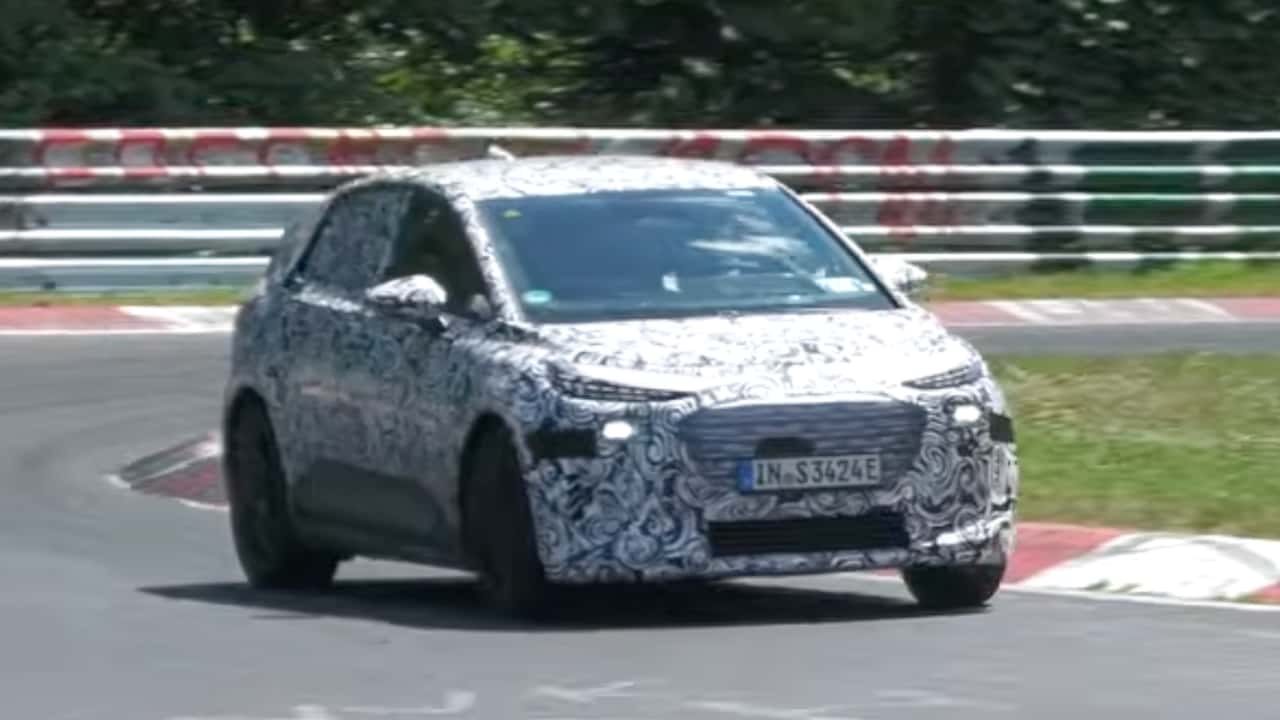


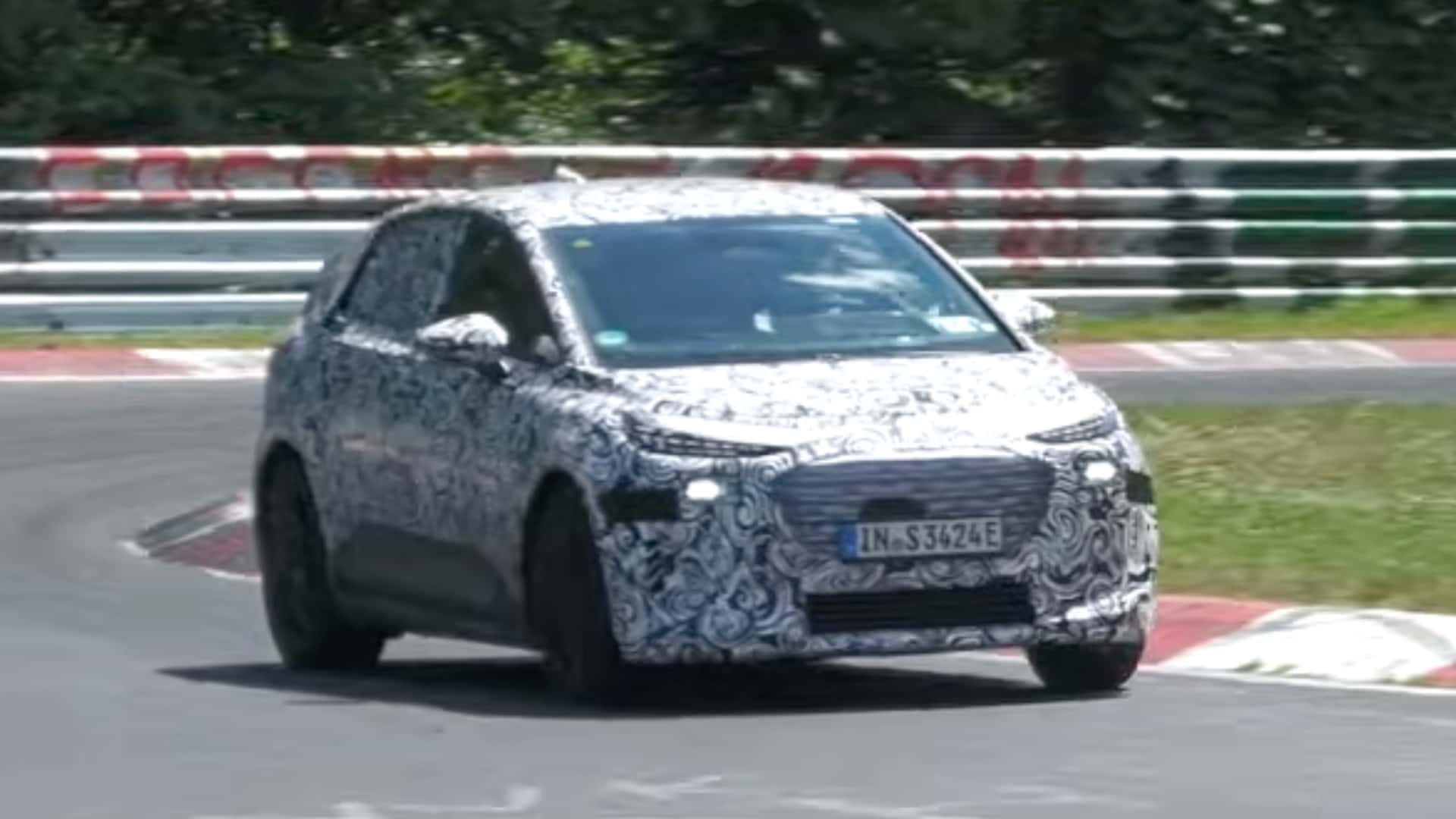
A camouflaged Audi A2 prototype was recently spotted hammering laps at the Nürburgring, a strange proving ground for a small electric hatchback that most buyers will park at the grocery store. But Audi is clearly trying to prove something with this car, and the choice of venue says as much as the engineering underneath.
The original A2 launched in 1999 as a lightweight, aerodynamic efficiency experiment. It posted a drag coefficient of 0.28, which was exceptional for the era. It was also a commercial flop, killed off after just five years because buyers didn’t care about aluminum construction and fuel sipping when gas was cheap.
Now the A2 is back, reborn as a fully electric hatchback riding on the Volkswagen Group’s MEB platform. The prototype on the Ring still wears heavy camouflage, but the silhouette confirms what earlier spy shots suggested: Audi is leaning hard into the original car’s design language. Smooth surfaces, a split rear window, and an integrated rear spoiler all point toward the same aerodynamic obsession that defined the first generation.
Powertrain details haven’t been officially confirmed, but the MEB architecture gives us a clear window. Expect output ranging from around 170 horsepower to as much as 326 hp, depending on variant. Maximum range could push past 373 miles, which would make the A2 competitive with the best efficiency-focused EVs in Europe.
Inside, spy photographers have already caught the dashboard layout. It borrows Audi’s current curved display design, merging the digital instrument cluster and infotainment screen into one sweeping panel. Nothing radical, but consistent with the brand’s current interior philosophy.
Pricing is expected to start around €35,000 when the A2 goes on sale in early 2027, following an unveiling this fall. That puts it squarely in the heart of Europe’s increasingly crowded affordable EV segment. It will face the Volkswagen ID.3, the Renault Megane E-Tech, and a growing wave of Chinese competitors undercutting everyone on price.
And here’s the familiar sting for American readers: the A2 isn’t coming to the US. Not now, not later. Audi has made no indication it plans to bring the car stateside, which tracks with the broader European strategy of fielding smaller, cheaper EVs that don’t translate well to a market still obsessed with crossovers and trucks.
The Nürburgring testing is telling in its own right. Audi doesn’t send cars to the Nordschleife for a photo op. That track punishes suspension tuning, thermal management, and chassis rigidity in ways no test track or public road can replicate.
For a small EV that will spend most of its life in urban traffic, it signals Audi wants the A2 to feel like more than an appliance. Whether that ambition survives the cost pressures of a €35,000 price point is another question entirely.
The original A2 was ahead of its time and paid the price for it. Audi is betting that the market has finally caught up. With European emissions regulations tightening, Chinese brands flooding in at the low end, and VW Group desperate to justify the billions sunk into MEB, the A2 carries more weight than its compact footprint suggests.
Production timing puts the car roughly two years behind the latest Chinese entrants already selling in Europe at similar or lower price points. Audi’s brand cachet buys it some runway, but not forever.

Share this Story