
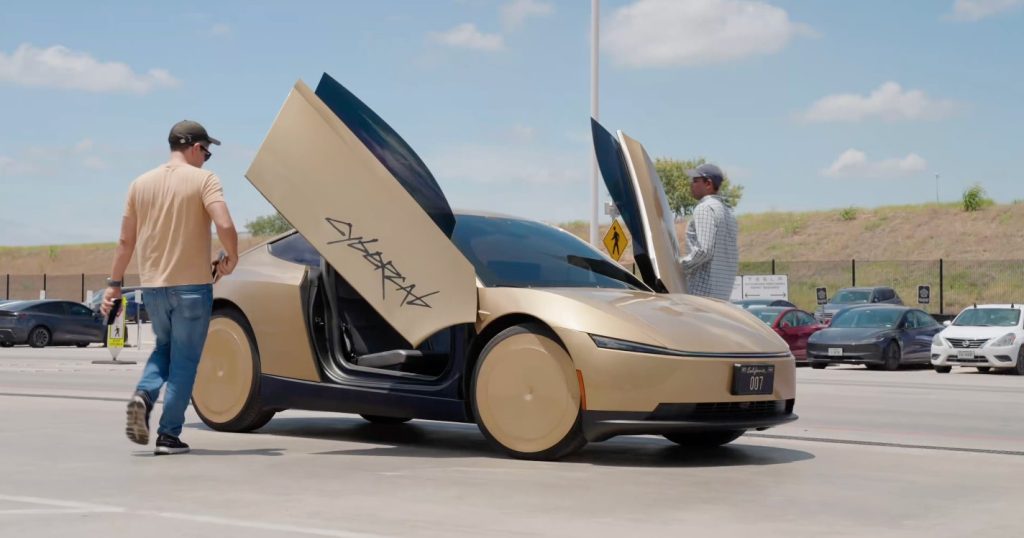


Tesla’s unsupervised Robotaxi fleet crossed one million miles of driverless operation, the company announced September 3 at a Cybercab launch event in Austin. Six weeks earlier, the total stood at 380,000 miles. That means roughly 620,000 miles were added in a month and a half, a pace that would have been unthinkable when safety drivers still sat behind the wheel.
The acceleration coincided with Tesla pulling human monitors out of its vehicles in most markets. Austin, Dallas, Houston, Miami, Orlando, and Tampa now run fully driverless. Only the San Francisco Bay Area still requires a safety operator under California permitting rules.
One million miles sounds like a lot until you look across the street. Waymo has logged more than 200 million fully autonomous rider-only miles. Tesla is celebrating a number that Alphabet’s subsidiary passed years ago.
Tesla knows this. Its argument has always been about trajectory, not snapshots. The company says its unsupervised mileage is growing at a double-digit weekly rate, and it claims zero notable incidents caused by its vehicles through the July earnings update. Those are strong words, though Tesla has not published the underlying data or invited independent verification.
The Austin event also marked the first public rides in the purpose-built Cybercab, the pod with no steering wheel and no pedals. Forty-five units have joined the fleet according to Texas filings. Production Cybercabs are now mixed in with modified Model Y vehicles already running the service, and Tesla has not said how many of the recent miles came from which vehicle type.
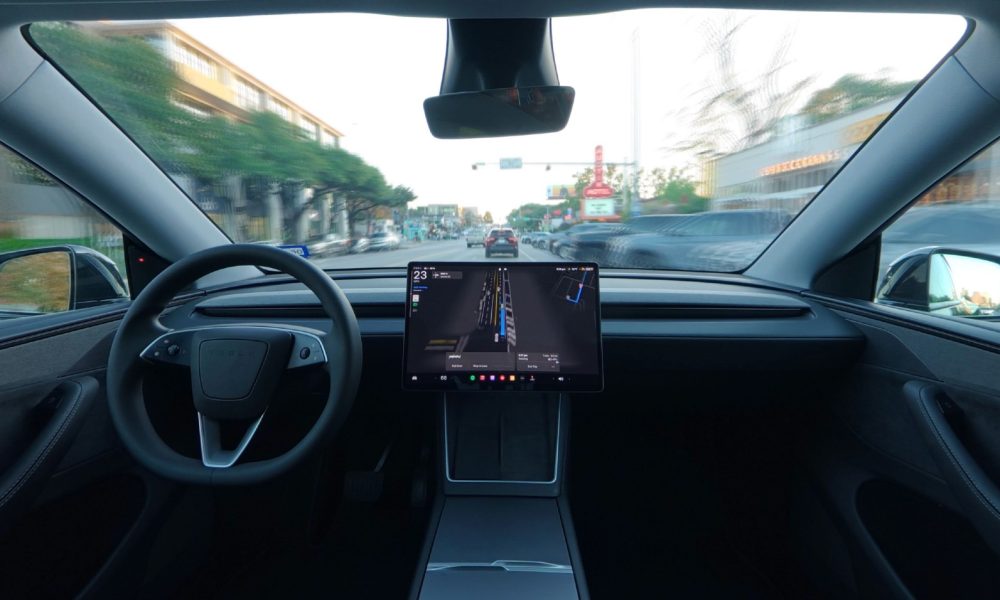
NHTSA noticed. The agency opened an Audit Query into the Cybercab’s self-certification under Federal Motor Vehicle Safety Standards the day after launch. The issue is straightforward: FMVSS were written for cars with steering wheels, brake pedals, and mirrors, and the Cybercab has none of those.
Tesla certified it anyway, and the agency wants to see the technical reasoning. That is not a recall or a cease-and-desist. But it is the federal safety regulator publicly saying it needs to understand how Tesla decided its vehicle complies with rules designed for an entirely different kind of machine.
The answer will shape how every future autonomous vehicle without manual controls reaches American roads.
Meanwhile, Tesla AI lead Ashok Elluswamy hinted that 24-hour Robotaxi service could arrive as soon as October. The fleet currently operates from 6 a.m. to 10 p.m. Overnight rides depend on merging new capabilities into the Full Self-Driving v15 software stack, which Tesla describes as containing roughly ten times more parameters than earlier versions.
About 40 percent of planned v15 improvements are already running on fleet vehicles.
Separately, Tesla began rolling out FSD Supervised v14.3.9 to consumer vehicles with a feature that can activate autonomous driving even when the owner is driving manually. If the system detects an imminent collision and judges that conventional emergency braking will not suffice, it can steer, brake, and accelerate to find an escape path. It can also re-engage if it senses the driver accidentally disengaged FSD at a critical moment.
The pieces are moving fast. A million driverless miles, a vehicle with no controls, a regulator asking hard questions, overnight service possibly weeks away, and software that can override its own driver. Tesla is building its autonomous future in public, city by city, update by update.
Waymo, for its part, just keeps quietly stacking miles.
Share this Story