
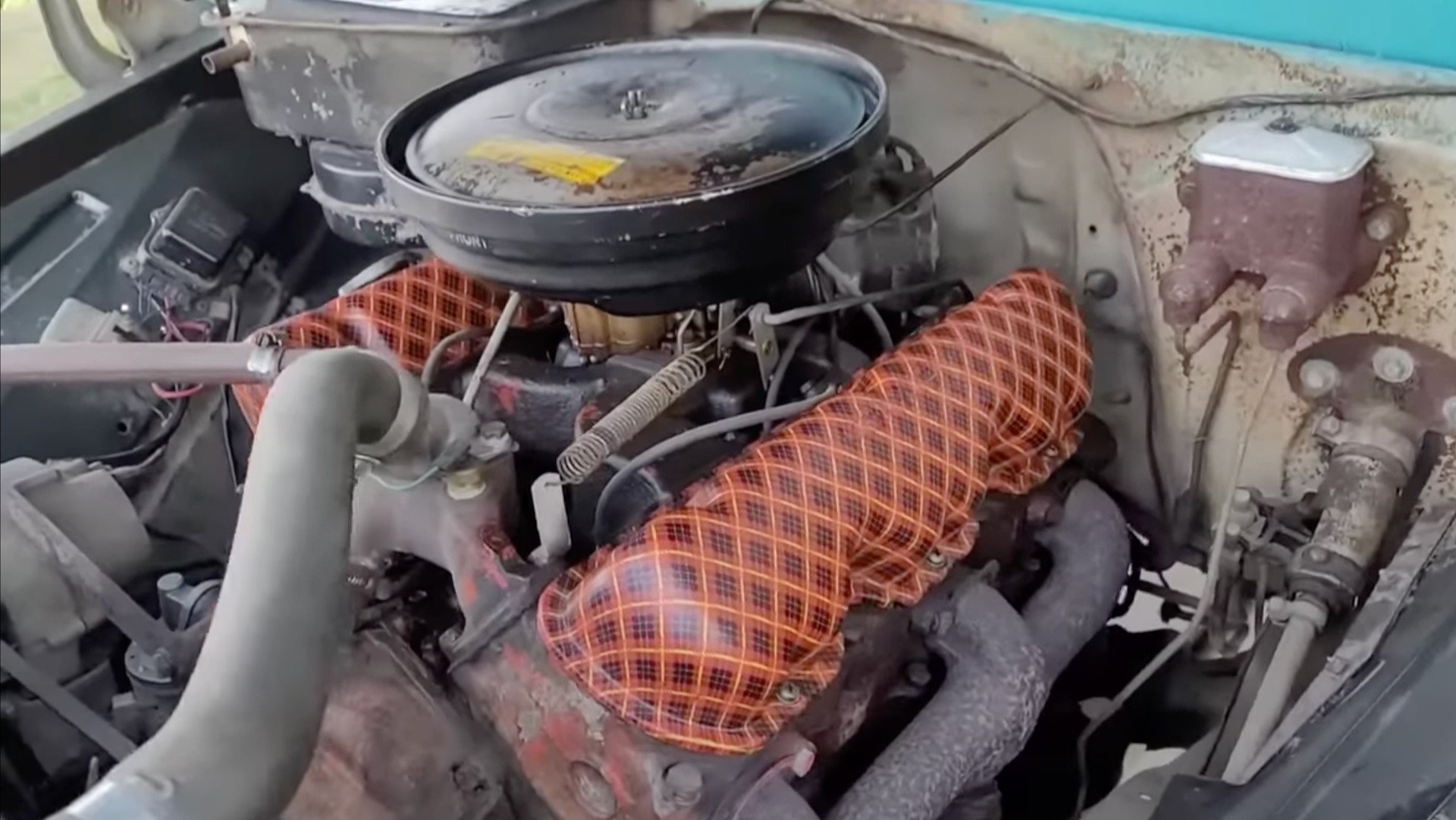


In 1963, GMC offered factory plaid valve covers on its half-ton trucks. Not as a joke. Not as a concept. As a real, order-it-from-the-dealer option on 305-cubic-inch big-block V6 engines.
The story of how tartan ended up on a truck engine is stranger than the option itself.
When GMC launched its new generation of trucks in 1960, customers hammered the brand over the V6’s fuel economy. Engineers went to work testing different carburetors and camshafts, hunting for a combination that would quiet the complaints. They found one. And to keep track of which engines in the plant were running the improved setup, someone grabbed a roll of adhesive shelf-lining paper with a tartan pattern and slapped it on the valve covers. It was just what happened to be lying around.
That should have been the end of it. But GMC’s marketing people walked through the engine shop, spotted the plaid covers, and had an idea. The running theory, sourced from a former GMC engineer’s account posted on the 6066 GMC Club forum, is that the marketing team played off cultural stereotypes of Scottish thriftiness to tie the tartan to the truck’s improved fuel economy. The pattern went from shop-floor improvisation to production-line option in one leap of corporate logic that could only have happened in Detroit in the early 1960s.
The plaid covers appeared only on 1963 models equipped with the big-block V6, and only on half-tons. One model year, one engine, one truck line. Given the extra cost of applying the patterned covering and the relentless annual styling churn of that era, it died as quickly as it was born.
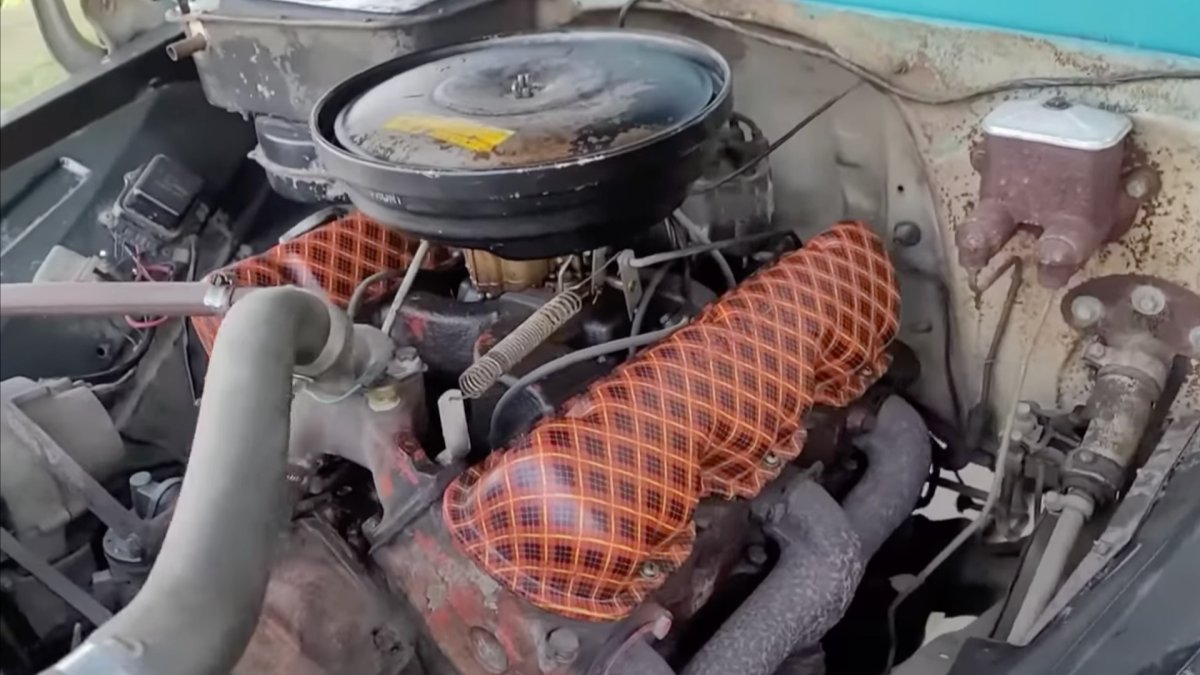
A surviving example turned up on a clean original 1963 GMC farm truck documented by the YouTube channel Kyle’s Car Farm, proving these things actually made it into customers’ hands and, in at least one case, survived six decades under a hood.
The truck itself was part of a quietly important generation. It marked the first time GM’s light-duty pickups rode on a dedicated truck platform rather than sharing bones with passenger cars. That architecture carried through 1966, when the “Action Line” trucks replaced it and set the template for the modern full-size pickup.
Plaid valve covers did not set any template. Nobody followed GMC’s lead. No other automaker in the 1960s, or any decade since, decided that engine dress-up meant textile patterns. Chrome stayed king. Painted covers came and went.
Eventually plastic engine covers buried the whole question under a slab of branded trim that hides everything worth looking at.
The fact that someone is still selling reproduction plaid material in the correct pattern for 1963 GMC restorations says something about the peculiar loyalty of truck collectors. These covers have become a cult item precisely because they were so brief and so inexplicable.
Modern trucks would never allow it. Pop the hood on a current Sierra and you’ll find a molded plastic shroud designed to look engineered and conceal everything underneath. The idea of a factory option that exists purely because an engineer reached for whatever adhesive paper was on the shelf belongs to a version of the auto industry that no longer exists. One where a marketing guy could walk past a workbench, see something weird, and get it into a showroom within months.
Whether any plaid valve covers are still sitting undiscovered in old barns across the Midwest is anyone’s guess.




Share this Story