
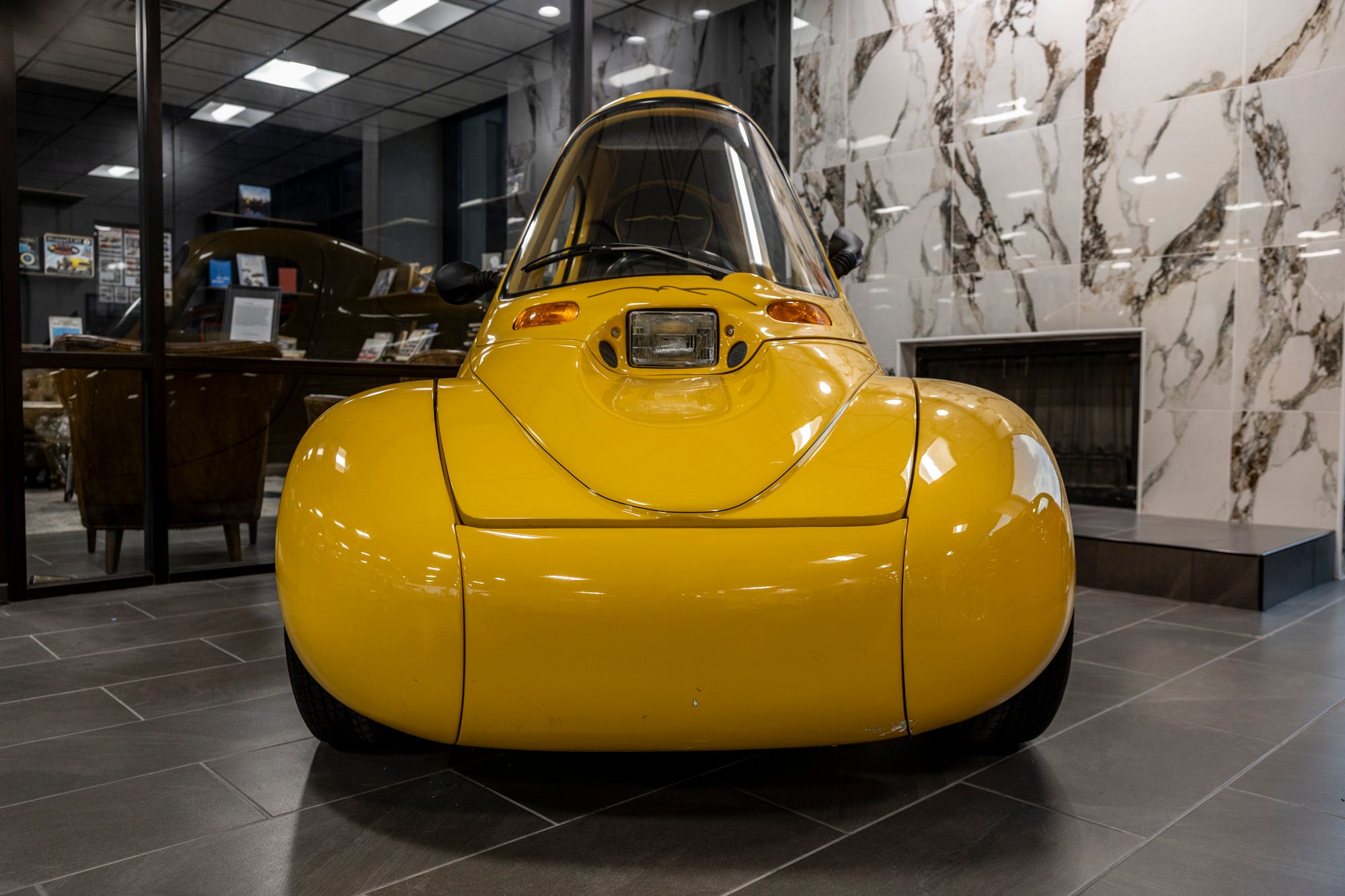


A banana-yellow, three-wheeled electric vehicle shaped like a shoe just surfaced on Bring a Trailer. It’s a 2000 Corbin Sparrow, and it looks like something pulled from a Richard Scarry illustration. The auction ends August 11.
The Sparrow was the brainchild of Mike Corbin, a former Navy electrician turned motorcycle customizer who was far more serious than his creation’s goofy silhouette might suggest. In 1974, during the oil crisis, Corbin piloted his battery-electric motorcycle Quicksilver to a land speed record north of 165 mph. That record held for nearly 40 years.
So no, the guy who designed this rolling banana was not messing around.
The Sparrow was conceived as a single-seat, three-wheeled city commuter. More weatherproof than a motorcycle, smaller than a car, and fully electric at a time when that meant lugging around a belly full of lead-acid batteries. It was logical, even if it looked absurd. The concept never gained real traction, largely because battery technology in 2000 was brutally heavy and expensive.
Hollywood loved it anyway. The Sparrow earned a cameo in “Austin Powers in Goldmember” as the villain’s appropriately ridiculous ride. It also planted a seed that would later sprout into the ElectraMeccanica Solo, a similar single-occupant EV three-wheeler that tried, and mostly failed, to crack the modern market.
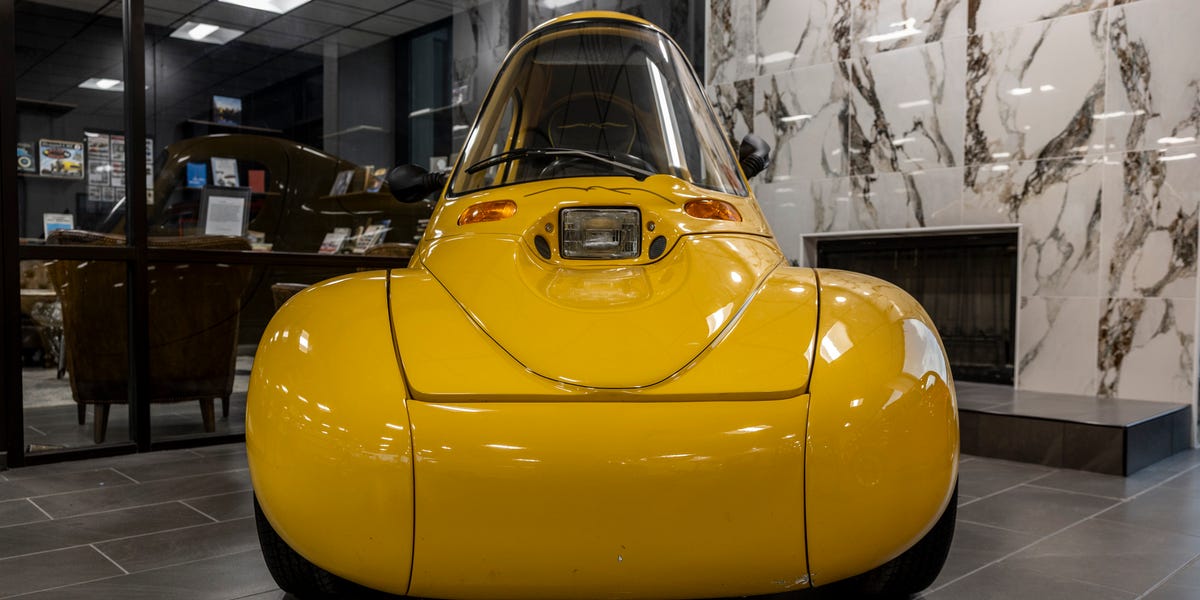
This particular example has been sitting in a Fort Worth, Texas, museum, collecting dust rather than miles. It needs work. The listing makes that clear. But here is where the calendar actually favors the Sparrow for the first time in its existence.
Lithium-ion battery packs have plummeted in price and surged in energy density since this thing rolled off the line with its original lead-acid setup. Swapping in modern cells is a far less painful job than rebuilding a carburetor-fed engine. The bones of the vehicle are simple, the electronics are minimal, and a competent builder with access to off-the-shelf lithium cells could turn this museum piece into a functional urban runabout for relatively modest money.
Whether anyone should is a different question. The Sparrow was always more proof of concept than practical transportation, a vision of urban mobility that arrived two decades before the infrastructure or the cultural appetite existed to support it. Corbin saw something the rest of the industry wouldn’t take seriously until Tesla forced the conversation.
Three-wheeled EVs remain a niche within a niche. The Solo never reached volume production in any meaningful sense. Arcimoto has struggled. The regulatory patchwork around three-wheelers, classified as motorcycles in most states, keeps insurance and licensing quirky.
But the Sparrow has something none of those newer attempts possess: genuine artifact status. It is a relic from the moment when electric vehicles were the exclusive domain of tinkerers and true believers, before venture capital and government mandates flooded the space. Owning one is less about driving it than about holding a piece of the EV origin story.
At time of writing, bidding was still modest. That could change. Quirky, low-production EVs from the early 2000s have started to attract collector interest as the first generation of EV enthusiasts looks backward with the same nostalgia that once powered the muscle car market. The Sparrow sits at exactly that intersection of strange, scarce, and historically relevant.
Fort Worth to wherever this thing ends up next, someone is about to own what might be the most photogenic grocery-getter ever built. Whether it actually gets to a grocery store is another matter entirely.
Share this Story