
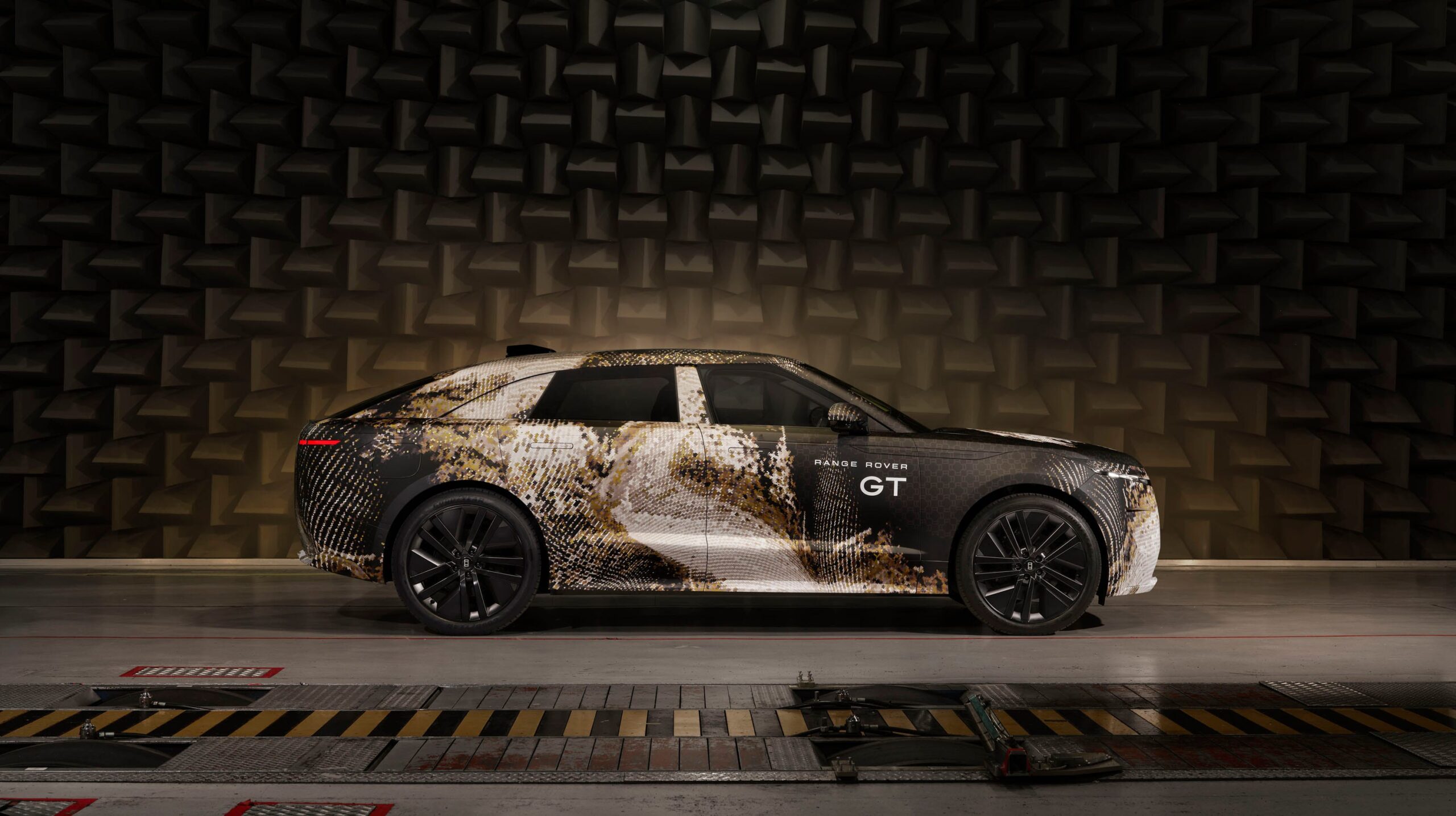


Land Rover just did something it has never done in its 77-year history: it built a car that sits low to the ground.
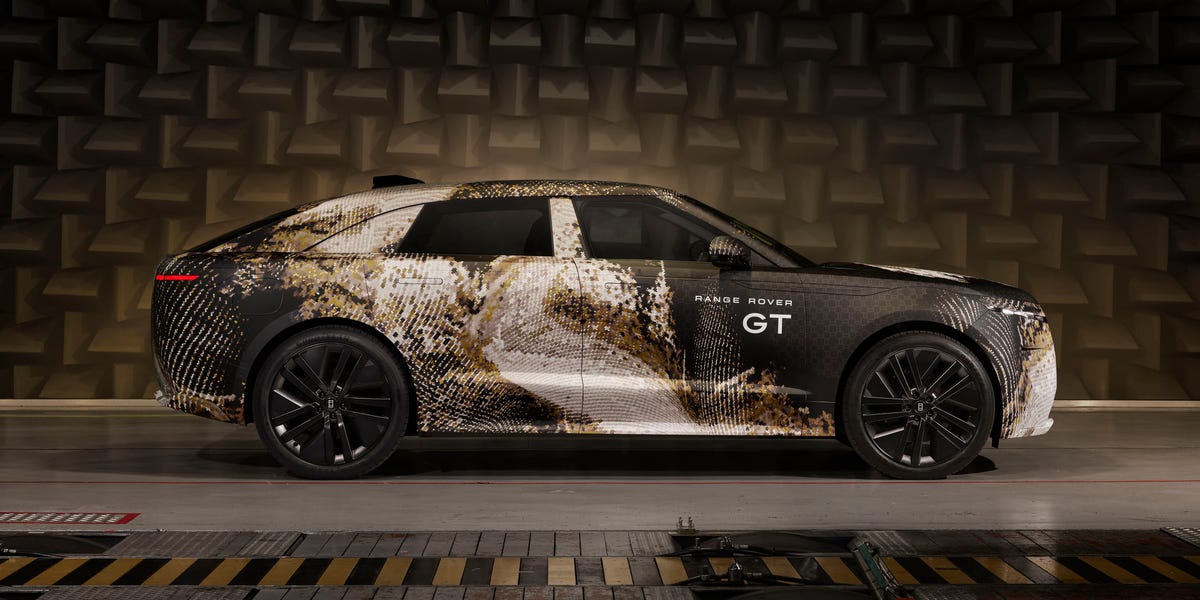
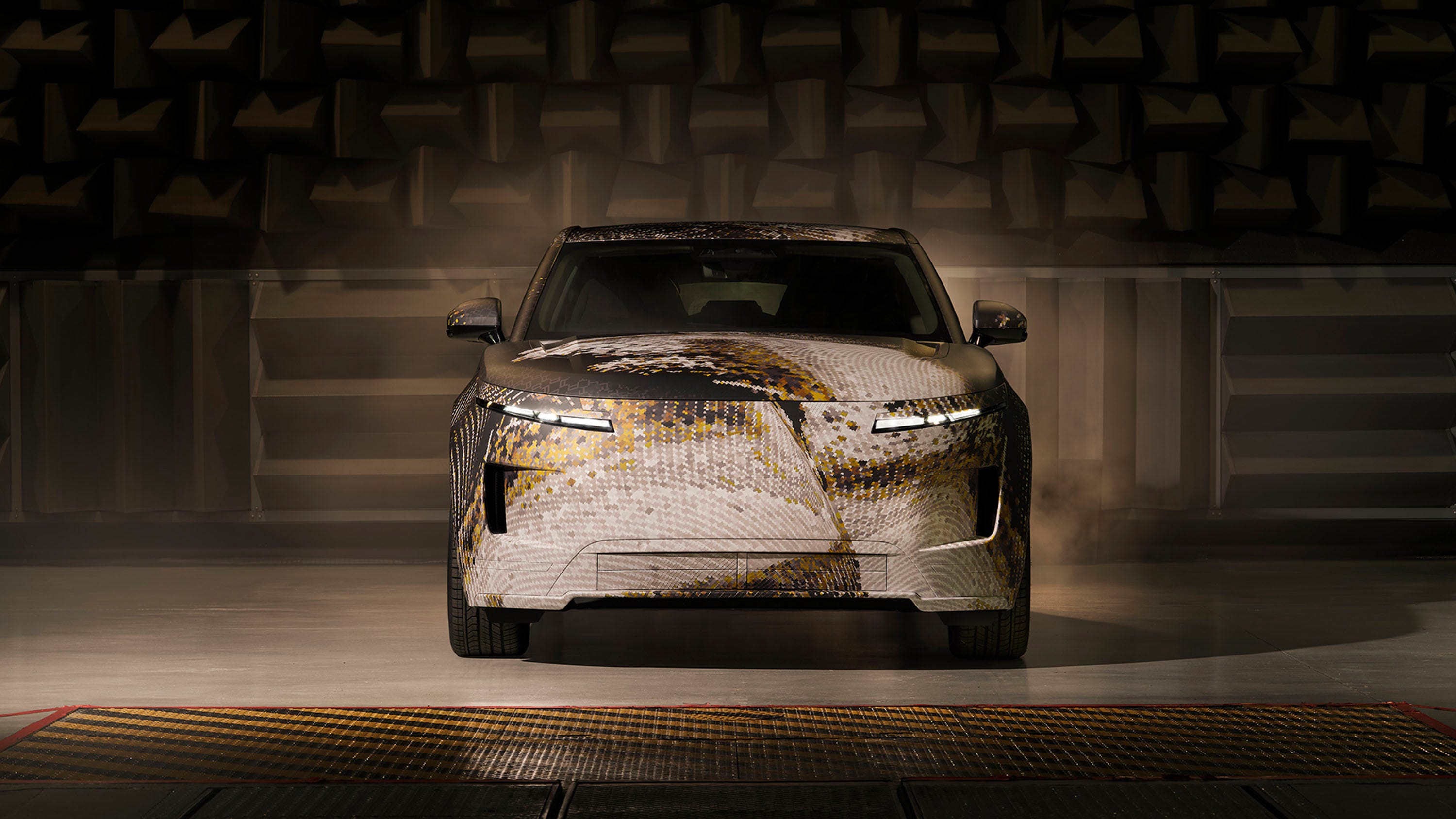
The Range Rover GT prototype, unveiled this week as the fifth member of the Range Rover family, is a fastback electric vehicle with proportions closer to a sedan than anything the brand has ever produced. It rides on JLR’s new EMA architecture, and if the camouflaged prototype is any indication, it looks like someone stretched a Velar until it forgot it was an SUV.
That’s the tension at the heart of this vehicle. Range Rover has spent decades building its identity around commanding ride height, go-anywhere capability, and a particular kind of aristocratic bulk. The GT abandons nearly all of that.
The roofline swoops. The stance is wide and planted. The steering wheel is smaller and slightly ovoid. This is not the truck that ferries diplomats through flood zones.
Inside, the departure is just as dramatic. Sustainable materials replace the leather and wood that have defined Range Rover cabins for generations. Physical buttons are scarce.
Digital displays are restrained by 2026 standards, with a slim gauge cluster and a rectangular center screen, nothing more. A head-up display comes standard, which suggests JLR wants drivers looking through the windshield rather than down at screens.
The seats, reportedly plush but flat and uncontoured, sit beneath a large uninterrupted glass roof. Rear passenger space is described as generous. But some of the center console materials are already drawing early criticism, with plastic in places where a six-figure Range Rover buyer will expect something more considered.
JLR has confirmed only an electric powertrain so far, though the company has been strategically vague about output, range, and motor configuration. Given the Range Rover name, a dual-motor all-wheel-drive setup seems inevitable, but nothing has been committed to paper publicly. Production reveal is expected by early 2027, with the GT likely arriving as a 2028 model.
The real question is who this car is for. Range Rover’s traditional buyers, the ones who wanted a fortress on wheels that could tow a horse trailer through a muddy field and then park at Claridge’s, are not necessarily shopping for a low-slung electric fastback with recycled fabrics. This is a play for a different customer entirely, one who might otherwise be cross-shopping a Porsche Taycan, a BMW i5, or whatever Jaguar was supposed to become before JLR mothballed the brand.
And that’s the uncomfortable subtext. The GT borrows more than a little from Jaguar’s design language. Cross a Velar with a Jaguar XF, as Car and Driver noted, and you arrive at something very close to what’s wearing camouflage here.
JLR killed Jaguar’s sedan lineup and now appears to be resurrecting the concept under a nameplate with stronger commercial gravity. The Jaguar badge couldn’t sustain these cars. Maybe Range Rover’s can.
JLR insists the GT doesn’t replace any existing Range Rover model. It sits alongside the full-size Range Rover, Range Rover Sport, Velar, and Evoque. That’s a crowded family, and adding a sedan-shaped member to it is either a bold expansion of what the brand can mean or a dilution of what made it distinct.
The prototype is out in the open now. The camo will come off early next year. What won’t be disguised is the gamble: Range Rover is betting that its name alone is strong enough to sell a shape it has never tried before, powered by a drivetrain it has barely proven, wrapped in materials its customers have never asked for. That’s not evolution. That’s reinvention wearing a familiar badge.
Share this Story