
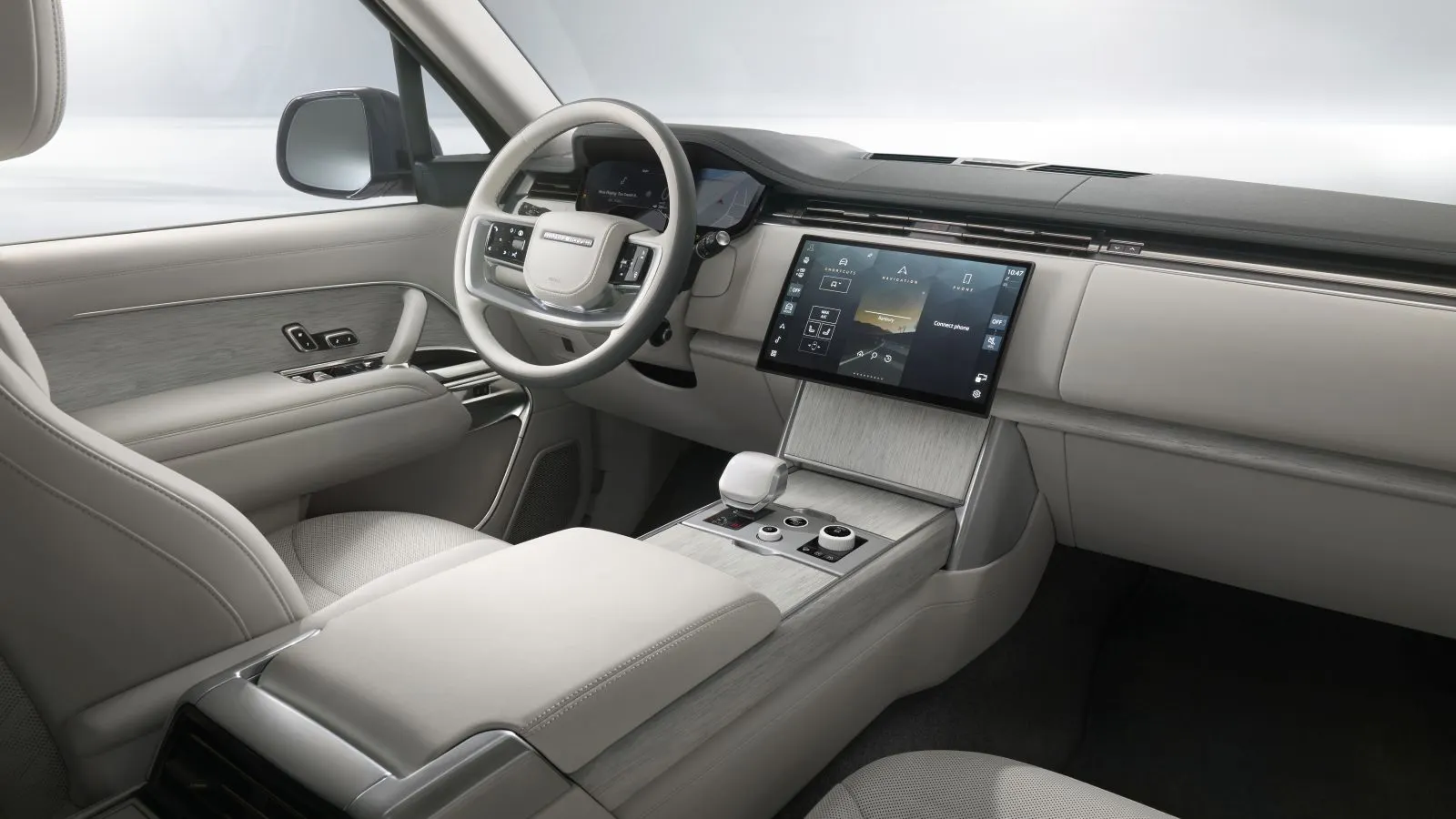


Land Rover is pinning the identity of its most expensive Range Rover ever on something you hear and feel rather than something you see under the hood. The new Range Rover SV Ultra, priced north of $270,000, debuts what the company calls a world-first electrostatic audio system. Twenty-one paper-thin transducers are woven into the seats, headliner, and floor pan, promising each occupant their own private concert hall.
The technology comes from Warwick Acoustics, a British firm that has been chasing audiophile-grade electrostatic sound for years but never landed it inside a production vehicle. Each speaker is a membrane just one millimeter thick, sandwiched between perforated metal plates. Land Rover claims they respond up to 1,000 times faster than conventional coil speakers, draw 90% less power, and weigh 90% less.
They also contain no rare earth elements and are made from fully recyclable materials. Five traditional bass loudspeakers fill in the low end, because physics still demands cone-driven thump for deep frequencies. The electrostatics handle everything else.
Then there’s the tactile layer. The SV Ultra borrows the Body and Soul Seat system from the Range Rover Black SV, using software to analyze whatever media is playing in real time and translate it into physical pulsations through the seat cushions. Four transducers beneath the floor mats in each footwell add what Land Rover calls a “Sensory Floor.”
The entire cabin becomes the speaker — a design philosophy that trades visible hardware for invisible immersion. It’s a fascinating gamble at this price point. Buyers spending Bentley money on a Range Rover have historically done so for presence, capability, and interior opulence measured in leather hides and wood veneers.
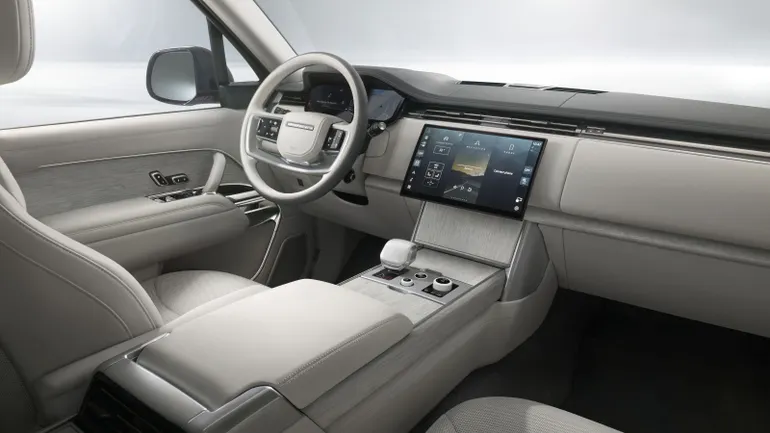
Land Rover is now asking them to value something far more subjective: how a cabin sounds and feels when a track plays. That’s a harder thing to photograph for Instagram and a harder thing to sell on a showroom floor.
The interior does offer the expected visual theater. Duo-tone leather-free Ultrafabrics in Orchid White and Cinder Grey replace animal hides, with laser-crafted seat patterns and rattan palm veneer trim. Outside, a Titan Silver paint embedded with fine aluminum flake is designed to mimic liquid metal.
Under the skin, there’s nothing revolutionary. Buyers choose between the P550e plug-in hybrid or the P615 twin-turbocharged 4.4-liter V8. A fully electric version is expected later this year, which will presumably become the purest expression of the audio system — no engine noise to compete with those gossamer-thin membranes.
The luxury car arms race has shifted terrain. Rolls-Royce sells starlight headliners. Mercedes sells fragrance systems. Bentley sells rotating dashboard displays. Land Rover is now selling sound itself as the differentiator — not louder, not bassier, but supposedly purer and more physically enveloping than anything else on four wheels.
Whether a quarter-million-dollar bet on electrostatic membranes and vibrating floor mats resonates with ultra-luxury buyers will say a lot about where this segment is headed. The old playbook was simple: more leather, more wood, more power. The new one apparently involves convincing very wealthy people to close their eyes and listen.




Share this Story