
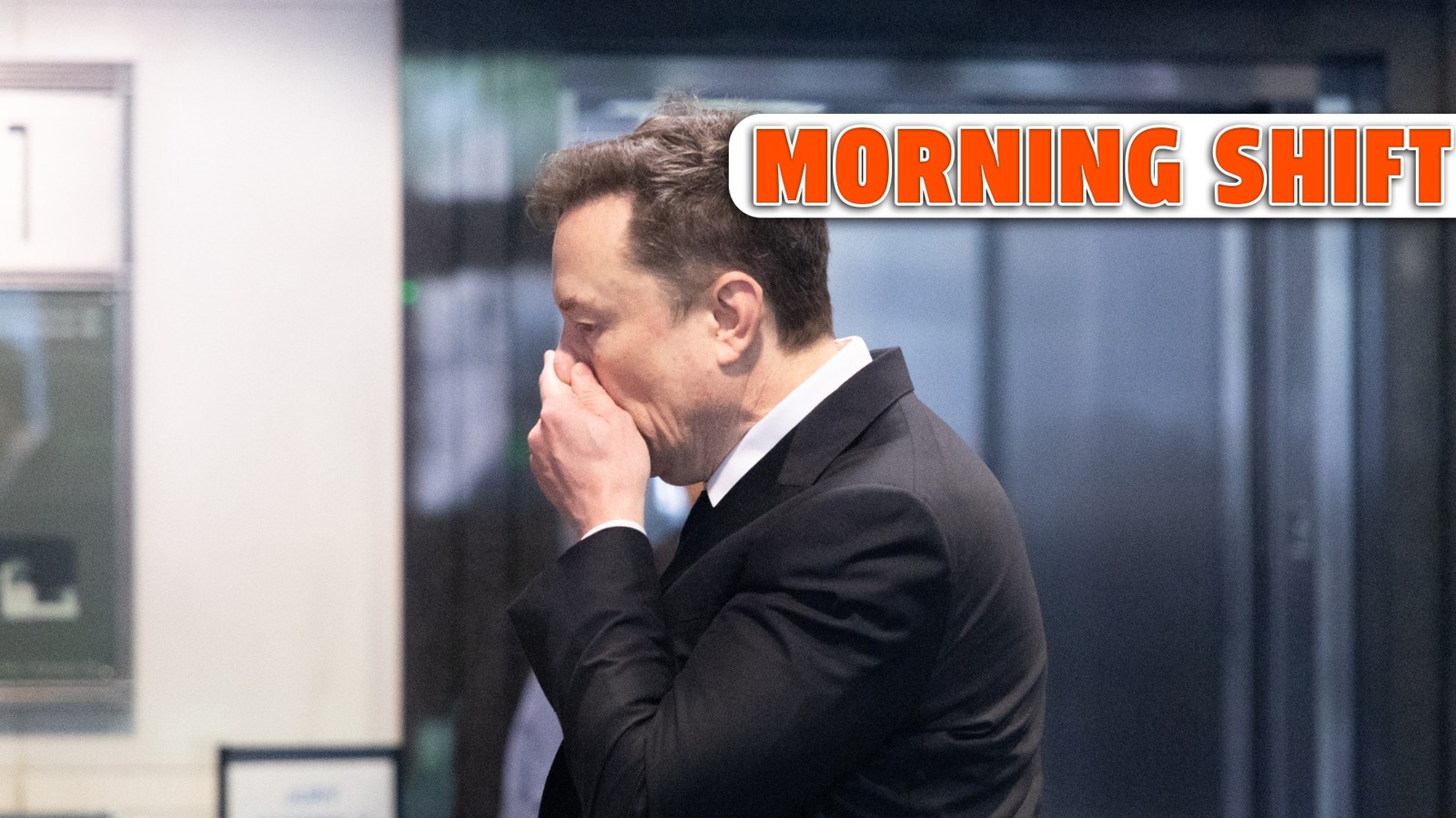


Tesla’s latest regulatory filing pegs Elon Musk’s 2025 compensation at $158 billion. The actual amount he took home? Nothing.
That jarring gap between the headline number and reality tells you everything about where Tesla stands right now — a company whose ambitions routinely outrun its execution.
The $158 billion figure, disclosed late Thursday, represents the maximum grant date fair value of the $1 trillion stock award shareholders approved about six months ago. It assumes every performance condition gets met. None of them were.
Tesla didn’t hit a single market value or operational milestone baked into the package, so Musk’s total realized compensation was zero. He hasn’t drawn a salary from the company in years.
Roughly $132 billion of the total came from that mega-grant’s theoretical ceiling. Another $26 billion traces to an interim award Tesla’s board approved last August, which Musk forfeited in April after his 2018 compensation package was reinstated. On paper, it’s the largest executive pay figure ever reported. In practice, it’s vapor.
Tesla itself acknowledged the absurdity, noting a “significant disconnect” between what it reports as Musk’s total compensation and “the value actually realized.” You don’t often see a company pre-debunk its own filing.
None of this makes Musk poor. Forbes still pegs his net worth at $788.7 billion, down from a peak of $839 billion but up from $195 billion just two years ago. The man is fine.
But the zero payout lands at a moment when Tesla’s core business is under real pressure. Competition from Chinese EV makers has intensified. The product lineup feels stale. And Musk’s attention has been scattered across SpaceX, his government efficiency crusade, and whatever else catches his eye on any given Tuesday.
Meanwhile, the broader auto industry is grinding through a brutal stretch that makes Musk’s phantom payday look almost quaint by comparison.
President Trump announced plans to hike tariffs on European-built cars and trucks from 15% to 25%, claiming the EU hasn’t complied with last summer’s trade deal. Brussels rejected that characterization immediately. The tariff escalation is tangled up in a wider geopolitical mess involving the war in Iran, the Strait of Hormuz, and Trump’s threats to pull U.S. troops from Germany, Italy, and Spain.
Automakers are exhausted. Bentley and Porsche have already raised prices to absorb tariff costs. Others will follow. The consumer, as always, ends up holding the bag.
At Volkswagen, the mood isn’t much brighter. CFO Arno Antlitz told investors that EV profit margins won’t match combustion-engine vehicles until the next-generation SSP platform arrives near the end of the decade. The current MEB Plus architecture gets 70 to 80 percent of the way there. VW also faces annual EU emissions penalties between $468 million and $586 million through 2027 because its current lineup can’t meet CO2 targets.
And Ford? The Dearborn automaker just dropped its 34th recall of 2026, covering 180,000 Broncos and Rangers with insufficiently tightened front seat bolts. Its nearest competitors — Stellantis and Toyota — have 12 recalls each this year. Ford is already closing in on 9.8 million vehicles recalled in 2026, and it’s only early May.
Gas prices aren’t helping anyone’s mood either. The national average hit $4.56 per gallon, another 2026 record, with WTI crude hovering around $102 and Brent at $110. The all-time high of $5.02, set in June 2022, is now just 56 cents away.
Against that backdrop, a $158 billion compensation number that amounts to exactly zero feels almost poetic. Tesla promised the moon. Musk didn’t deliver. The filing says so in black and white. The only question is whether anyone on Wall Street is still reading the fine print.


Share this Story