
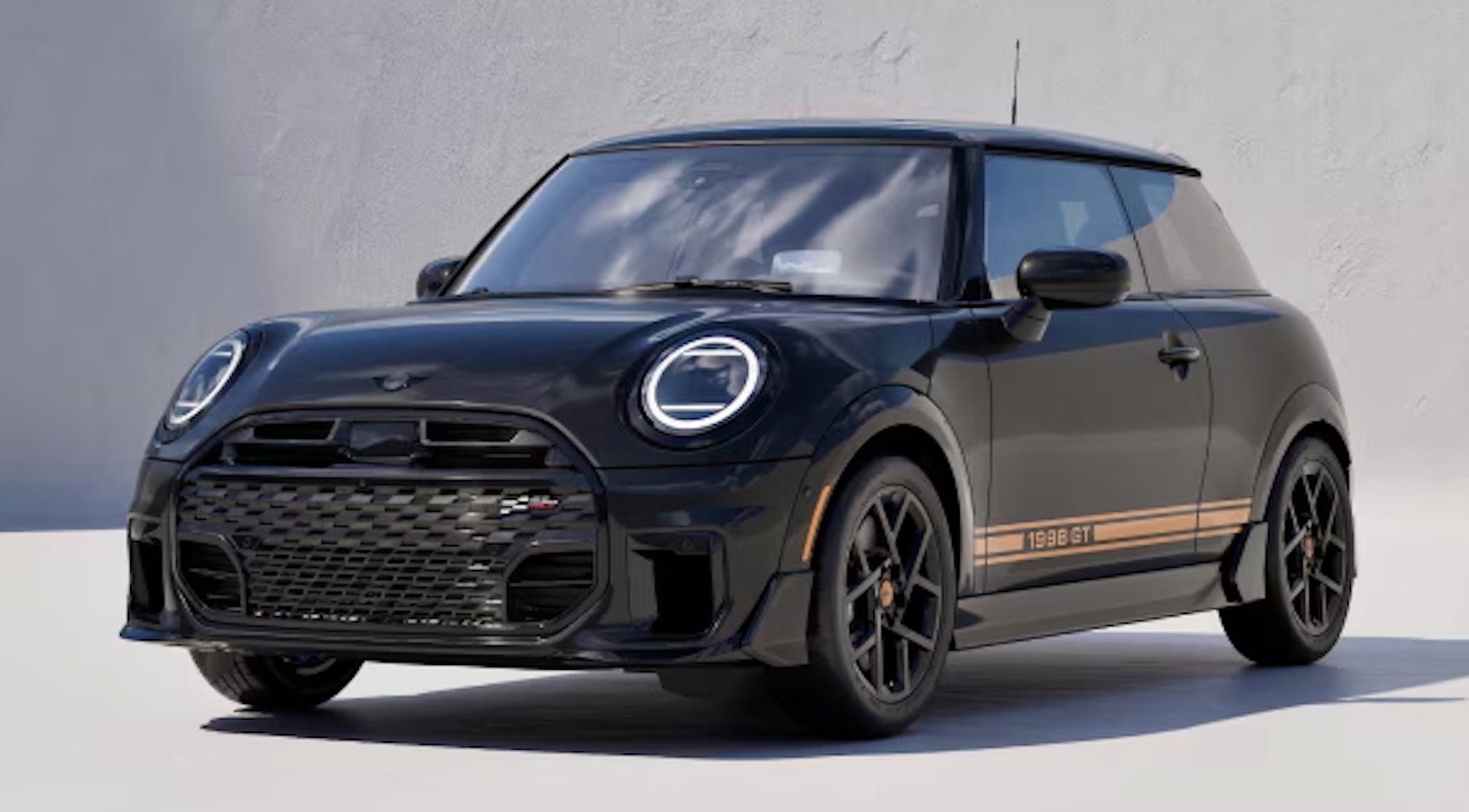


Mini just revealed the 1998 GT, the latest in its “Icon drop” series of limited-edition cars, and on paper it sounds like exactly the kind of enthusiast-focused trim that earns a cult following. Borrow the brakes and suspension from the hotter John Cooper Works model, drop them onto the base Cooper, keep the price under $40,000. Simple, except the math doesn’t quite work.
The 1998 GT rides on the JCW’s chassis hardware but retains the Cooper’s 161-hp 2.0-liter turbocharged four-cylinder. Mini is pitching it as a handling-first car, one that corners like the range-topper without the full-bore power delivery. The sticker comes in at $38,225.
That figure sits in an awkward no-man’s land. The Cooper S, which makes 201 horsepower, starts below $35,000. The actual JCW, with 228 horses and the same suspension and brakes the GT borrows, opens at $40,075.
So for roughly $2,000 less than the JCW, buyers get the same chassis but 67 fewer horsepower. For $3,000 more than the Cooper S, they get better suspension but 40 fewer horsepower.
Mini is banking on the idea that a subset of buyers wants agility over outright speed and will pay a premium for it. That’s a real philosophy with real roots in the brand’s history. The original Mini became a motorsport legend not because it was fast in a straight line but because it could embarrass bigger cars through corners.
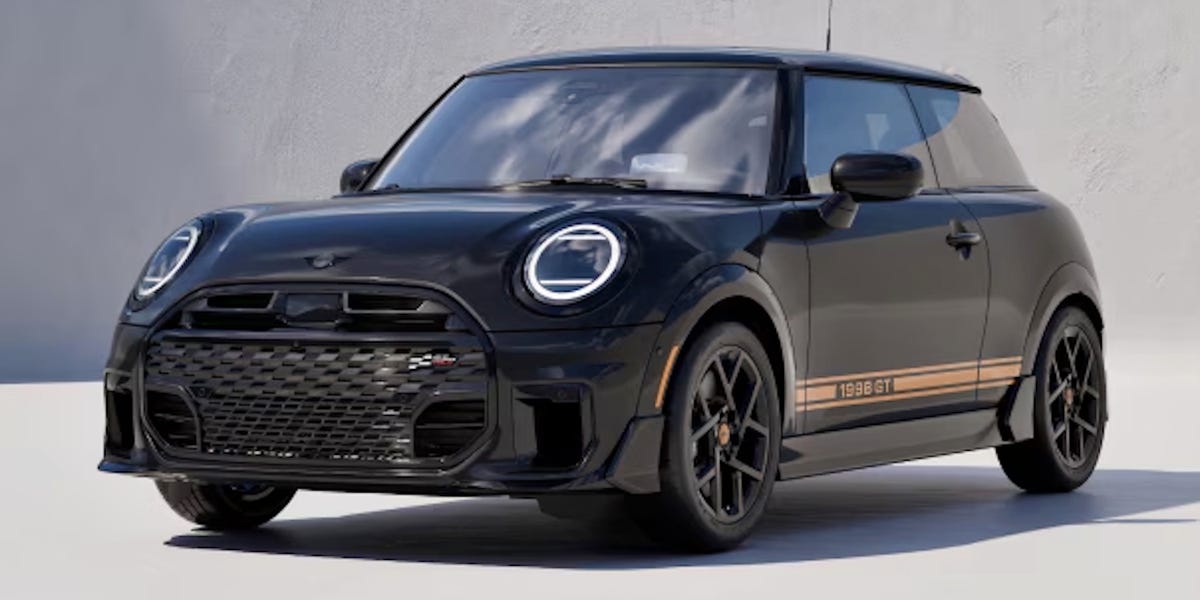
The 1998 GT leans on that legacy hard, right down to the name referencing the year BMW relaunched the brand. The problem is that legacy pricing only works when the alternative doesn’t exist in the same showroom.
A Cooper S buyer who wants the JCW suspension can probably close that gap with aftermarket parts for less than the $3,000 premium Mini is charging, and still have 40 more horsepower to play with. A buyer stretching to $38,000 might look at the JCW’s $40,075 sticker and figure the extra $1,850 buys a lot more car.
Mini says reservations are open now. Two more Icon drop models are planned, with the next one due in October. The company hasn’t said what those will be, but the pattern suggests more mix-and-match combinations pulling hardware from different trim levels into limited packages.
Special editions have always been part of Mini’s playbook. The brand thrives on exclusivity, personalization, and the sense that your car is a little different from every other one on the road. That works brilliantly when the special edition offers something you genuinely cannot get any other way.
The 1998 GT’s pitch is narrower than that. It offers a specific combination of parts that Mini doesn’t sell as a regular configuration, but every individual component exists elsewhere in the lineup at a lower price. The car isn’t filling a gap so much as creating a new one and asking buyers to stand in it.
Whether enough enthusiasts see the value in a base-engine car with a top-shelf chassis will say a lot about where Mini thinks its customers’ priorities actually lie. October’s next Icon drop should tell us whether that confidence is growing or whether Mini is already hedging its bets.
Share this Story