
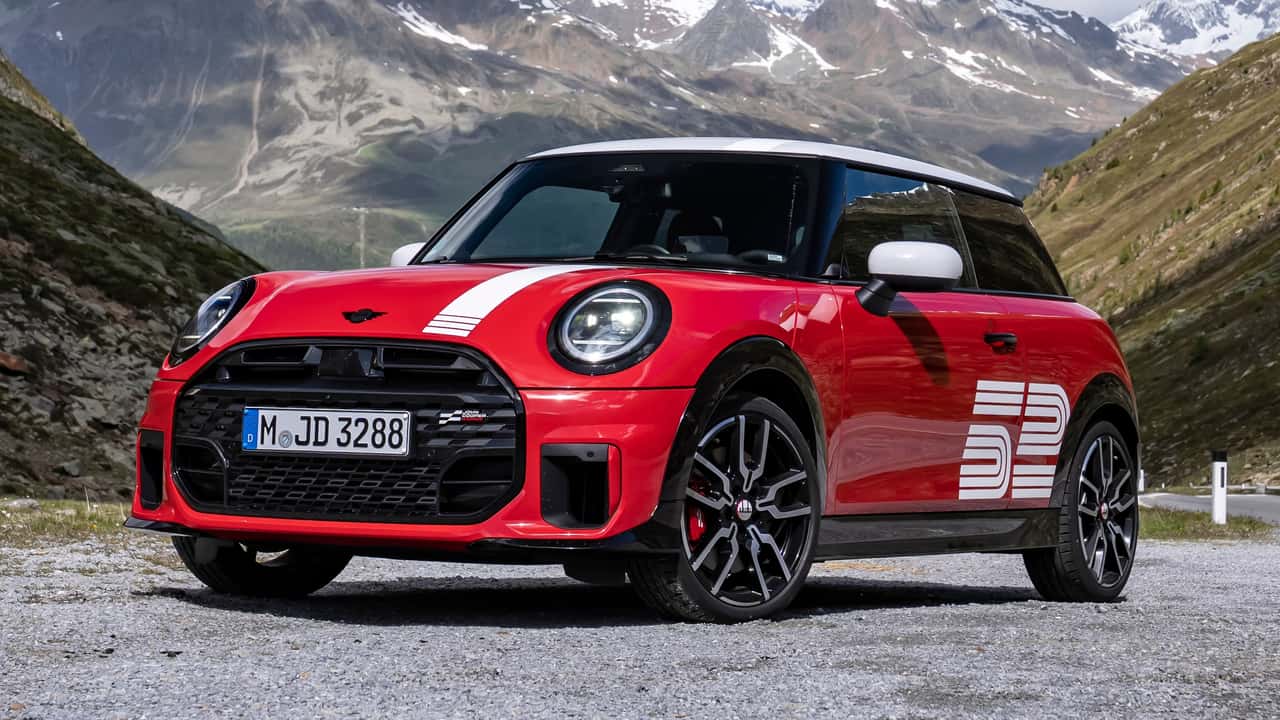


Sixty years after Timo Mäkinen and co-driver Paul Easter wrestled a tiny Cooper S through the snow-covered stages above Monaco, Mini wants you to buy the memory. The 1965 Victory Edition, arriving in showrooms from March 2026, wraps a modern Mini in Chili Red paint, a Glazed White roof stripe, and the number 52 that Mäkinen carried to victory. It looks the part. It does not drive the part.
Three drivetrains anchor the global lineup. The Cooper S brings a 2.0-liter TwinPower Turbo four-cylinder making about 204 hp. The John Cooper Works bumps that to roughly 231 hp. The John Cooper Works Electric tops out at 258 hp with zero tailpipe emissions, which would have baffled Mäkinen considerably.
None of the three gets a single piece of rally-derived hardware. No revised suspension tuning, no limited-slip differential, no shorter final drive, no underbody protection. The chassis underneath the nostalgic livery is identical to the standard Mini sitting next to it on the dealer lot.
In the United States, the edition is restricted to the John Cooper Works 3 Door hatchback, priced from $46,220. That sits above the standard JCW two-door, so American buyers pay a premium specifically for the visual package and heritage branding. Canada gets an even tighter allocation: just 45 units nationwide, all JCW 3 Door cars directly tied to the original AJB 44B registration plate from the rally winner.
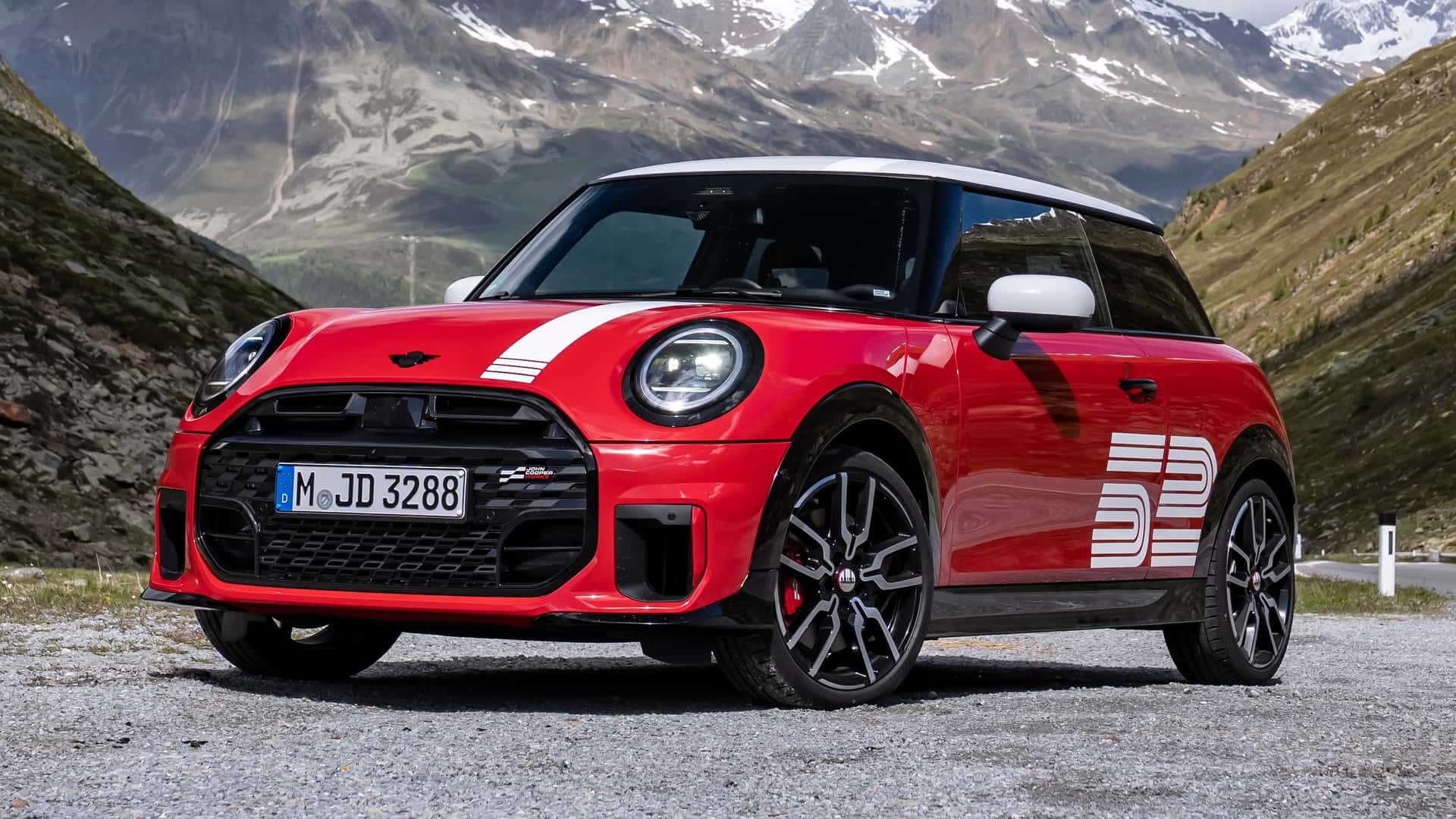
The cosmetic details are thorough, to Mini’s credit. Exterior badges reference AJB 44B, a 1965 script sits on the C-pillar, and edition-specific hub caps, valve caps, and 18-inch wheels separate it from the catalog Cooper S or JCW. Inside, 1965 lettering on the entry sills and a dedication plaque on the driver’s door complete the tribute. It is a trim-and-badge exercise, executed with care.
Mini has done this dance before. The brand understands that its heritage is arguably its most valuable asset, more bankable than any single powertrain or platform advancement. The Monte Carlo wins of the 1960s remain the foundational myth of the entire brand, the David-beats-Goliath story that turned a cheap city car into a cultural icon.
But there is a tension Mini never quite resolves with packages like this. The original Cooper S won Monte Carlo because it was a genuine performance weapon, low, light, and ruthlessly effective on tight mountain roads where bigger cars could not follow. The 1965 Victory Edition borrows the skin of that car and none of its intent. It is a commemorative plate you can drive.
For collectors chasing future value, the Canadian 45-unit cap might matter. Scarcity tends to hold residual value, especially when the cosmetics are distinctive enough to spot across a parking lot. Chili Red with a white roof and race numbers will not blend in.
For anyone hoping Mini might channel its rally DNA into something with mechanical teeth, the search continues. Rumors of a rear-wheel-drive Cooper revival suggest the brand is at least thinking about chassis engagement again. But this car is not that car.
Mini plans a staggered global rollout through 2026, with European, North American, and Asian markets each setting their own launch timing and local pricing. The company has not disclosed total production numbers outside the Canadian allocation, leaving open the question of just how “limited” this edition will actually be.
Sixty years is a long time to trade on one rally win. Mini keeps finding buyers willing to pay for the story.
Share this Story