
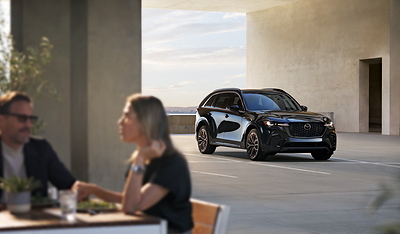


Mazda sold 34,735 vehicles in August, down 8.9 percent from the same month a year ago. The topline number tells one story. The model-by-model breakdown tells a much stranger one.
The Mazda3 sedan posted its best August ever, with 3,452 units representing a 113.9 percent jump over last year. The Mazda3 hatchback climbed 40.3 percent. Combined Mazda3 sales nearly doubled, hitting 4,427 units.
The car segment as a whole rose 70 percent. In 2026, Mazda is selling sedans like it’s 2014.
And then there’s the crossover lineup, which accounts for the vast majority of volume and is bleeding out across nearly every nameplate.
The CX-90, Mazda’s flagship three-row, dropped 37.3 percent to just 4,265 units. The CX-70, its two-row sibling, fell 25 percent. The CX-5, still the brand’s bread-and-butter model despite aging out of its generation, slid 17.9 percent. Even the CX-30 dipped 4.7 percent.
Truck-category sales, Mazda’s term for its entire crossover portfolio, declined 16 percent for the month and 9.5 percent year to date.
Only the CX-50 showed any resilience, essentially flat at 9,694 units for the month but up 21.8 percent on the year. That model has quietly become Mazda’s top seller in 2026, with 86,204 units edging past the CX-5’s 84,417.
The bright spots Mazda chose to highlight in its release tell you where the company is trying to steer the narrative. A “best-ever August” for CX-70 MHEV sounds good until you notice the CX-70 total cratered by a quarter. The mild-hybrid variant did well relative to its own short history, but the broader CX-70 line did not.
Year-to-date, U.S. sales sit at 275,749, down 6 percent from last year’s pace. The daily selling rate paints a slightly less grim picture at negative 4.7 percent, since August 2026 had one fewer selling day. But the trajectory is clear enough.
Canada mirrored the U.S. decline, with August sales off 8.2 percent and year-to-date volume down 11.3 percent. Mexico was the outlier, posting a 17 percent August gain and running 4 percent ahead for the year at 70,115 units.
The Mazda3’s resurrection deserves a closer look. Year to date, the sedan and hatchback have combined for 28,782 sales, up nearly 35 percent. That’s still a fraction of CX-50 or CX-5 volume, but the growth rate is the kind of number that makes product planners reconsider their assumptions about compact cars being dead.
Whether this reflects genuine consumer demand shifting back toward sedans or aggressive incentive spending to clear inventory is something the sales report doesn’t reveal. Mazda killed the Mazda6 sedan. It kept the 3. Right now, the 3 is returning the favor.
The MX-5 Miata ticked up 10.1 percent to 925 units, a modest but steady pulse for a sports car that refuses to die quietly. Its roadster and retractable fastback variants split volume almost evenly.
Certified pre-owned sales of 7,164 units barely budged, down just 0.7 percent. That suggests used Mazda demand remains solid even as new-vehicle momentum fades on the crossover side.
Mazda’s 795 North American dealers are now navigating a split personality. The car lineup is punching above its weight. The crossover lineup, which was supposed to carry the brand upmarket, is giving back gains faster than it accumulated them.
The CX-90 alone has shed 11,233 units year to date compared to 2025. A brand built on driving joy is, for the moment, finding its joy in the wrong segment for its strategy.
Share this Story