
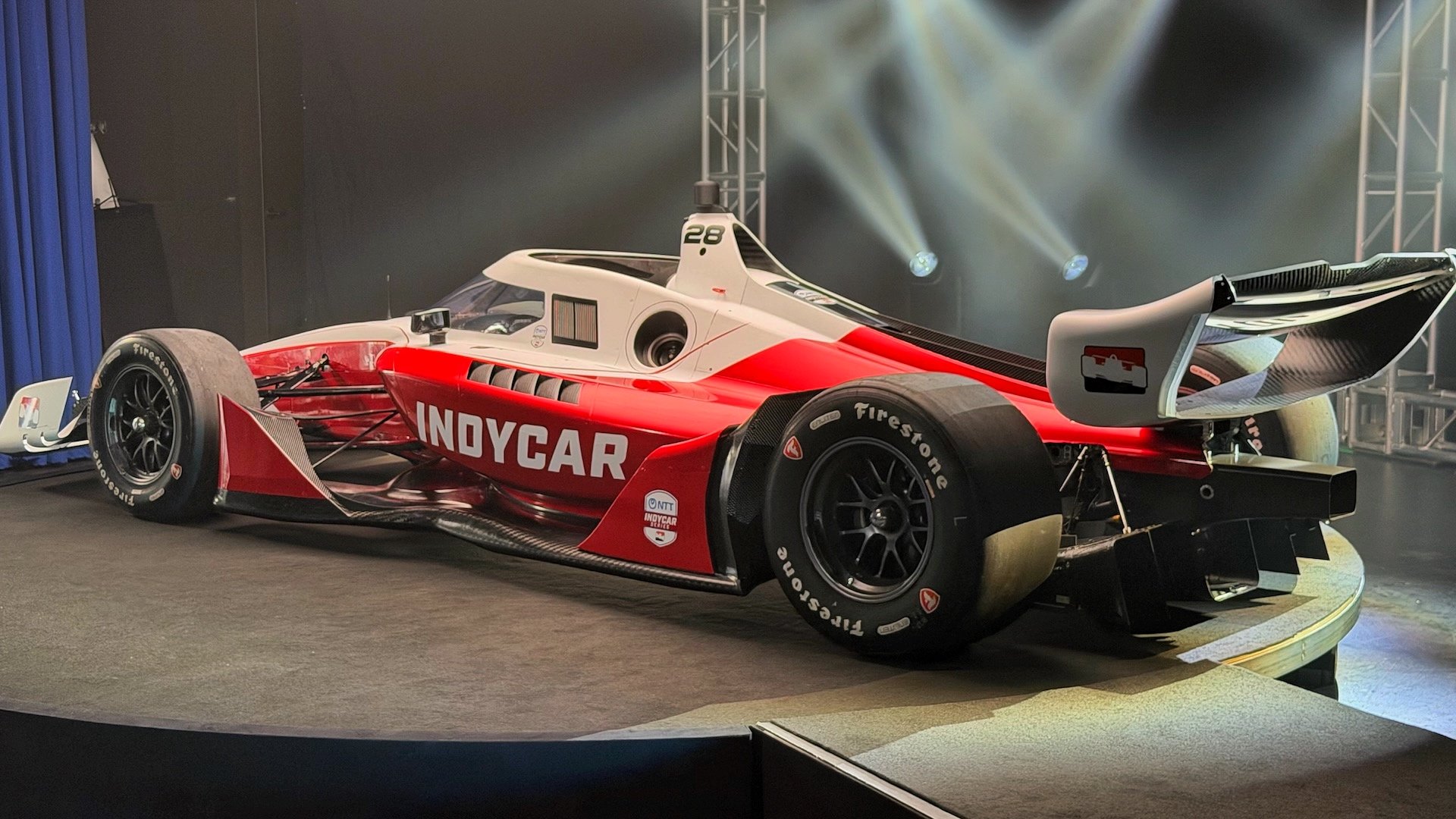


Two Alexes, Rossi and Palou, shook down IndyCar’s IR28 prototype last weekend on the Indianapolis Motor Speedway road course, and the series’ new race car already looks like it belongs to a different decade than the machine it replaces. The IR28 is lighter, safer, and designed from scratch to do something the aging IR18 never could: smash track records and convince a third engine manufacturer to join the party.
Mark Sibla, IndyCar’s senior vice president of competition and operations, put it plainly. “I think people also love challenging track records. Fans love seeing things like that and seeing historical moments, and that’s what that car is designed to do.
That ambition is not accidental. IndyCar has been riding a wave since Roger Penske purchased the series and the Indianapolis Motor Speedway in 2019, adding new races in Arlington, Texas, and Washington, D.C., signing a new TV network deal, and watching its driver roster grow into something approaching mainstream recognition. But the current car, an evolution of the Dallara DW12 platform that debuted in 2012, has been holding the series back in ways that go beyond aesthetics.
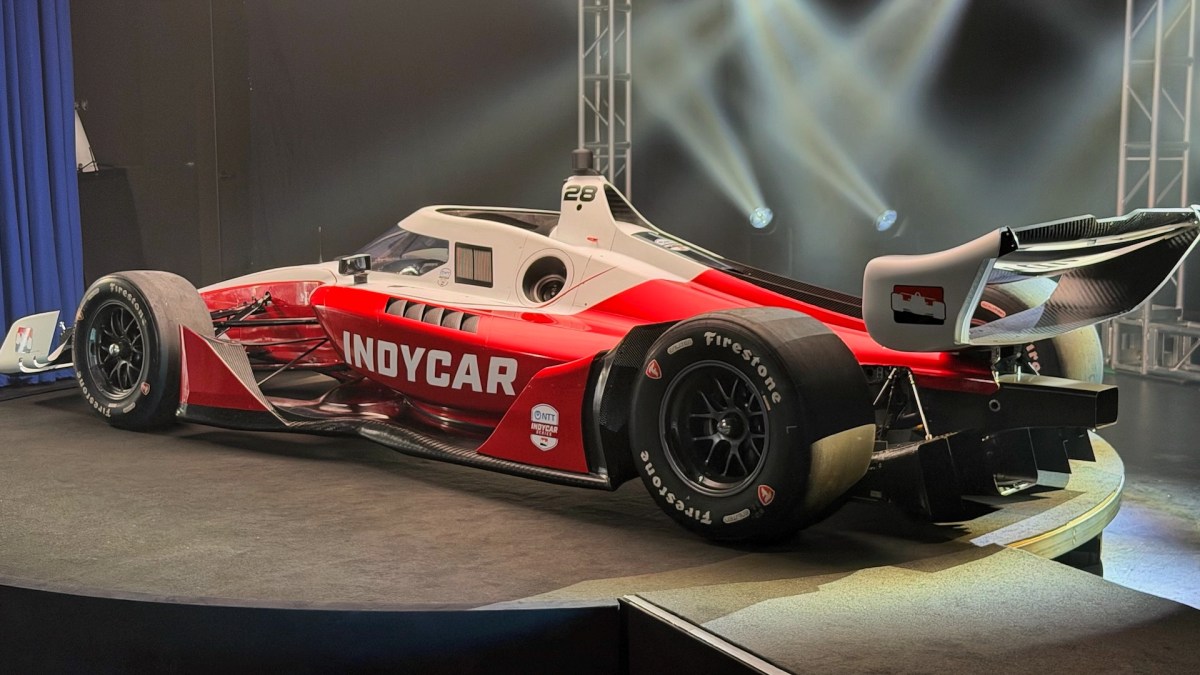
The IR28 is a full reset. Safety features that were bolted onto the DW12 as afterthoughts, things like underbody air ducts, anti-flip spines, and aerodynamic flaps, are now baked into the core design. The aeroscreen, which was retrofitted onto the IR18 in 2020, is fully integrated into the chassis for the first time.
The cockpit is larger, accommodating a wider range of driver body types, with better padding, improved cooling, and even a dedicated spot for a driver’s cool suit box. Built-in flashing lights in the rear wing and a digital number panel on the car’s flanks bring IndyCar closer to the visual polish fans expect from top-tier motorsport in 2028.
Sibla outlined a three-year development cycle. In year one, every team races the car as delivered. In subsequent seasons, IndyCar may “unlock” components for team customization, a deliberate strategy to keep the learning curve even and prevent the sport’s chronic haves-versus-have-nots problem from returning on day one.
The real chess move here is the engine reset. Honda and Chevrolet have recommitted to the series, and by most accounts, that partnership is the strongest it has ever been. But IndyCar has wanted a third manufacturer for years. A clean-sheet chassis with a new engine formula gives Toyota, Mercedes, or another OEM a natural entry point rather than asking them to play catch-up on a platform their rivals have spent a decade perfecting.
“This gives us a chance to go out and have some discussions with other engine manufacturers and see if we can get more folks participating,” Sibla said.
The weekend shakedown at IMS was strictly a systems check. The engine powering the prototype is not the specification that will race in 2028, so any lap times from the test are meaningless as performance indicators. IndyCar plans three more tests this year across a road course, a short oval, and a street circuit to evaluate the chassis in the full range of conditions it will face.
Up close, the IR28 reportedly looks far sharper than the digital renderings released days earlier suggested. That matters when you are trying to capture eyeballs on a new television deal and compete for cultural relevance against NASCAR’s next-gen stock cars and Formula 1’s global media machine.
IndyCar has spent half a decade building the scaffolding around its product. New races, new fans, new money. The IR28 is the first time the car itself has caught up with the ambition. Whether a third manufacturer actually signs on, whether records actually fall, those answers are still three years and several test sessions away.
Share this Story