
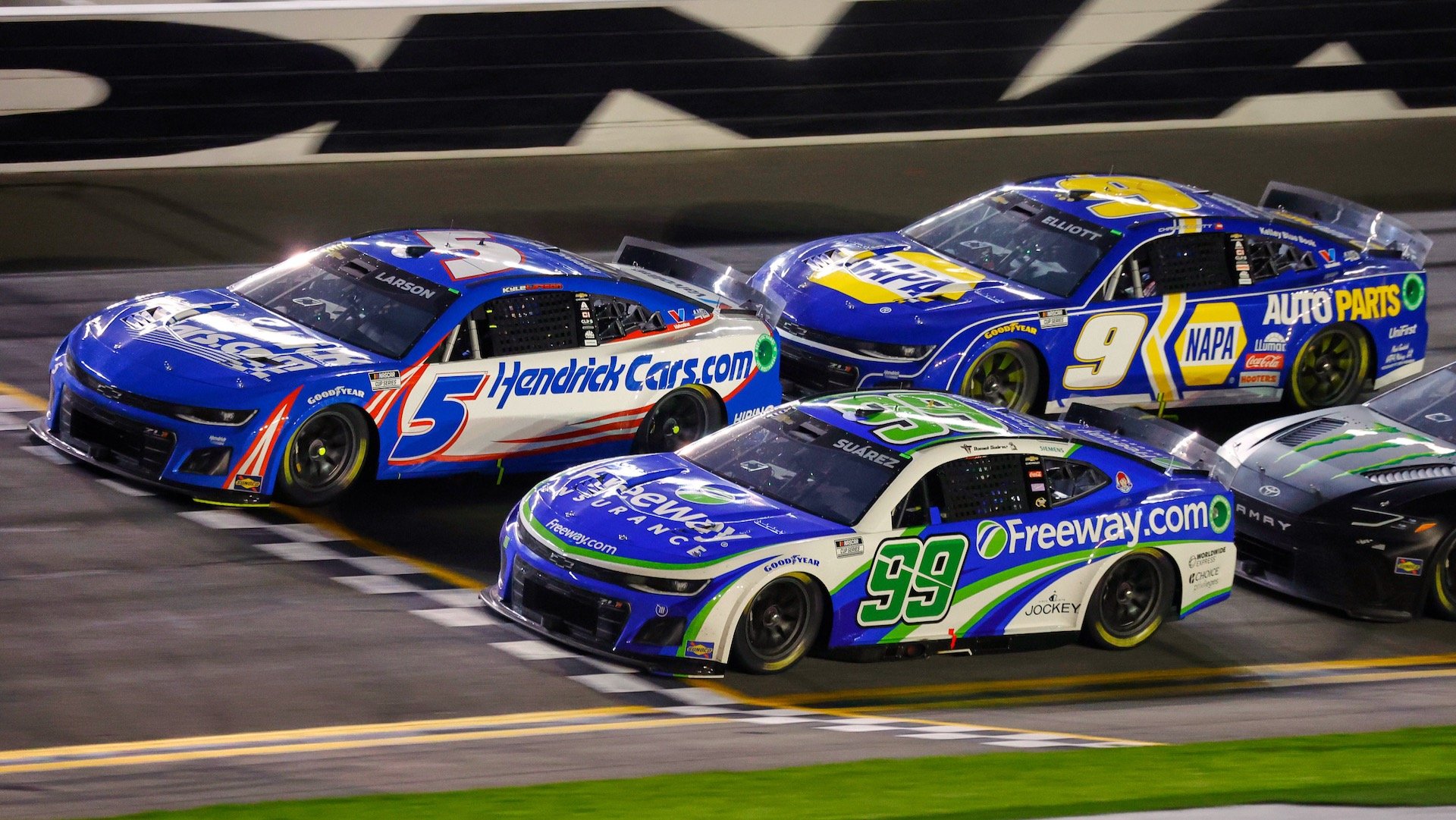


When the NASCAR Cup Series rolls into Daytona on August 29 for the Coke Zero Sugar 400, the cars will produce just 465 horsepower. That’s less than a bone-stock Mustang GT you can buy at your local Ford dealer. And it’s entirely on purpose.
NASCAR announced this week that it’s shaving 45 horsepower from the previous Superspeedway package while simultaneously chopping rear spoilers from 7 inches down to 4. The math is simple: less downforce means less drag, which means a single car can run up to 3 mph faster than it could before. The horsepower reduction keeps things from getting dangerously quick in the draft while giving lone wolves a real advantage over the pack.
The irony is rich. Ford’s Cup car wears Mustang Dark Horse livery, yet it’ll make 35 fewer horsepower than the naturally aspirated Dark Horse sitting in showrooms. The branding gap between stock car and street car has never been wider, and nobody at NASCAR seems particularly concerned about it.
They shouldn’t be. The problem they’re trying to fix is far more urgent than optics. Superspeedway racing at Daytona and Talladega has calcified into a fuel-strategy exercise where track position is won on pit road, not on the track.
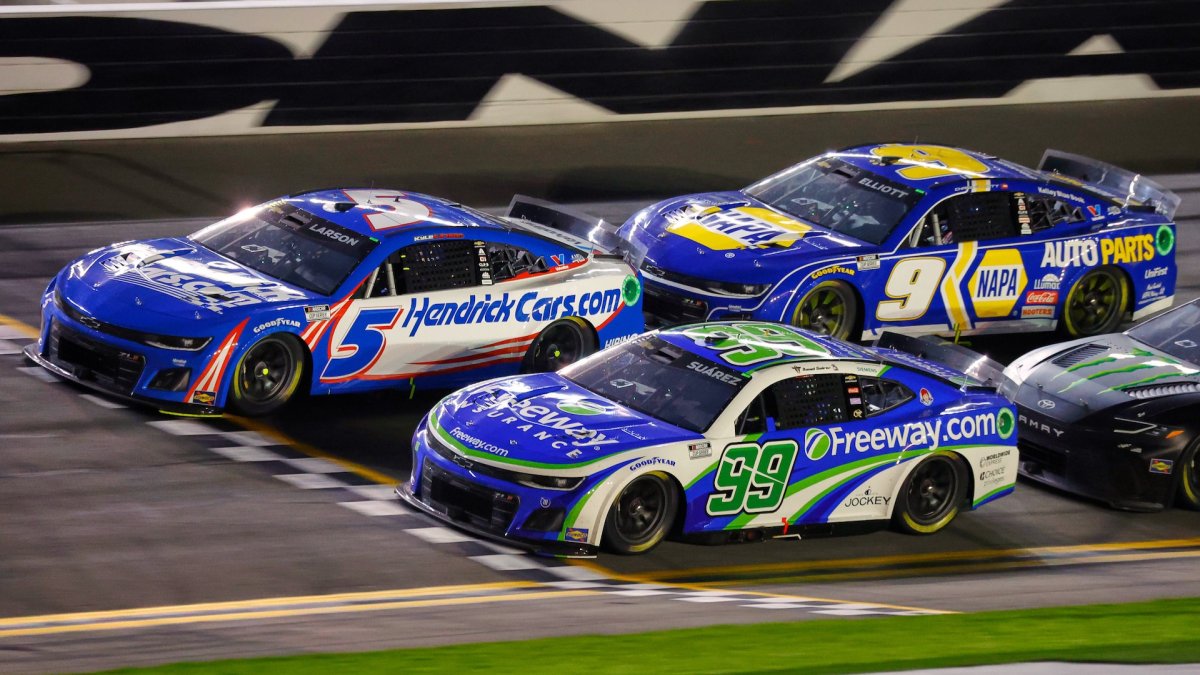
Cars are faster in packs than alone, so passing is nearly impossible without drafting help. Drivers ride around conserving fuel, waiting for the final pit window, hoping to cycle into the top four for one last shot.
Denny Hamlin, who helped develop these changes as part of a NASCAR working group, didn’t sugarcoat it. We basically know you have to be in the top four inside that last fuel window, unless there’s a big wreck, to have a shot at winning,” he said on NASCAR’s Inside the Race. “If you come out 10th, you are log-jammed; you’re not going anywhere.”
The shorter spoiler borrows from what’s already running at intermediate tracks like the reconfigured EchoPark Speedway, the tight oval formerly known as Atlanta Motor Speedway. Hamlin pointed to the aggressive racing there as the blueprint. The reduced aero dependency should let drivers break free when they get a run, while creating enough spacing for cars to slot back in after making a move.
Less apprehension, more boldness with 30 laps to go. That’s the theory.
Hamlin was candid about expectations, calling this “our first bite of the apple” and estimating the package delivers “roughly a 33% gain in the right direction.” That’s honest language from a driver who understands the difference between a simulation and 40 cars at 190 mph.
The timing adds pressure. This race closes the regular season, and a postseason visit to Talladega on October 25 means the revised package will get exactly one chance to perform under championship stakes. NASCAR revived the Chase branding this year and changed playoff qualification rules so that a single race win no longer guarantees a postseason spot.
Reducing horsepower to improve racing sounds counterintuitive until you remember that stock car racing was never really about horsepower. It was about competition, about cars swapping the lead and drivers making moves that mattered before the white flag. Somewhere along the way, aerodynamics turned Daytona into a parade with occasional explosions.
Four hundred sixty-five horsepower in a purpose-built race car is still plenty fast. Whether it’s enough to make the racing worth watching again is the only question that matters at Daytona this August.

Share this Story