
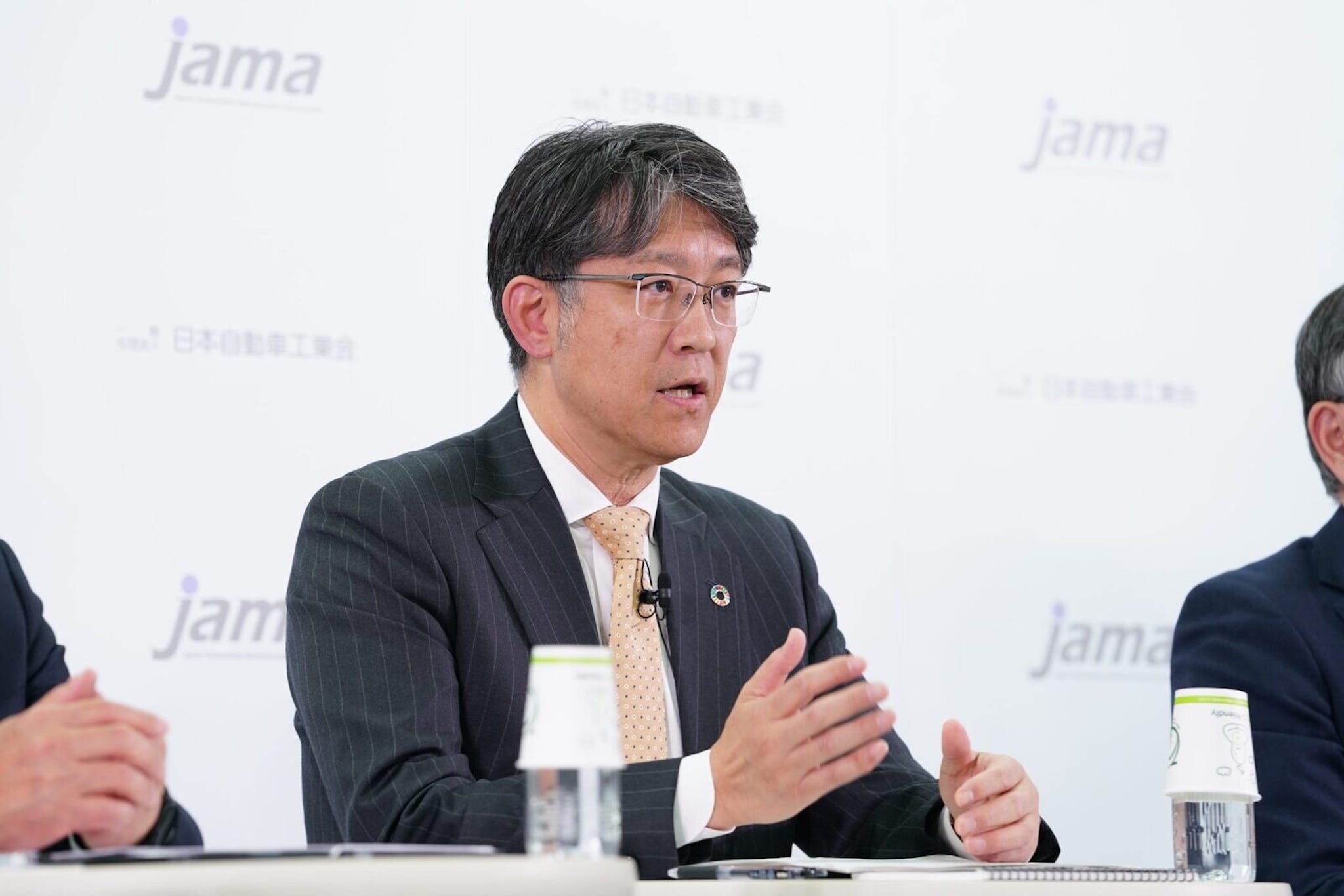


Koji Sato, Toyota’s vice chairman and head of the Japanese Automobile Manufacturers Association, is pushing rival automakers to stop competing on the small stuff and start sharing standardized parts. Wiring harnesses, cooling components, fasteners — the invisible guts of a car that no customer ever thinks about but that cost billions to develop and source independently.
The call, reported by Automotive News, is aimed squarely at companies like Nissan, Honda, Mazda, and Subaru. The subtext is impossible to miss: Chinese automakers, led by BYD, are developing vehicles faster and cheaper than Japan can, and the old model of every company reinventing every bolt isn’t going to cut it anymore.
Sato stepped back from Toyota’s CEO role earlier this year but clearly hasn’t stepped back from steering the industry. His dual role atop both Toyota and JAMA gives him unusual leverage, and he’s using it. When the chairman of an association representing every major Japanese automaker says “collaborate,” it carries the weight of a directive, not a suggestion.
This is not a new playbook. Japan ran it once before, and it worked spectacularly. In the 1950s and ’60s, government pressure consolidated a scattered mess of small manufacturers into the disciplined powerhouses that eventually humbled Detroit.
The country went from building laughable tin cans to producing the Datsun 240Z in about a decade. That transformation didn’t happen through free-market romanticism. It happened through coordination.
The threat today is different in scale but familiar in shape. China’s auto industry was a punchline not long ago. It isn’t anymore. BYD sold more than three million vehicles last year and is expanding aggressively into Southeast Asia, Europe, and Latin America — markets Japan has treated as home turf for decades.
Chinese manufacturers benefit from massive state support, vertically integrated supply chains, and a domestic battery ecosystem that no other country can match.
Sato isn’t asking Honda to abandon VTEC or Subaru to ditch its boxer engines. The proposal targets commodity-level components, the kind of parts where differentiation adds cost but zero customer value. Standardize the boring stuff, the thinking goes, and free up engineering budgets for the things that actually matter — software, electrification, performance.
It already happens to a degree. Mitsubishi supplies components to Subaru despite their legendary rally rivalry. Toyota’s corporate umbrella covers Daihatsu and formerly Hino.
But what Sato envisions is something more systematic, an industry-wide parts architecture that would function almost like an internal standard.
The risk is obvious. Homogeneity can breed complacency. Japanese cars already face criticism for playing it safe, and a parts-sharing mandate could accelerate that drift toward appliance-grade anonymity.
But the alternative is worse. Nissan is already gasping for air financially. Honda’s merger talks with Nissan collapsed earlier this year.
Mazda and Subaru are minnows in a pond filling up with sharks. Without structural cost reduction, some of these companies may not survive the decade independently.
There is a genuinely optimistic case buried in here. If Mazda doesn’t have to spend engineering hours on wiring looms, maybe it can pour everything into making the next Miata extraordinary. If Subaru can shed commodity development costs, perhaps the WRX STI finally gets greenlit again.
History supports this. Toyota absorbed Hino and built the Hilux. Nissan swallowed Prince and gave the world the Skyline GT-R.
Consolidation in Japan has historically produced better cars, not worse ones. Whether this generation of executives can repeat that trick against the most formidable competitor the global auto industry has ever faced is the only question that matters. Sato is betting that survival depends on cooperation. Given what’s coming out of Shenzhen and Hefei, he’s probably right.


Share this Story