
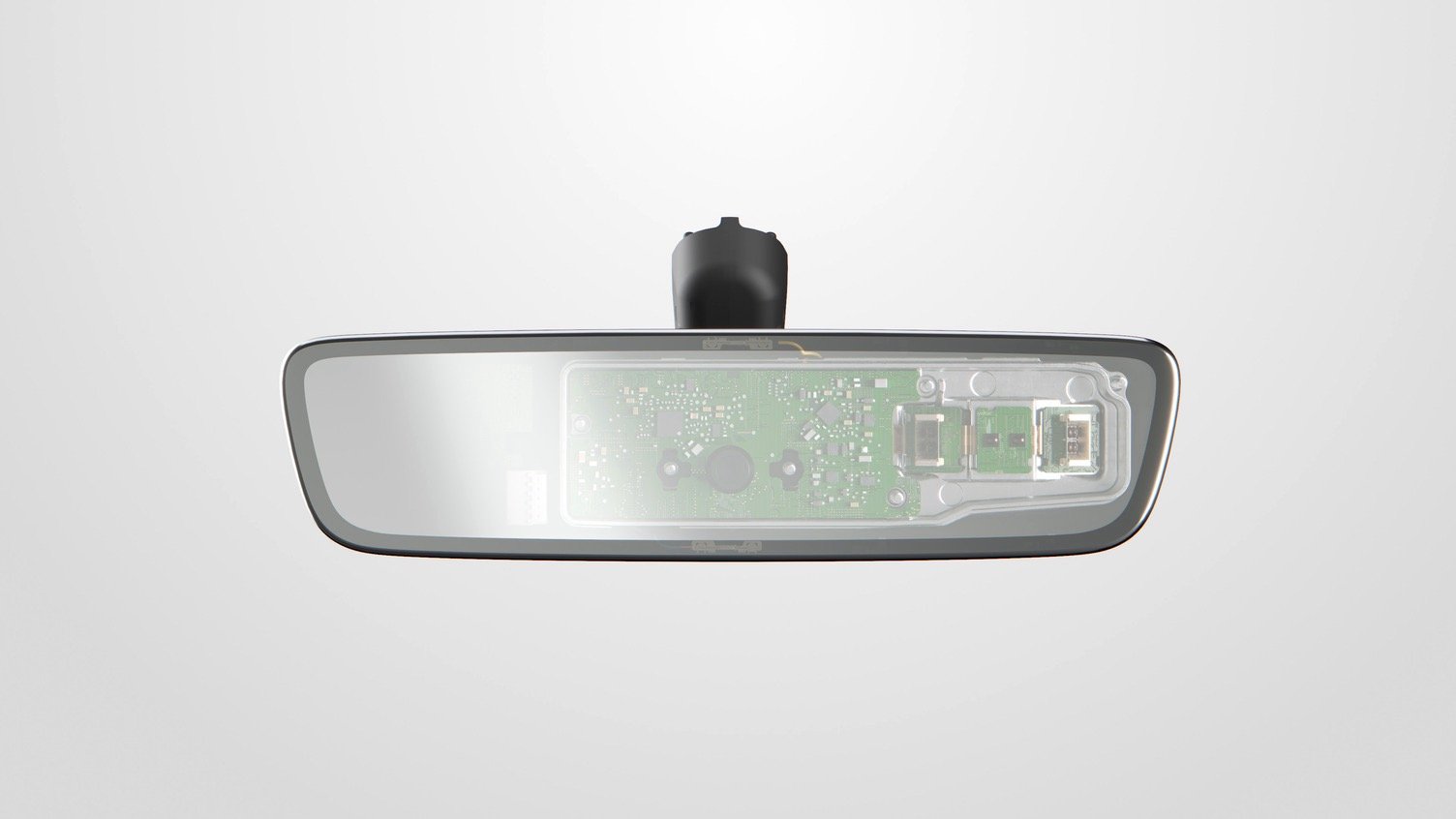


Magna, one of the largest automotive suppliers on the planet, wants to put a camera in your rearview mirror and keep it pointed squarely at your face. The company says its integrated RGB-infrared system can detect driver distraction faster than existing setups, and it is already producing the hardware.
The pitch is straightforward. Current driver-monitoring cameras sit on the instrument cluster or atop the steering column, where a driver’s hands or the wheel itself can block the view. A rearview mirror never has that problem.
You have to look at it, or at least near it, to drive. That means the camera can always see you.
Magna says the mirror-mounted package works across vehicle sizes and body types, from compact sedans to full-size SUVs, from tall drivers to short ones. Because everything lives inside the mirror housing, automakers don’t have to redesign their dashboards to accommodate it. One hardware set, many applications.
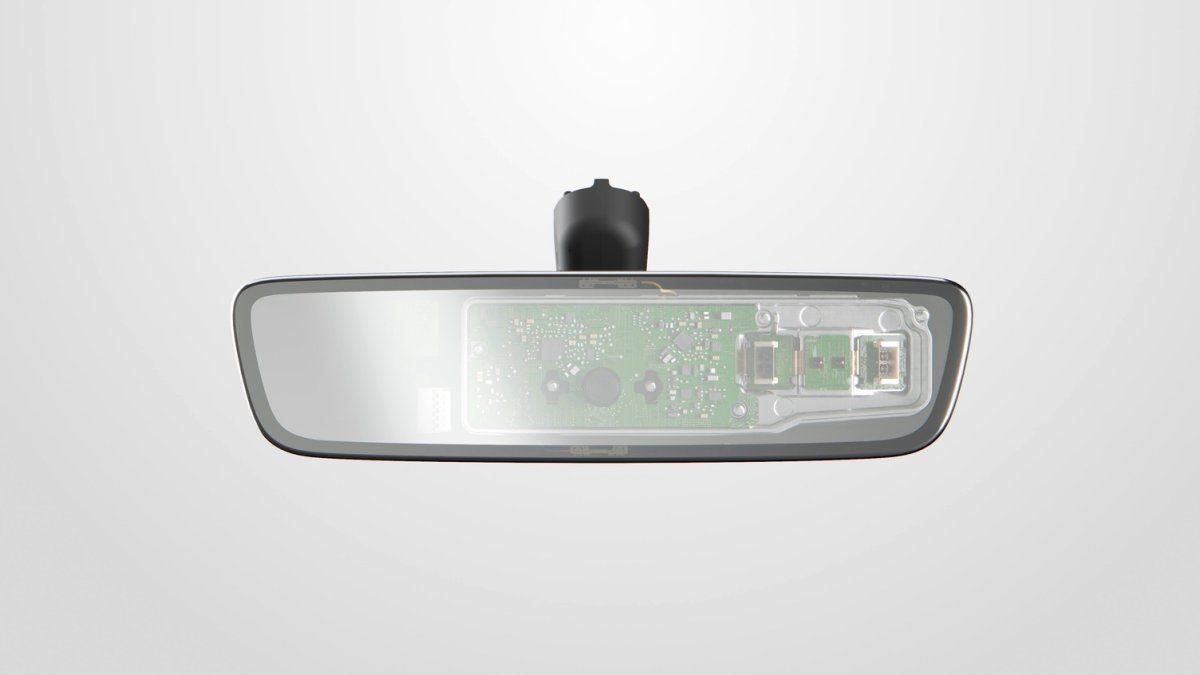
The same camera can pull double duty. Magna claims it supports occupancy detection, seatbelt monitoring, and what the company vaguely calls “additional interior sensing capabilities.” Rivian already offers a preview of what that means.
The R2’s mirror-mounted RGB camera handles driver monitoring for Rivian’s Universal Hands Free system and moonlights as a Pet Cam, letting owners check on animals left in the vehicle.
Magna started producing the system in 2024. Last October, it announced plans to launch the hardware on Chinese-market vehicles from a Germany-based automaker. Earlier this year, a supply agreement with an unnamed European brand followed, though Magna stayed quiet about which markets would be included.
The timing is not accidental. Regulatory pressure and insurance industry scrutiny of driver-assist technology are both intensifying. The Insurance Institute for Highway Safety has been pushing for stronger safeguards against driver inattention, particularly as automakers roll out increasingly capable hands-free systems that still require human oversight. The gap between what these systems can do and what drivers think they can do remains dangerously wide.
Steering-wheel torque sensors, the old-school alternative, measure whether your hands are on the wheel and applying force. They work fine for Level 2 systems that require constant hand contact. But the latest hands-free systems, by design, let drivers take their hands off the wheel entirely, making torque sensing irrelevant.
Cameras become the only reliable way to verify a driver is still paying attention when the car is doing most of the work.
There is a real tension in all of this. Automakers sell driver-assist features as cutting-edge convenience, then install monitoring cameras to make sure customers don’t actually treat them that way. The technology promises to take the burden off the driver while simultaneously demanding the driver stay fully engaged.
Magna is betting that automakers will accept the tradeoff because they have to. Every new hands-free system that reaches public roads without adequate monitoring is a liability waiting to happen. Regulators in Europe, China, and eventually the U.S. are moving toward mandating interior monitoring as a condition of deploying advanced driver assistance.
The mirror that once just showed you what was behind the car now has a new job. Whether drivers will welcome its unblinking attention is another question entirely, one that nobody in the supply chain seems eager to answer.

Share this Story