
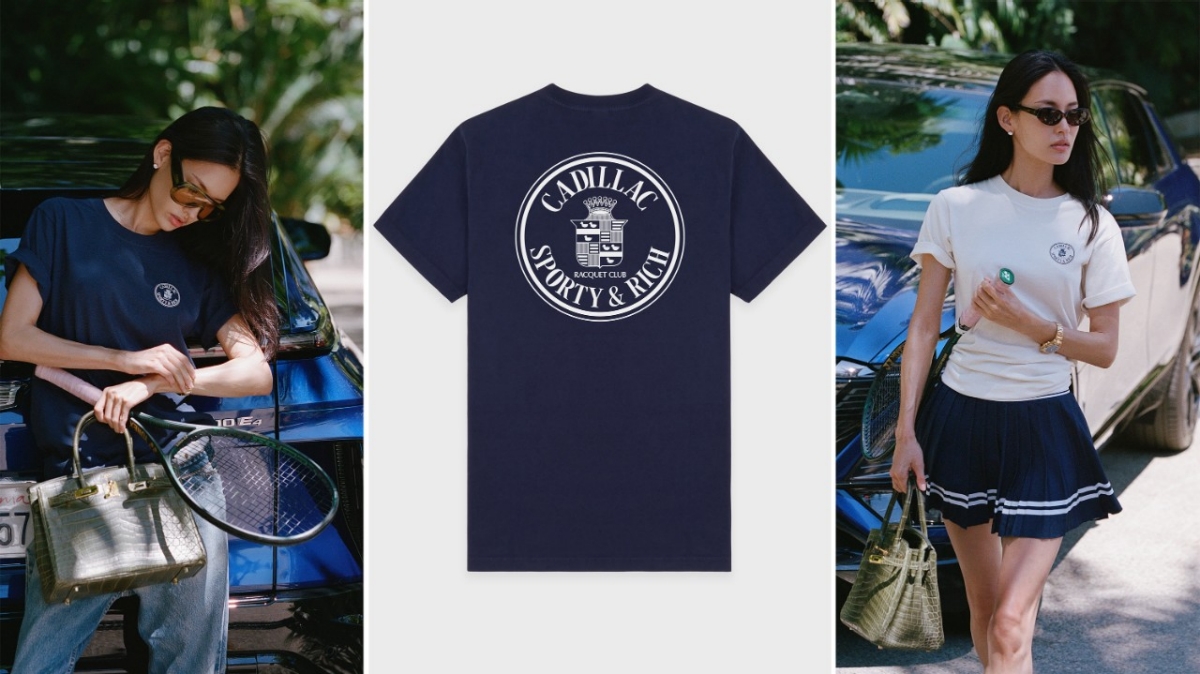


A $250 white hoodie with a Cadillac crest and tennis motifs. That is what General Motors wants you to buy during the 2026 US Open.
Cadillac and Los Angeles lifestyle brand Sporty & Rich have launched an eight-piece capsule collection called Cadillac Racquet Club. The line includes a navy hat for $70, tees at $80, gym shorts for $120, a crewneck at $200, and that hoodie at the top of the price list. Available now on both brands’ websites.
The collaboration taps Sporty & Rich founder Emily Oberg’s aesthetic, which started as an Instagram mood board in 2014 and grew into a full lifestyle label obsessed with vintage athletic leisure. Cadillac’s chief marketing officer David Mogensen called tennis “a natural expression of the Cadillac ethos: precise, confident and stylish.”
Precise and confident are interesting words for a brand that spent the last decade trying to convince buyers its electric sedans and SUVs could compete with BMW and Mercedes. The Lyriq has gained traction. The Celestiq is a halo car with a price tag north of $300,000.
But Cadillac’s U.S. market share remains a fraction of what it was in the brand’s heyday, and GM has struggled to make the nameplate resonate with buyers under 50. Enter the hoodie.
Luxury automakers chasing lifestyle credibility through fashion collaborations is not new. BMW has partnered with Kith. Lamborghini has done capsules with Supreme.
Porsche has an entire design studio pumping out branded merchandise that costs more than some used 944s. The playbook is borrowed from Ferrari, which generates billions in licensing and branded goods.
What makes the Cadillac move different is the gap between aspiration and reality. Ferrari sells hoodies because people already fantasize about the cars. Cadillac is selling hoodies because it needs people to start fantasizing about the cars again.
Sporty & Rich is a smart partner for that mission. Oberg’s brand trades in a very specific kind of nostalgia, the kind where old money meets wellness culture, where everything looks like a Ralph Lauren ad from 1988 filtered through a 25-year-old’s iPhone. It is cool in the way that only deliberate, curated restraint can be cool.
The collection itself is modest. Eight pieces, a navy-and-white palette, co-branded logos. Nothing loud.
The strategy here is proximity. Put the Cadillac name next to a brand that Gen Z and millennials already follow. Let it absorb some cultural warmth by association.
Mogensen described the line as “a new way to experience Cadillac, moving seamlessly from the court to everyday life.” That framing is revealing. Cadillac’s problem has never been the product in the showroom.
The Escalade still dominates its segment. The Lyriq reviews well. The problem is that outside of a certain tax bracket and a certain zip code, nobody under 40 thinks about Cadillac at all.
A crewneck sweatshirt will not fix that. But it signals where Cadillac’s marketing brain trust is focused: not on horsepower specs or EV range charts, but on vibes. On the idea that a car brand can mean something culturally before a customer ever sets foot in a dealership.
Whether a $70 hat creates a future Escalade buyer is a question nobody at GM can answer yet. The US Open timing gives the collection visibility. Tennis skews affluent and educated, exactly the demographic Cadillac has been chasing.
The real test is not whether the hoodies sell out. It is whether anyone wearing one ever walks into a Cadillac showroom.
Share this Story