
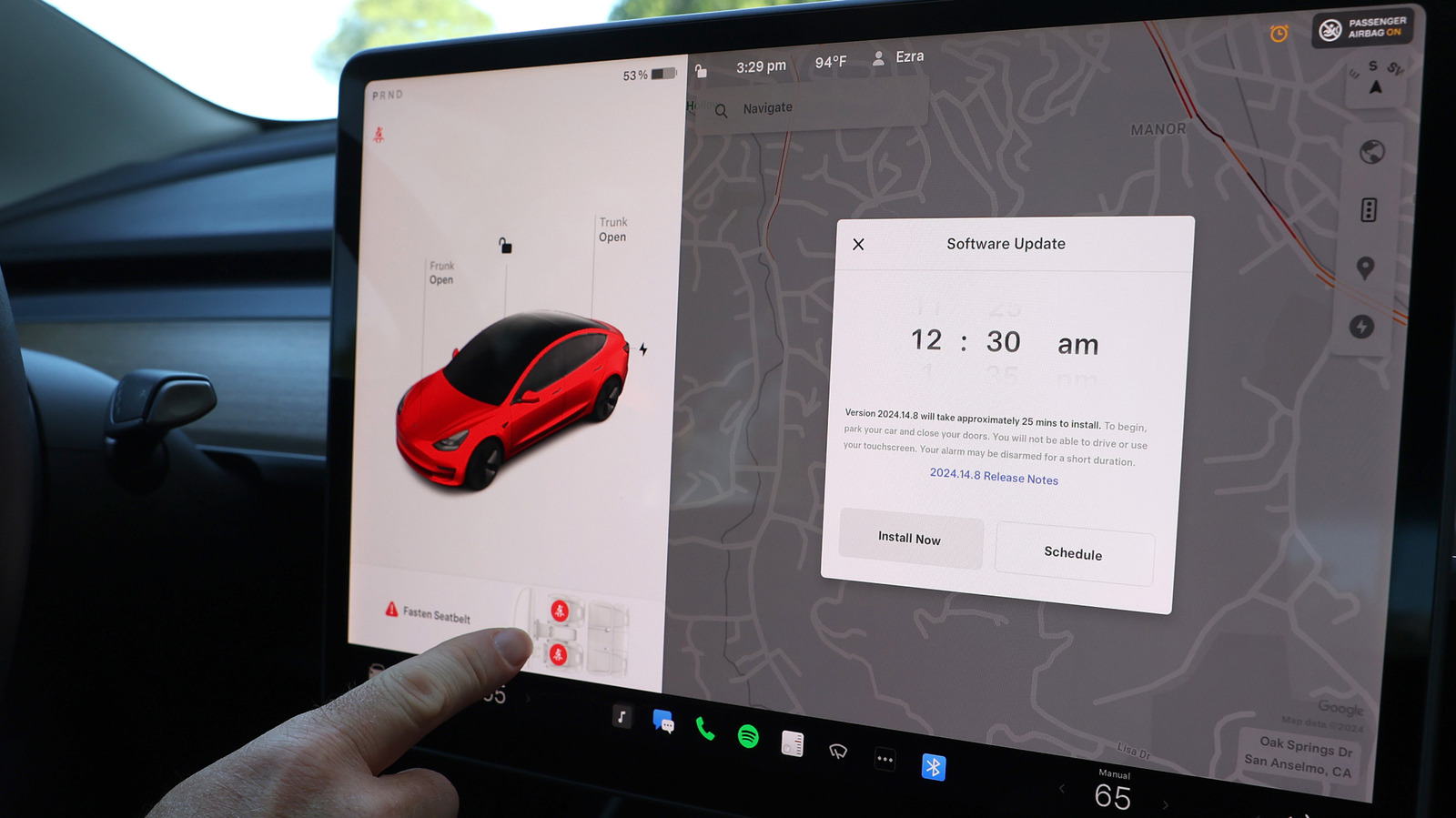


The average new car in America now costs north of $50,000. Owners are keeping them for 12.8 years, the longest stretch ever recorded. But the software baked into those cars may not last nearly that long, and nobody is guaranteeing it will.
This is the quiet crisis brewing beneath every glossy touchscreen and over-the-air update promise. Automakers have spent a decade pushing the software-defined vehicle concept, selling cars that behave more like rolling smartphones. Features get added, interfaces get refined, bugs get squashed, all without a trip to the dealer.
Sounds great until the manufacturer decides to stop pushing those updates. It’s not hypothetical. It’s already happening.
In 2024, Nissan killed key features on early Leaf models, including the ability to schedule charging through the app. Owners who had relied on timed charging to capture off-peak electricity rates lost that capability overnight. The reason was the U.K.’s 2G network shutdown, which those cars depended on for connectivity.
Two years earlier, AT&T’s 3G shutdown in the U.S. stranded millions of vehicles, cutting off SOS emergency response and other connected services across multiple brands.
Then there’s Tesla. Earlier this year, Elon Musk confirmed that vehicles built with Hardware 3 would never run unsupervised Full Self Driving, after previously assuring owners their cars could handle it. The consolation prize was an upgrade offer or a discounted trade-in, which is cold comfort for someone who bought a car based on that promise.
The pattern is clear. Cars are being sold with capabilities that depend entirely on continued manufacturer support, and no one is required to keep that support alive for any defined period. A $55,000 vehicle with a 15-year mechanical lifespan could lose core functionality in five.
The EU already mandates minimum software support windows for phones and tablets. No equivalent regulation exists for automobiles. The United Nations has two cybersecurity regulations touching on automotive software updates, but they govern how manufacturers manage updates, not how long they must keep providing them.
That distinction matters enormously. Used car values will inevitably start reflecting this reality. A three-year-old vehicle still receiving active software support is a fundamentally different product from one that’s been orphaned.
Dealers and buyers haven’t fully reckoned with this yet, but they will. Classic car enthusiasts face an even stranger future, preserving machines whose mechanical hearts run fine but whose digital brains have gone dark.
One potential remedy mirrors the Right to Repair movement. Regulations could force automakers to release software update tools to third parties, preventing manufacturers from flipping the switch when supporting an older model becomes inconvenient. The concept has traction in repair circles but hasn’t gained formal legislative momentum for vehicle software specifically.
For now, buyers have no contractual protection. No disclosure requirement tells them how long their car’s software will be maintained. The purchase agreement covers the physical vehicle, and the software riding along inside it exists in a kind of regulatory void.
Automakers keep adding screens, subscriptions, and connected features to justify rising prices. The question nobody at the dealership wants you to ask is simple: how long will all of this actually work?



Share this Story