
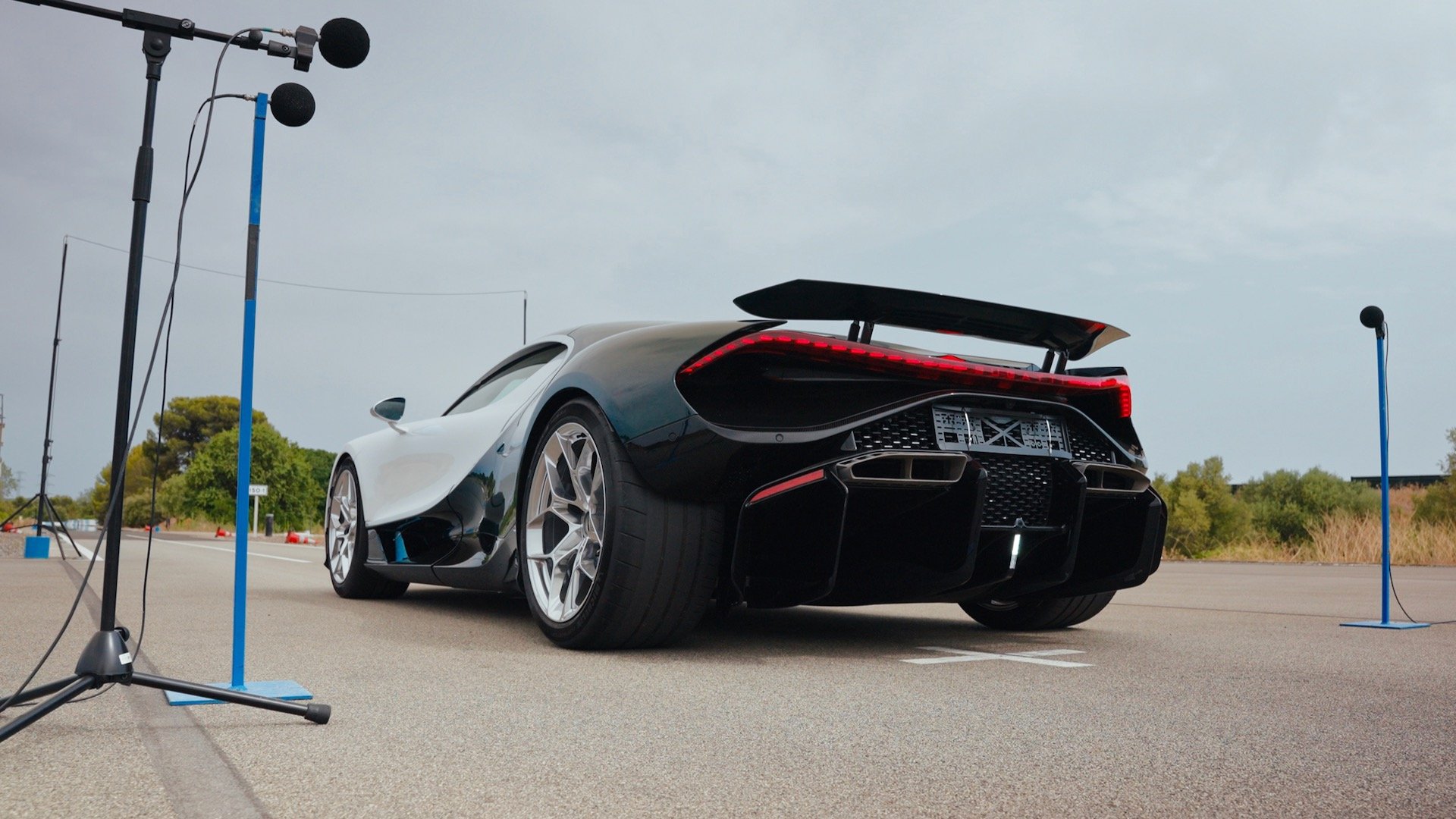


A naturally aspirated 8.3-liter V16 that screams to 9,000 rpm should sound fantastic without any help. Bugatti’s engineers apparently disagreed, pouring thousands of hours into sculpting the exhaust note of the Tourbillon before they were satisfied.
The engine itself, built by Cosworth with a cross-plane crankshaft, is paired with three electric motors for a combined 1,800 horsepower. Zero to 62 in two seconds. Top speed of 276 mph.
But the hybrid powertrain created a problem no previous Bugatti team had ever faced: making the car sound right whether the V16 is doing all the work, the electric motors are shouldering the load, or both are firing together.
Romain Volatier, Bugatti’s head of NVH and acoustics, described the target character as “dirty and raw.” Not the clean metallic wail of a Ferrari flat-plane V8 or the surgical precision of a modern turbocharged engine. The Tourbillon builds with a low rumble, something more visceral and less polished.
That’s a deliberate break from the outgoing W16 era. The Veyron and Chiron were products of Volkswagen Group thinking, engineered for everyday usability as much as outright speed. Refined. Muted. Corporate.
The Tourbillon is meant to be driven with the windows down, which tells you everything about where Bugatti’s priorities have shifted under Mate Rimac’s leadership.
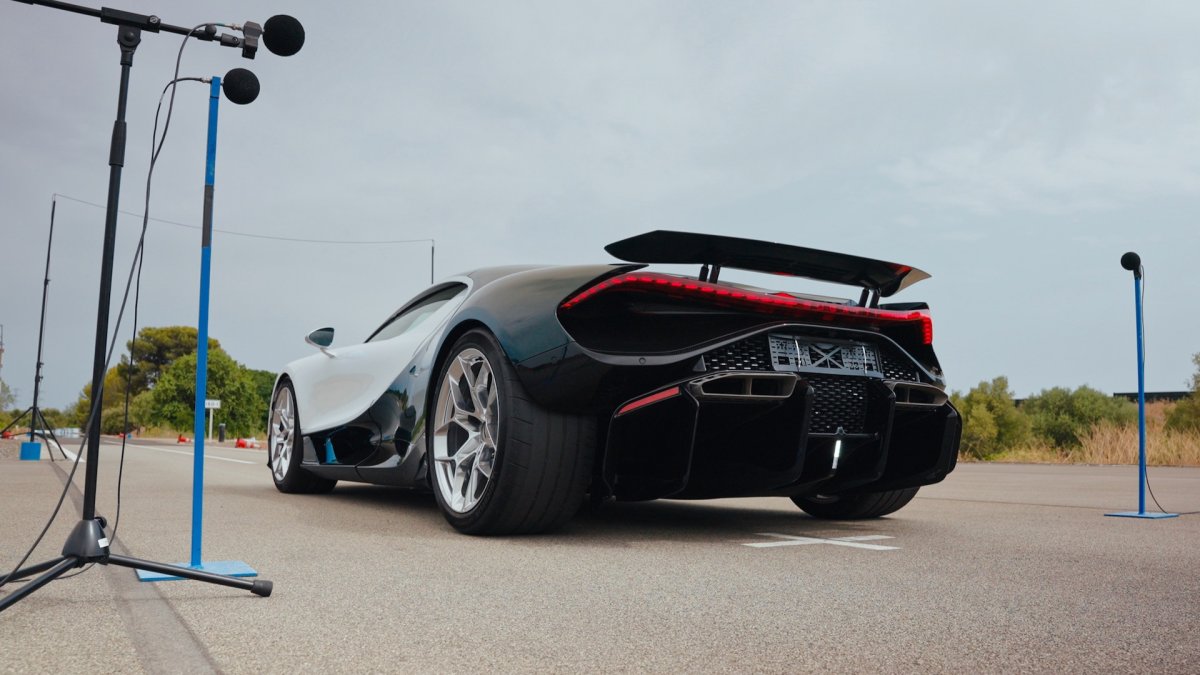
Bugatti claims every sound the driver hears is natural. No artificial augmentation through speakers, no digital trickery. In a market where even some sports cars pipe synthesized engine noise through their audio systems, that’s a specific and telling choice.
The engineering challenge cuts both ways, though. European drive-by noise regulations cap the Tourbillon at 72 decibels, a total figure that includes tire noise, wind noise, and mechanical sounds from the drivetrain. Every decibel saved on tire roar or aerodynamic turbulence is a decibel the exhaust team could spend on making the V16 heard.
So the thousands of hours weren’t just about tuning pipes and mufflers. They were about quieting everything else so the engine could sing louder within the legal limit.
Bugatti has cycled through wildly different engine configurations over its history. Prewar straight-eights. The quad-turbo W16 that defined two decades of the modern brand. Now a hybrid V16 that shares its architecture with nothing else on the road.
Finding a consistent sonic identity across all of that is probably impossible, but the “dirty and raw” direction at least acknowledges that a 9,000 rpm naturally aspirated engine deserves to be heard on its own terms.
Deliveries are expected to begin later this year, with production locked at 250 units. At roughly $4 million each, the Tourbillon will be rarer than rare. Most people will never see one in the wild, let alone hear it at full throttle.
But in a world of electrified hypercars that hum and whir, Bugatti is betting that the sound of combustion still matters enough to justify thousands of engineering hours. Whether the finished product lives up to that investment is something only 250 buyers will know for certain.


Share this Story