
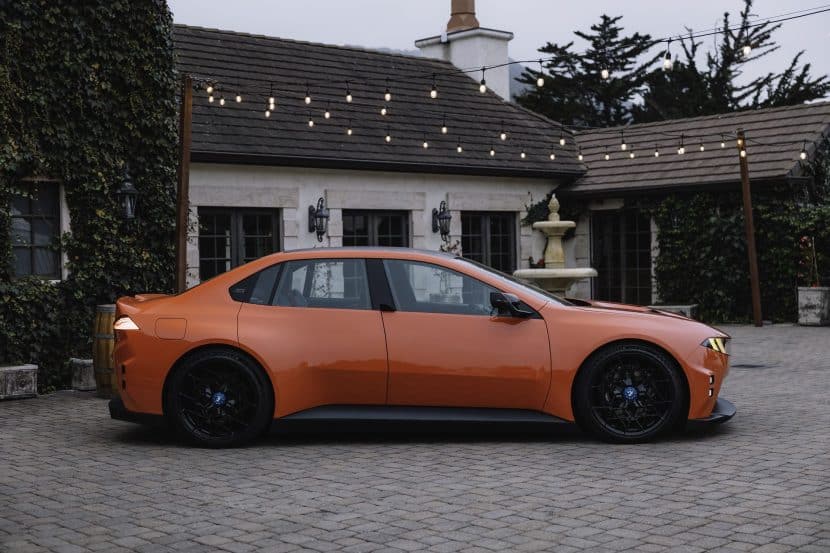


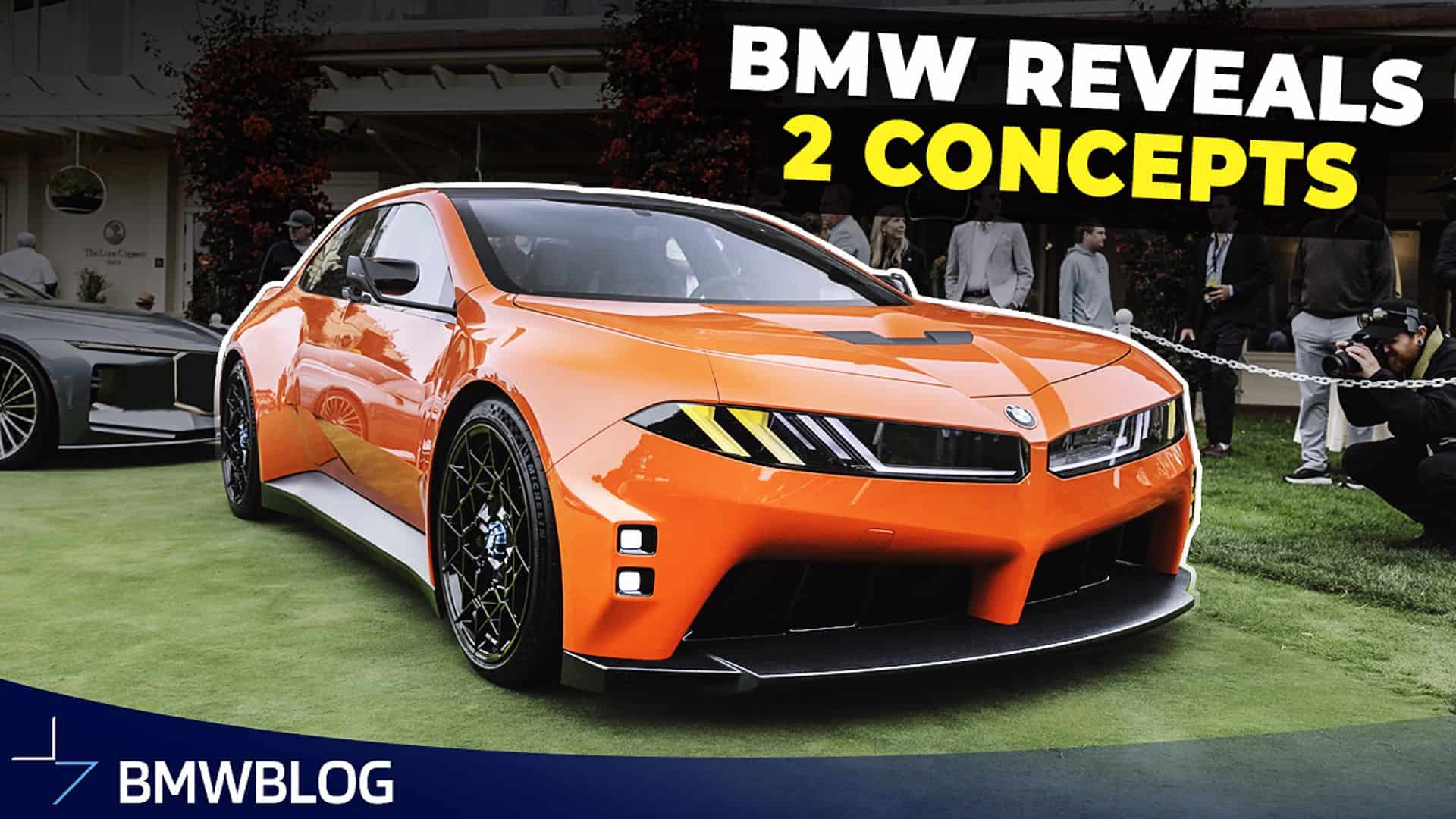
BMW rolled into the 2026 Pebble Beach Concours d’Elegance with two concepts that could not be more different from each other, and that’s precisely the point. The M Concept Class Neue Klasse previews the next M3. The Vision BMW ALPINA previews a production B7 due next year. One screams track day. The other whispers old money.
The M concept arrives wrapped in a new yellow lighting signature that BMW says will become the visual calling card for every future M and M Performance model. Paired with a stretched kidney grille and sharper three-stripe M graphics rendered in 3D, the front end looks angrier than anything wearing a roundel today. The front splitter and rear diffuser ditch carbon fiber for natural fiber panels, a material BMW intends to carry into production M cars.
That last detail matters more than it might seem. BMW has already confirmed the racing-style lights integrated into the concept’s front end will migrate to the production M3. This is not a pure design fantasy. The bones of the next M3 are visible here, dressed up in concept theater but structurally honest about where the car is going.
Blue and red center caps on the wheels reference endurance racing, where pit crews identify tire compounds by color. Harness mounts in the rear seats won’t survive to the showroom floor, but the carbon bucket seats and M1/M2 drive mode buttons on the steering wheel almost certainly will. The proportions shift from the current M3 too: a shorter hood accommodating an electric motor, a cabin pushed forward. BMW plans to offer both electric and combustion versions when the production car arrives.
Then there’s the ALPINA, and it operates on an entirely different frequency.
The Vision BMW ALPINA is a two-door coupe with a genuine four-seat cabin, achieved through a long wheelbase and short overhangs rather than bloated dimensions. ALPINA design lead Alex Innes walked through the car in detail, and what he described reveals a brand repositioning itself against Mercedes-Maybach rather than competing within BMW’s own M lineup.
The chrome trim never sits on the car’s primary surfaces. It lives in recessed panels, a technique Innes traced directly to the BMW 507. The crystal detailing in the headlights is mounted on the underside of the lamp housing, visible only from certain angles. Innes called this “the second read,” ALPINA’s internal term for details that reward closer inspection rather than demanding attention.
ALPINA’s signature exterior stripe, the Deco line, has a stranger origin story than anyone might guess. According to Innes, founder Burkard Bovensiepen borrowed the graphic from a 1970s Fischer C4 ski and applied it to the brand’s race cars. On the Vision ALPINA, the line is hand-painted beneath the lacquer and paired with a two-tone interior that follows the same forward-tilted angle as the exterior speed line.
Inside, ALPINA’s traditional green and blue accents have been reduced to a single bridge stitch detail on the seats, a technique that originated from how the brand once hand-stitched replacement steering wheel leather. The brightwork uses a watchmaking technique where one physical component carries two finishes, polished and satin, rather than combining separate parts.
BMW has not confirmed how closely the production B7 will follow this concept. The M Concept Class Neue Klasse remains officially a design study. But the underlying message from both cars is clear enough: Neue Klasse is not a single design language being applied uniformly. It is a platform being split into two distinct identities, one built for lap times and the other for the kind of buyer who notices which side of a headlight lens the crystal sits on.
Whether BMW can hold both lanes without diluting either one is a question the production cars will have to answer.

Share this Story