
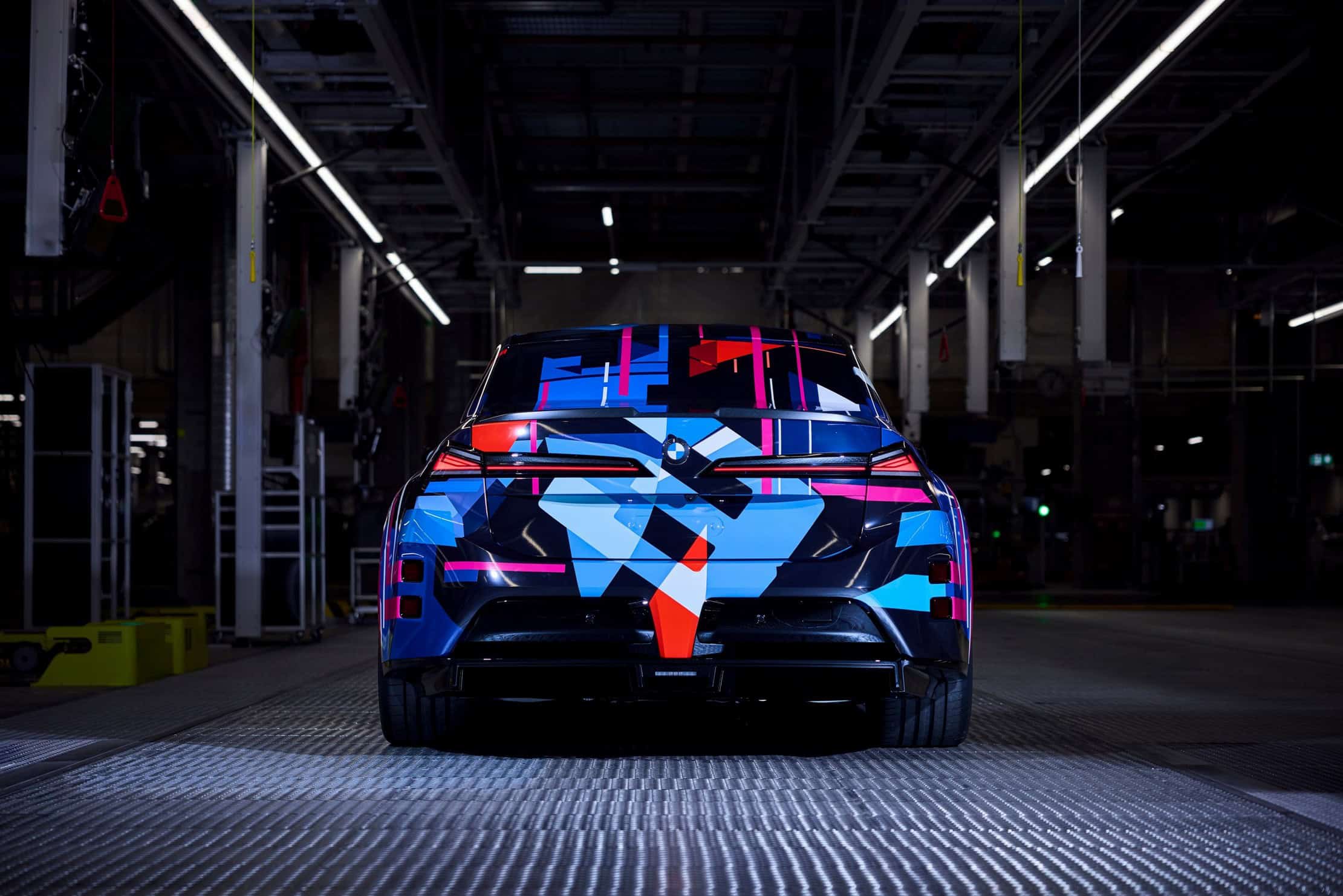


BMW’s camouflaged M3 prototype has shed enough of its colorful wrap to confirm what enthusiasts hoped and skeptics doubted: the production car will look almost exactly like the M Concept Neue Klasse that turned heads on the show circuit. That almost never happens.
The latest factory teasers reveal flared wheel arches, a vented hood, massive front bumper openings, and those polarizing M Track Lights, the square-shaped corner lamps BMW plans to make a signature element across its future M lineup. All carried over from the concept with minimal dilution. BMW has officially confirmed the M3 name, dropping the “i” prefix that has defined its EV branding until now, and the car is scheduled for a 2027 debut.
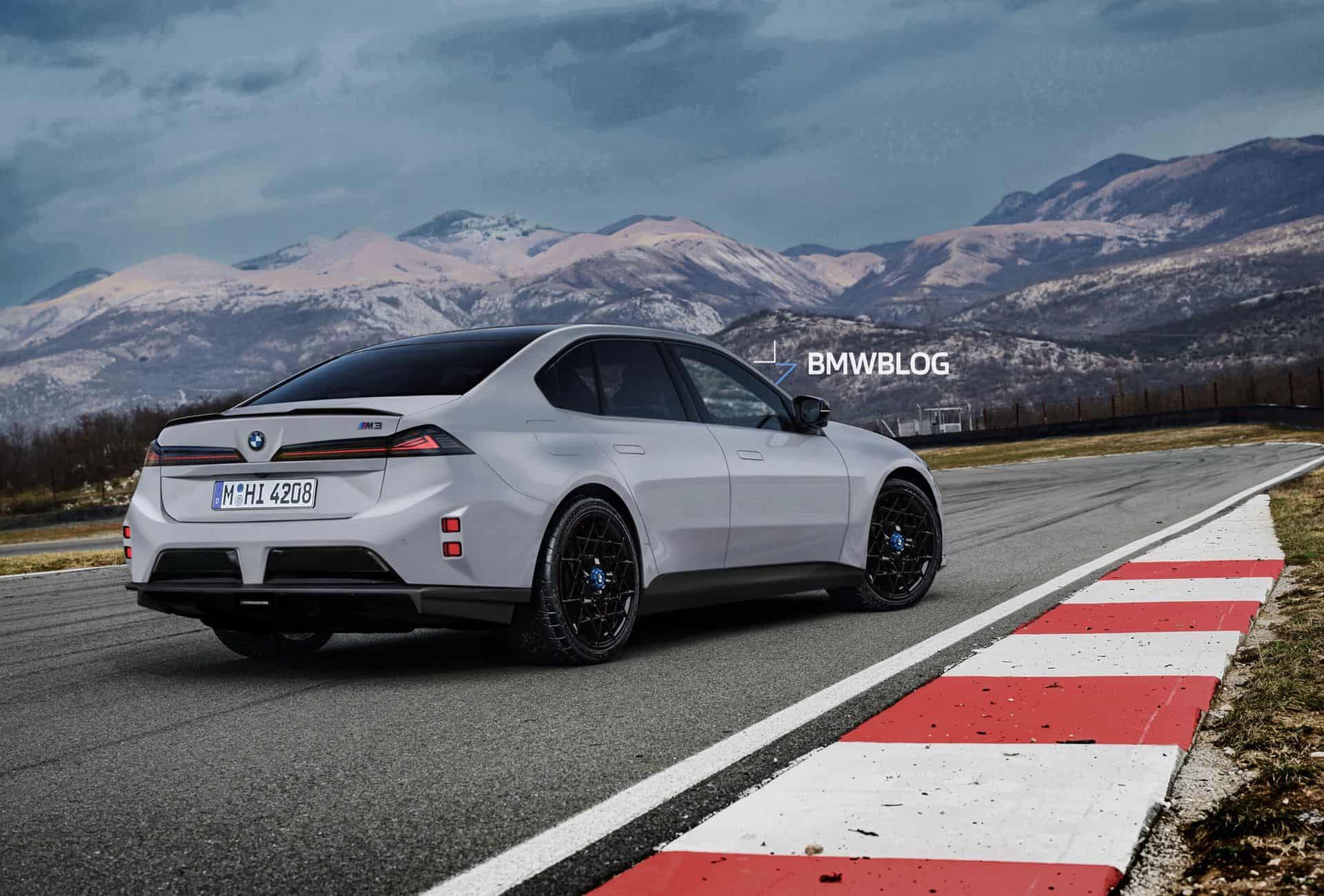
BMWBLOG published a rendering this week that attempts to bridge the gap between concept flash and production reality. The digital recreation strips away the show car’s split ducktail spoiler in favor of a more conventional trunk-lid unit and dials back the oversized rear diffuser. Standard concessions to aerodynamic efficiency, cost, and the fact that real humans need to park this thing at Costco.
The broader story here is more interesting than any single rendering. BMW is running two M3 programs simultaneously. The electric ZA0 arrives first in 2027, followed roughly a year later by a new combustion-powered M3, reportedly designated G84, with a six-cylinder engine.
Both will share the Neue Klasse platform’s visual language, much the way the current i3 M60 and M350 already look like fraternal twins. BMW is not choosing sides in the powertrain war. It is placing parallel bets.
That strategy carries risk. Engineering two distinct drivetrains on the same architecture doubles development costs during a period when EV margins remain thin for most automakers. But BMW’s M division has always been a profit engine, and the company clearly believes there are enough buyers in both camps to justify the investment. The combustion M3 faithful are not a constituency Munich is willing to abandon.
Then there is the wagon question. An i3 Touring is expected as early as next year, and internal designations suggest an M variant, possibly called ZA1, is in the cards. BMW also appears committed to building another generation of the combustion 3 Series Touring, which could spawn a G88 M3 Touring. If that happens, it would mark the continuation of one of the best decisions BMW has made in the last decade, bringing the M3 wagon to markets beyond Europe.
The M Track Lights are worth watching as a design bellwether. BMW is betting that square-shaped accent lamps at each corner will become as instantly recognizable as the kidney grille or Hofmeister kink. It is a bold move for a brand that has struggled with design consistency in recent years, bouncing between the oversized beaver-tooth grilles of the 4 Series and the cleaner Neue Klasse aesthetic. Locking in a new visual signature across the M range suggests the design team has picked a direction and intends to stick with it.
Production details on powertrain specs, battery capacity, and pricing remain under wraps. BMW has said almost nothing about output numbers for the electric M3, though the dual-motor architecture and the M division’s habit of chasing horsepower headlines suggest something north of 600 hp is likely.
The one-millionth M car, a Fire Orange M3 sedan, rolled off the line recently. The next million will include cars that never burn a drop of fuel. Whether that changes anything about what an M3 is supposed to feel like is a question BMW has another year to answer.
Share this Story