
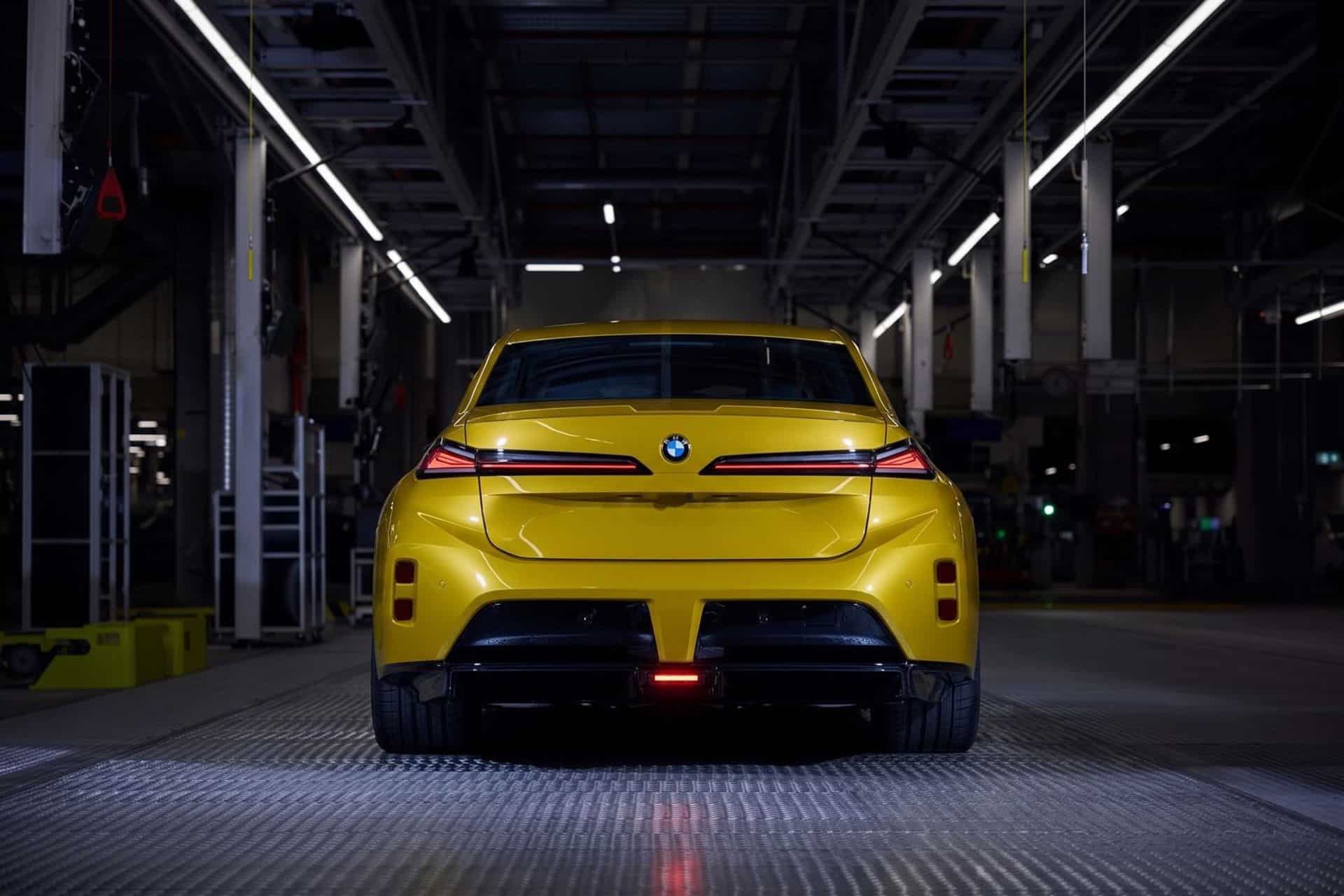


BMW has been stripping camouflage from the electric M3 prototype in stages, and the latest teaser images leave almost nothing to the imagination. The ZA0, as Munich internally codes it, still wears an M-colored wrap, but the body underneath is now visible enough that rendering artists can sketch a credible production car. What they see tracks closely with the M Concept Neue Klasse shown earlier, minus the theatrical aero.
That’s the tension at the heart of this car. BMW built a concept so aggressive it looked like it had been extruded from a Le Mans prototype, then committed to building something “strikingly similar” for the street. The latest prototype images show where reality stepped in.
The massive diffuser from the concept is gone. So is the split ducktail spoiler. Both were designed to make a show car photograph well under exhibition lighting, not survive a warranty claim from a driver who bottomed out in a Costco parking lot.
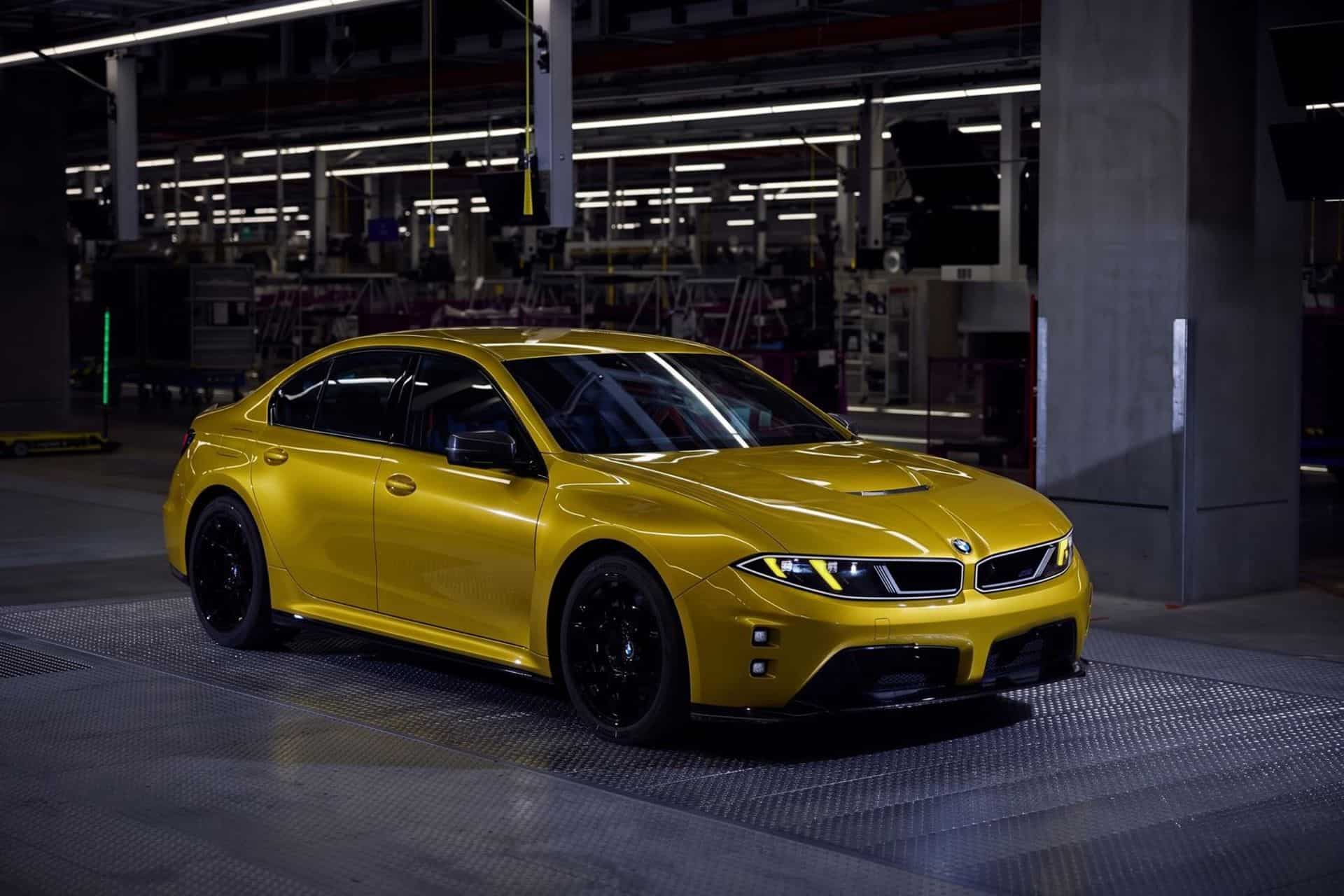
What survives is more interesting than what doesn’t. The squared-off Track Lights at the bumper corners, one of the concept’s wildest details, appear to have made the cut. BMW plans to roll these across the entire full-fat M lineup as a visual signature.
The central hood vent remains. The massively flared wheel arches, which give the M3 a considerably wider stance than the standard i3, are clearly visible beneath the wrap.
BMW has also confirmed the name by literally plastering “M3” across the prototype’s doors, roof, and trunk. No creative rebranding. No “iM3” or “M3e” or whatever focus-grouped alphanumeric might have been floated in a conference room somewhere. Just M3, the first one without a combustion engine.
The roof tells its own story about where BMW is heading with materials. Carbon fiber, long the prestige composite of M car roofs, is being replaced by a flax-based natural-fiber composite co-developed with Swiss firm Bcomp. BMW claims it cuts production-related emissions by 40 percent while matching carbon fiber’s strength and stiffness.
The material also shows up in the bucket seat structures. A panoramic glass roof will be optional, though don’t expect it to slide open. The standard i3’s glass panel runs from front to rear in one fixed piece.
The timing matters here. The electric M3 arrives in 2027, making it the first full-fat M car to abandon internal combustion entirely. But BMW isn’t burning any bridges.
A six-cylinder G84 variant follows roughly a year later, giving traditionalists their fix. Both powertrains will eventually get wagon variants, the ZA1 for electric and G88 for gas.
BMW just built its one-millionth M car, an M3 Sedan finished in Fire Orange. The next million will look very different.
The production design’s faithfulness to the concept is unusual for BMW. Show cars from Munich have historically promised boldness and delivered something more cautious by the time metal gets stamped. This time, the gap between concept and prototype appears narrower than anyone expected.
The proportions, the stance, the face — they all read as direct translations rather than diluted interpretations.
Whether the driving experience translates with equal fidelity is the question BMW hasn’t answered yet. Recent spy footage from the Nürburgring showed the ZA0 rotating its rear end with an enthusiasm that suggests the quad-motor setup can do more than just accelerate in a straight line. BMW’s M division has staked its identity on driver engagement for decades.
Delivering that promise without exhaust note, without a manual gearbox option, without the mechanical character that defined every M3 since 1986 is a fundamentally different engineering challenge. The camouflage is almost gone. The harder reveal is still ahead.
Share this Story