


Turn the key, hear the click, and the instinct is to price out a new battery. Most of the time, that instinct is wrong.
A battery that has sat for weeks or months without the engine running has usually just drained. It hasn’t failed. That distinction is the difference between a free afternoon and a receipt from the parts counter.
Carscoops’ Brad Anderson makes the case plainly. A battery that has slowly bled down can be brought back without unbolting the terminals, pulling it from the car, or calling a mechanic.
The hardware isn’t expensive. Chargers run from under $50 to more than $200, and they do one job: push current back into the battery, slowly, over several hours.
Slowly is the key word. This is not a fix for someone late to work.
The first step is finding the battery, which is harder than it used to be. Older cars park it beside the engine where anyone can see it. Newer ones tuck it under plastic trim that has to come off first.
Some don’t put it under the hood at all. The Alfa Romeo Giulia Quadrifoglio carries its battery in the trunk, a detail that has sent more than one owner staring into an engine bay for nothing.
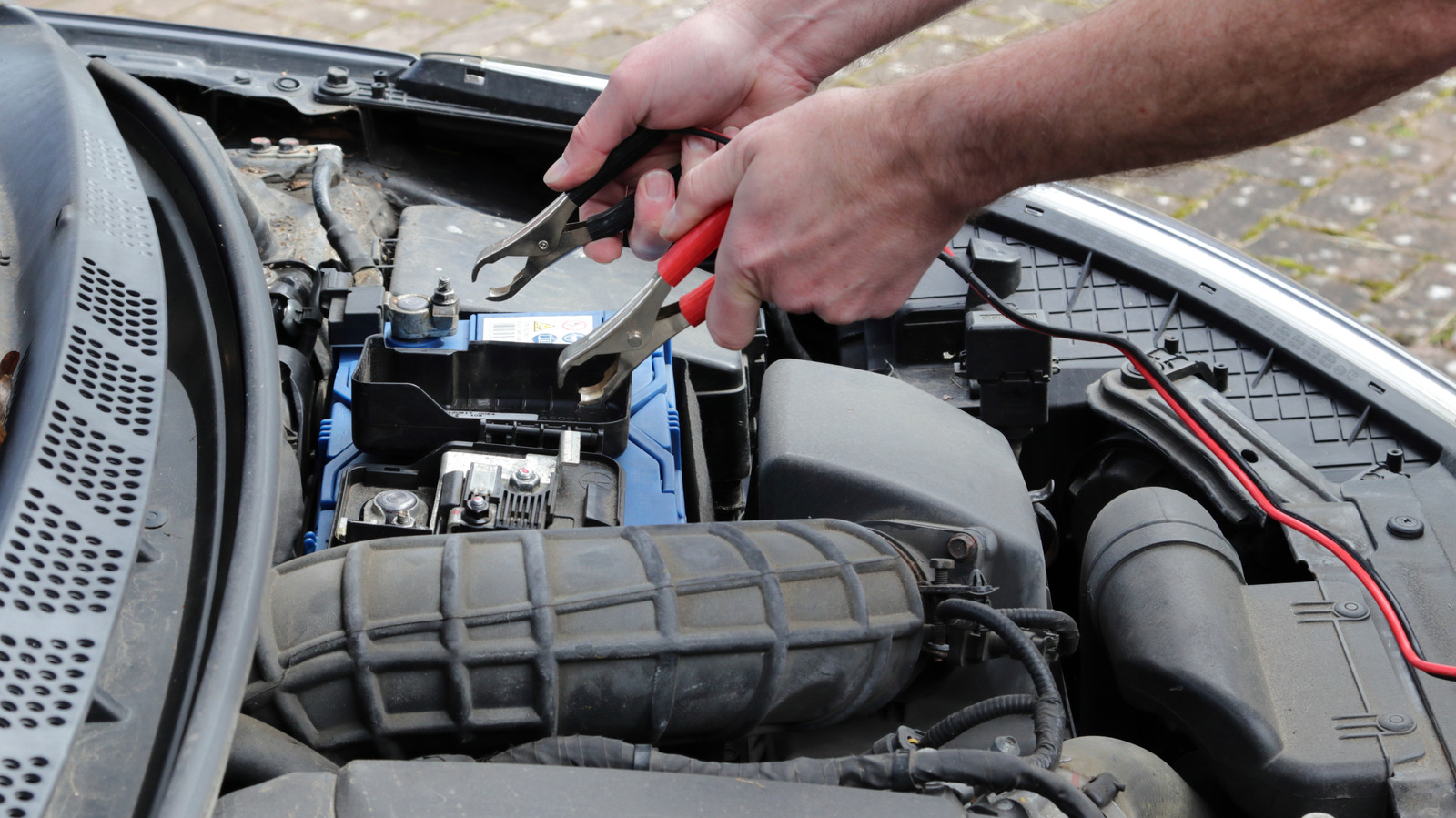
Once you’ve found it, the sequence is simple. Plug the charger into the wall and make sure it’s switched off. Red lead goes to the positive terminal, black lead to the negative.
On a completely drained battery, clamping the black lead straight to the negative terminal is generally considered safe. But there’s a better option, thanks to how modern cars are built.
In nearly every modern vehicle, the negative terminal is tied directly to the chassis. Engineers did that to save copper and weight. Instead of running a separate return wire from every component back to the battery, the car’s frame serves as one shared return path.
That design hands the home mechanic a safer connection point. Clip the black lead to bare chassis metal instead of the terminal itself.
The reason is a spark. Connecting directly at the negative post can produce one, and a spark near a battery can, in rare cases, cause an explosion. The odds are low, and avoiding them costs nothing but a few extra inches of cable.
With everything clamped, switch the charger on and follow the manufacturer’s instructions. Then wait.
If you can’t wait, a portable jump pack is the alternative. These units cost more than a basic charger, but they deliver enough current to start the car immediately, with no outlet and no hours of charging.
The smartest buy may be the one that stops the click from happening at all. A trickle charger, also called a battery maintainer, keeps a parked car’s battery topped up instead of rescuing it after the fact.
Anderson recently bought one himself, a Noco Genius 2X2. It works as both a standard charger and a maintainer, and it can look after two batteries at once.
The better maintainers can stay connected indefinitely. They track the battery’s natural discharge and add charge only when it’s needed.
That matters for the weekend car, the winter car, or the commuter that now sits at home three days a week. It’s a small box solving a problem the owner may not know is building.
The battery under the hood, or under the plastic, or in the trunk, is draining right now.



Share this Story