
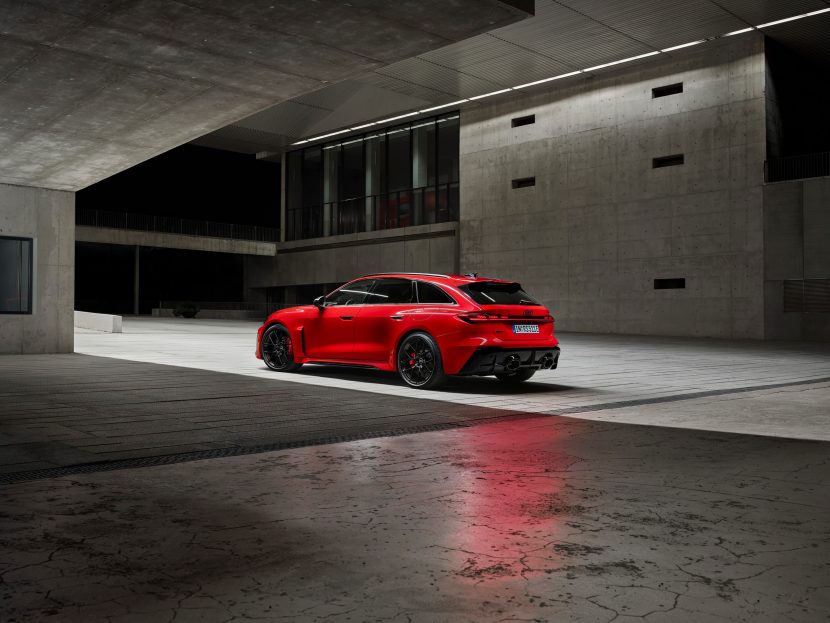


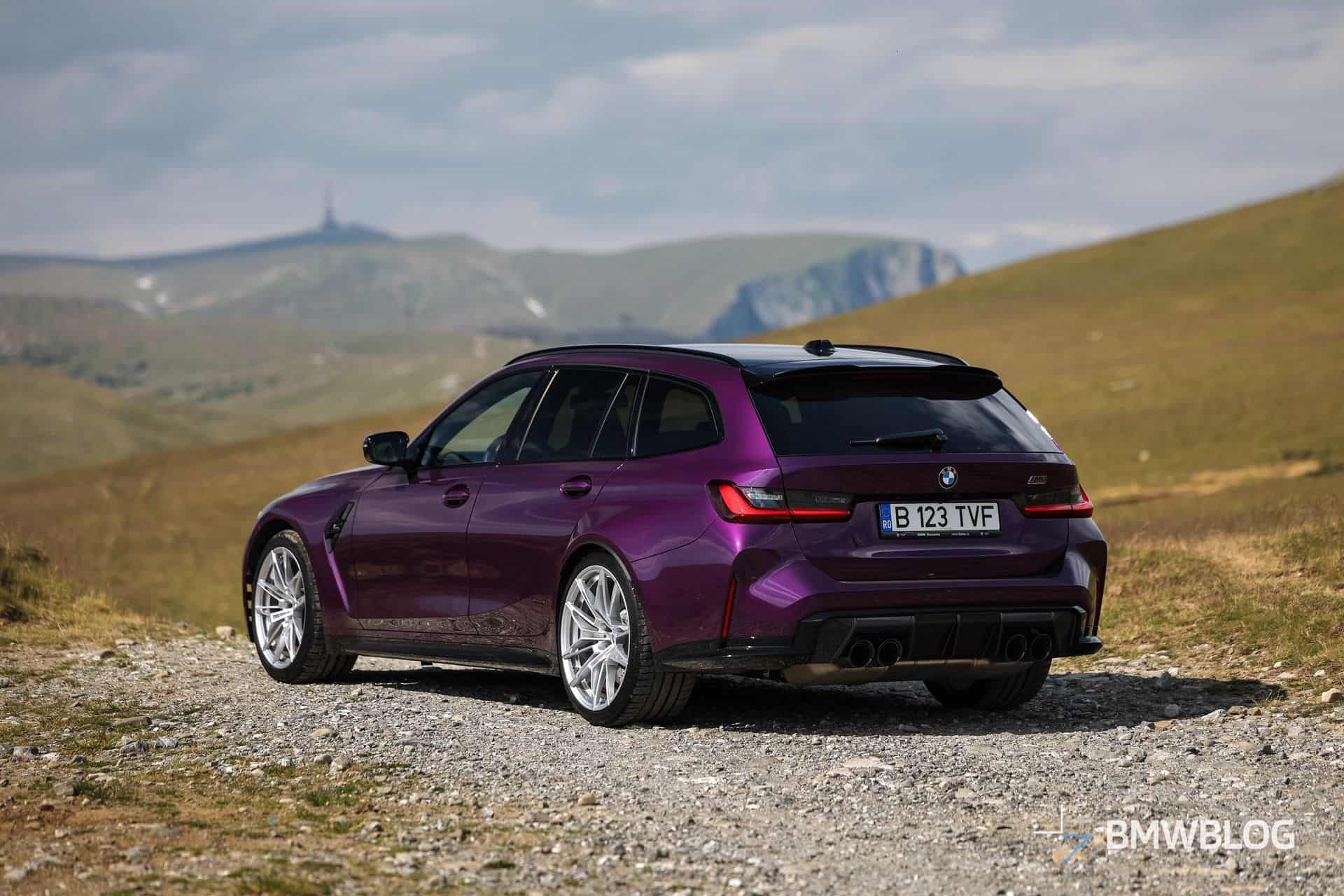
The BMW M3 Touring lapped Hockenheim in 1 minute and 53.44 seconds. The new Audi RS5 Avant needed 1 minute and 57.15 seconds. On a circuit that measures just 2.84 miles, a 3.71-second gap is a beating.
Sport Auto’s Christian Gebhardt drove both cars back to back, eliminating the driver variable. The result tells a story about what happens when a manufacturer straps a 22-kWh battery pack to a performance wagon in the name of emissions compliance.
The RS5 Avant weighs 2,370 kilograms. The M3 Touring tips the scales at 1,865 kg, making it 505 kg lighter. That is half a metric ton.
Audi went the plug-in hybrid route to save the twin-turbo 2.9-liter V6 from the regulatory chopping block, pairing it with an electric motor for a combined 630 horsepower. The tradeoff is a car that weighs roughly the same as a BMW M5 sedan.
The M3 Touring makes do with 523 hp from its twin-turbo 3.0-liter inline-six. No electrification, no battery pack, no compromise. It produced less power and still ran away on track.
Before anyone prints the scoreboard, there is a caveat worth addressing. The BMW wore optional Michelin Pilot Sport Cup 2 semi-slick tires. The Audi ran on Pirelli P Zero R rubber.
That is not an apples-to-apples comparison, and the tire gap alone could account for a meaningful chunk of the deficit. Semi-slicks on a short, technical circuit deliver more mechanical grip than any street-legal performance tire.
But here is the problem for Audi: even accounting for the tire advantage, the physics are punishing. A 505-kg weight penalty does not vanish with stickier rubber. It shows up in braking zones, in transitions, and in every corner where the car has to change direction while hauling around the mass equivalent of three additional adult passengers.
Audi made a calculated decision with the RS5. The plug-in hybrid system gives buyers up to 53.4 miles of electric range, which is a genuine daily-driving benefit and a useful tool for dodging low-emission zones across Europe. For the vast majority of RS5 Avant owners who will never see a racetrack, the PHEV setup makes practical sense.
BMW took the opposite bet. The G81 M3 Touring remains a pure combustion machine, unburdened by battery weight. That philosophy pays dividends the moment the road gets twisty or the stopwatch starts running.
This rivalry stretches back more than 30 years, to the days of the M3 E36 and the Audi RS2 Avant. Each generation has drawn the lines differently. This time, the philosophical split between the two cars is wider than it has ever been.
One manufacturer chose electrification and regulatory compliance. The other chose to leave the powertrain alone and keep the weight down.
The next chapter may narrow the gap. BMW’s forthcoming G88 M3 Touring is expected to adopt a mild-hybrid version of the S58 engine, adding some electrical assistance without the full battery weight penalty that Audi absorbed. If Munich keeps the curb weight under control, the formula that worked at Hockenheim could carry forward.
For now, the numbers from that short German circuit are hard to argue with. Power figures look good on a spec sheet. On track, weight is what you feel in your hands and through the seat. And 505 extra kilograms feels like a lot.
Share this Story