
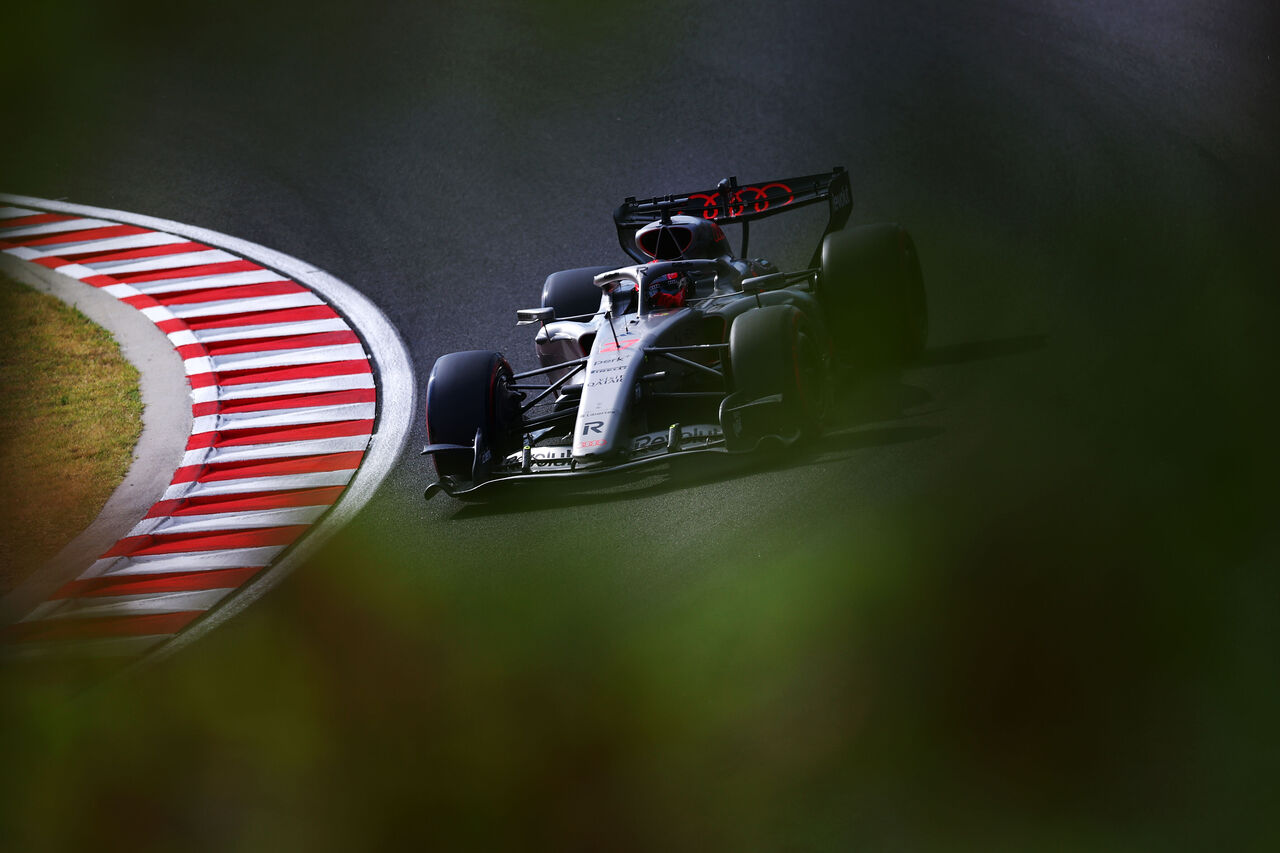


A filter originally designed for Berlin street drains is about to get its most punishing test yet. At the Dutch Grand Prix in Zandvoort, the FIA will deploy the URBANFILTER concept on a Formula 1 circuit for the first time, targeting the microscopic tire particles that twenty cars shred onto the track surface over a race weekend.
The retention rate during recent testing at the circuit hit 99%, depending on rainfall intensity and particle size. That number, if it holds under race conditions, would represent a genuine leap for a technology that started life in a university lab six years ago.
The Audi Environmental Foundation has backed the project since September 2020, partnering with the Technical University of Berlin, filtration specialist GKD, and rainwater company ARIS. The system sits inside drainage channels and intercepts tire wear, brake dust, microplastics, and other contaminants before they wash into the water cycle. It has already been validated in Berlin, Copenhagen, on an ADAC wet-handling track, and on public roads.
Dropping it into a Formula 1 environment changes the equation entirely. A Grand Prix weekend generates tire degradation at rates no city street can match. Twenty cars running aggressive compounds through high-speed corners produce volumes of rubber particulate that would take months to accumulate on a normal road.
If the filter holds up here, the urban application looks almost leisurely by comparison.
The timing is not accidental. Audi entered Formula 1 this season with its own factory team, and the company clearly wants its environmental credentials visible alongside its racing ambitions. The FIA recently handed Audi’s power unit facility in Neuburg a three-star environmental certification, the highest tier available, on top of existing ISO 14001 and ISO 50001 standards.
“Motorsport is once again proving that it can serve as a technological role model,” said Sven Veit, Managing Director of the Audi Environmental Foundation. It is the kind of line that reads like boilerplate until you consider what is actually happening on the ground. A drain filter is not glamorous, does not generate social media impressions, and sits underground catching rubber dust.
That is precisely why this deployment matters more than another sustainability pledge printed in a paddock brochure. Tire wear is one of the largest sources of microplastic pollution globally, and motorsport has long ignored its own contribution to that problem. The FIA mandating synthetic fuels was a headline move. Filtering the drainage at a racetrack is the unsexy work that follows.
The real question is scale. A single circuit deployment proves the concept under extreme conditions, but Formula 1 races at over twenty venues worldwide. Some sit in dense urban areas, while others border coastlines and waterways where microplastic runoff does immediate ecological damage.
Whether the FIA pushes this across the calendar or treats Zandvoort as a one-off showcase will say more about the sport’s environmental commitments than any certification ever could.
Audi’s foundation calls these efforts “Greenovation” projects. The branding is corporate, but the filter in the drain is real. At Zandvoort, with cars hammering through Tarzan corner and stripping rubber off soft compounds at 200 kilometers per hour, the URBANFILTER is about to find out whether a 99% lab number survives contact with a live Grand Prix.





Share this Story