
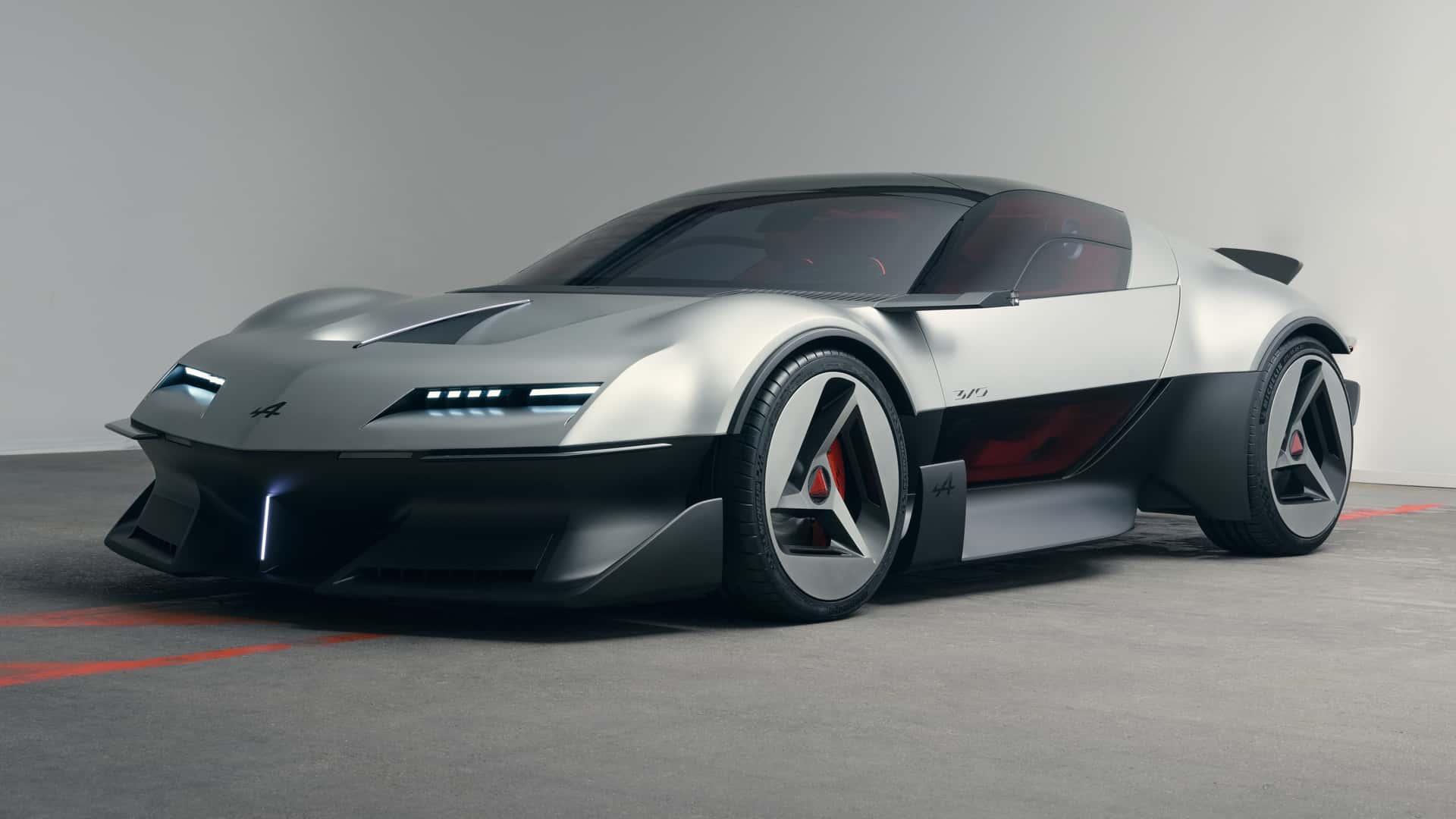


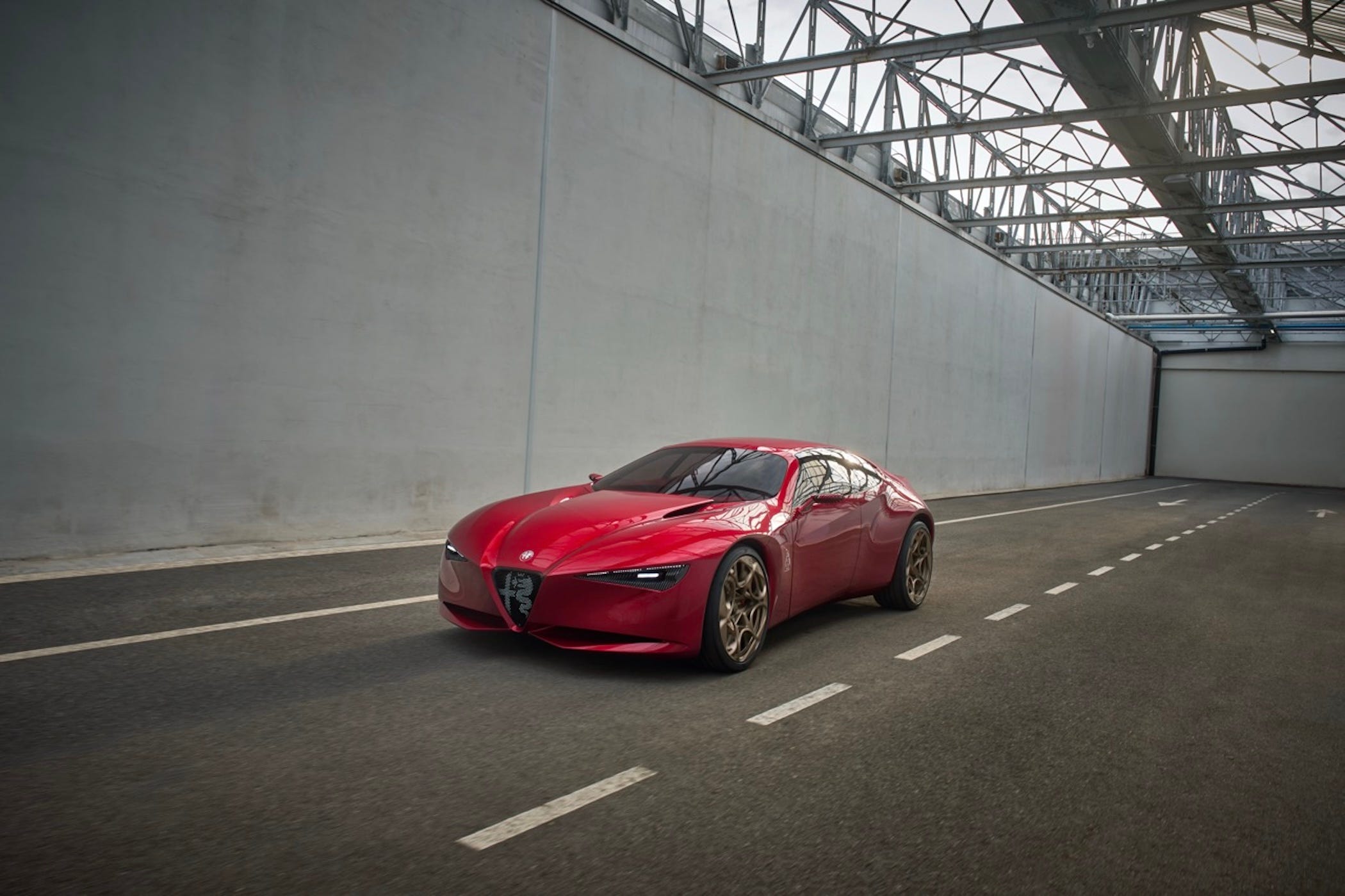
Alpine showed up to the 2026 Paris Motor Show without a single power figure, range estimate, or production timeline. What it brought instead was the A310 Vision, a two-seat electric concept dripping with 1971 nostalgia and wrapped in carefully noncommittal language.
The car looks fantastic. Its proportions echo the original rear-engined A310 so faithfully that you could mistake the silhouette for a period rendering brought to life. At 179.1 inches long, 79.9 inches wide, and just 46.5 inches tall, it sits lower and wider than almost anything on the road.
Alpine even managed a clever trick with the headlights: a “pop-down” reveal sequence that fires when you start the car. It’s a theatrical substitute for the pop-up units that regulations killed off years ago.
Beneath the skin sits Alpine’s 800-volt APP platform, shared with the upcoming A110 EV. Two rear-mounted motors deliver active torque vectoring that recalibrates every 10 milliseconds. The aluminum structure uses bonding and riveting rather than welding, with twin battery packs positioned to maintain a 40:60 front-to-rear weight split.
That all sounds promising on paper. But Alpine won’t say how much power those motors make. Or what the battery capacity is, the range, the weight, or when this thing gets built.
The company calls it a design study, not a production preview. Alpine has already announced a four-seat A310 as part of its electrification roadmap, a 2+2 that could arrive around 2028. The Vision concept is a two-seater with no confirmed relationship to that car, existing in a convenient gray zone: pretty enough to generate headlines, vague enough to avoid accountability.
A running development mule does exist. The A110 Future climbed the Goodwood hill last July carrying a split battery pack, roughly 71 kilowatt-hours, with Alpine targeting 3,090 pounds for the production A110. Those are real numbers attached to a real car, and the A310 Vision offers none of that clarity.
For American buyers, the wait is even longer and less certain. Alpine still says it wants to enter the U.S. market, but its earlier 2027 target has already slipped. Road & Track reported last August that the A110 could be the first model to arrive stateside around 2030, with Alpine prioritizing exclusivity over volume.
That’s a polite way of saying the business case isn’t fully there yet. Five years is a long time in this market. By 2030, Porsche will have cycled through updates to its electric Macan and likely launched more battery-powered sports cars.
Lotus is already selling the Eletre and Emeya. Hyundai keeps cranking out performance EVs at prices that undercut European rivals. The window for a small French brand to make a splash in America doesn’t stay open forever.
Alpine’s real problem isn’t talent or taste. The A310 Vision proves it has both. The problem is pace, because every concept that arrives without firm specs and firm dates feeds the suspicion that Alpine’s ambitions are outrunning its resources.
The company’s parent, Renault, has spent the last two years restructuring its EV strategy, pulling back from the Ampere IPO and recalibrating volume targets. Alpine sits inside that shifting corporate landscape, dependent on decisions made in Boulogne-Billancourt boardrooms where sports cars are never the top priority.
Paris gave us a gorgeous shape and a clever lighting trick. Everything else remains an open question.
Share this Story