


Porsche’s profits collapsed from $5.9 billion in 2024 to $101 million in 2025. That is not a typo. The company that once printed money selling Cayennes and Macans to anyone with a pulse is now scrambling to reinvent itself as something far more exclusive, and far more expensive.
New CEO Michael Leiters, who took the helm in January, unveiled his turnaround plan today in Stuttgart. It carries a very German name, Sportwagenschmiede ’35, and a very simple thesis: stop chasing volume, start chasing margins. The target is profitability below 200,000 units sold annually, achieved by making each car Porsche sells cost substantially more.
The centerpiece is a new mid-engined supercar architecture, previewed by a concept called Mission S debuting October 15. Porsche says it would sit above the 911, creating an entirely new tier in the lineup. Details are thin, but the signal is unmistakable.
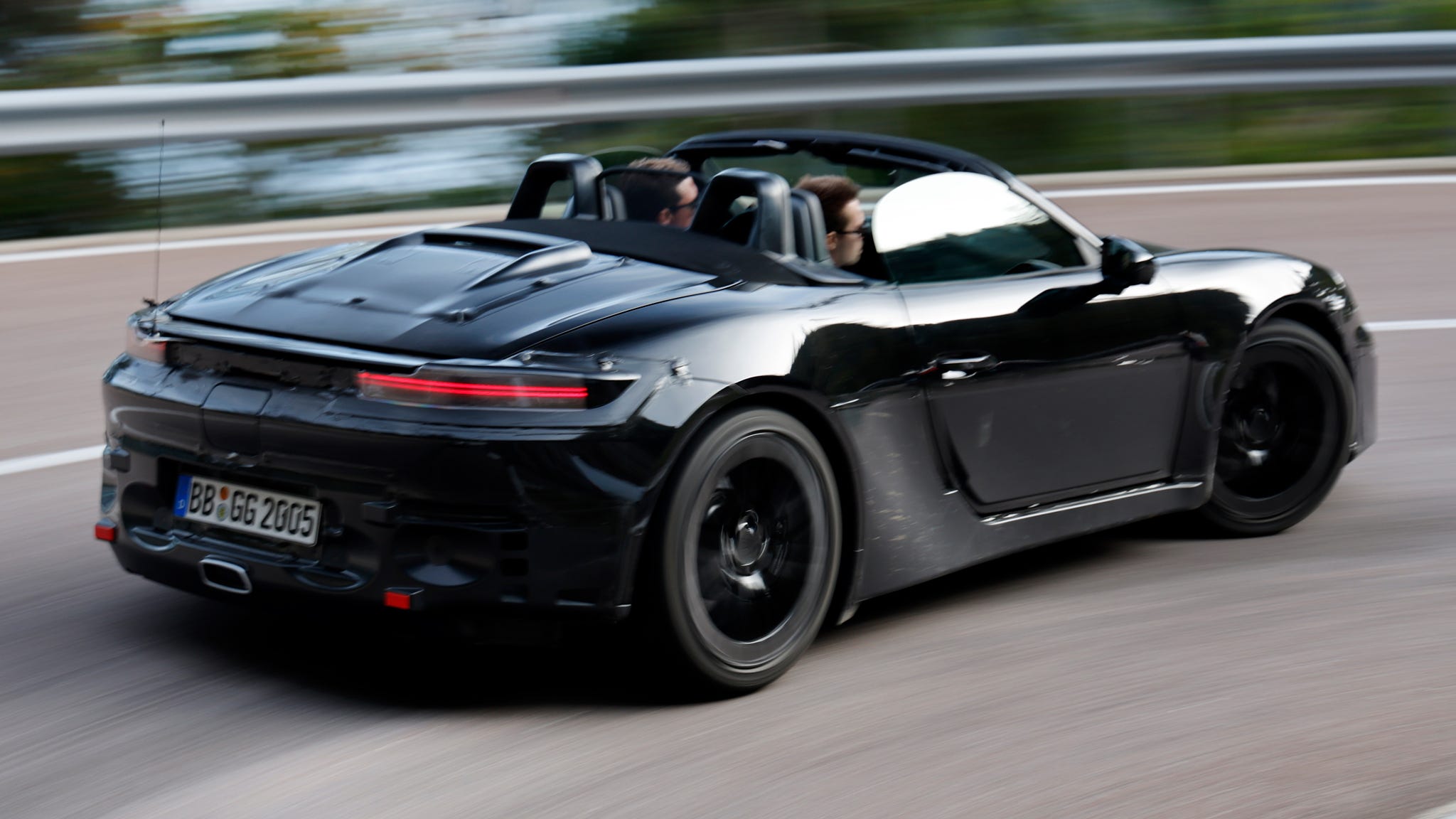
Before that arrives, Porsche has two urgent problems. The gas-powered Macan and the 718 Boxster and Cayman are both dead, leaving craters in the lineup. The electric 718 finally launches in 2027 after years of delays, offered as both a Boxster convertible and Cayman coupe. Plans for a gasoline-powered 718 variant have been scrapped entirely.
A new gas-powered Macan arrives in 2028, developed jointly with Audi, offering both pure combustion and plug-in hybrid powertrains. It will sell alongside the current electric Macan, giving dealers two very different vehicles wearing the same badge. Beyond that, Porsche is exploring a large SUV positioned above the Cayenne, previously known internally as the K1.
Leiters made one thing explicit: the 911 will never go electric. That line drew the sharpest applause.
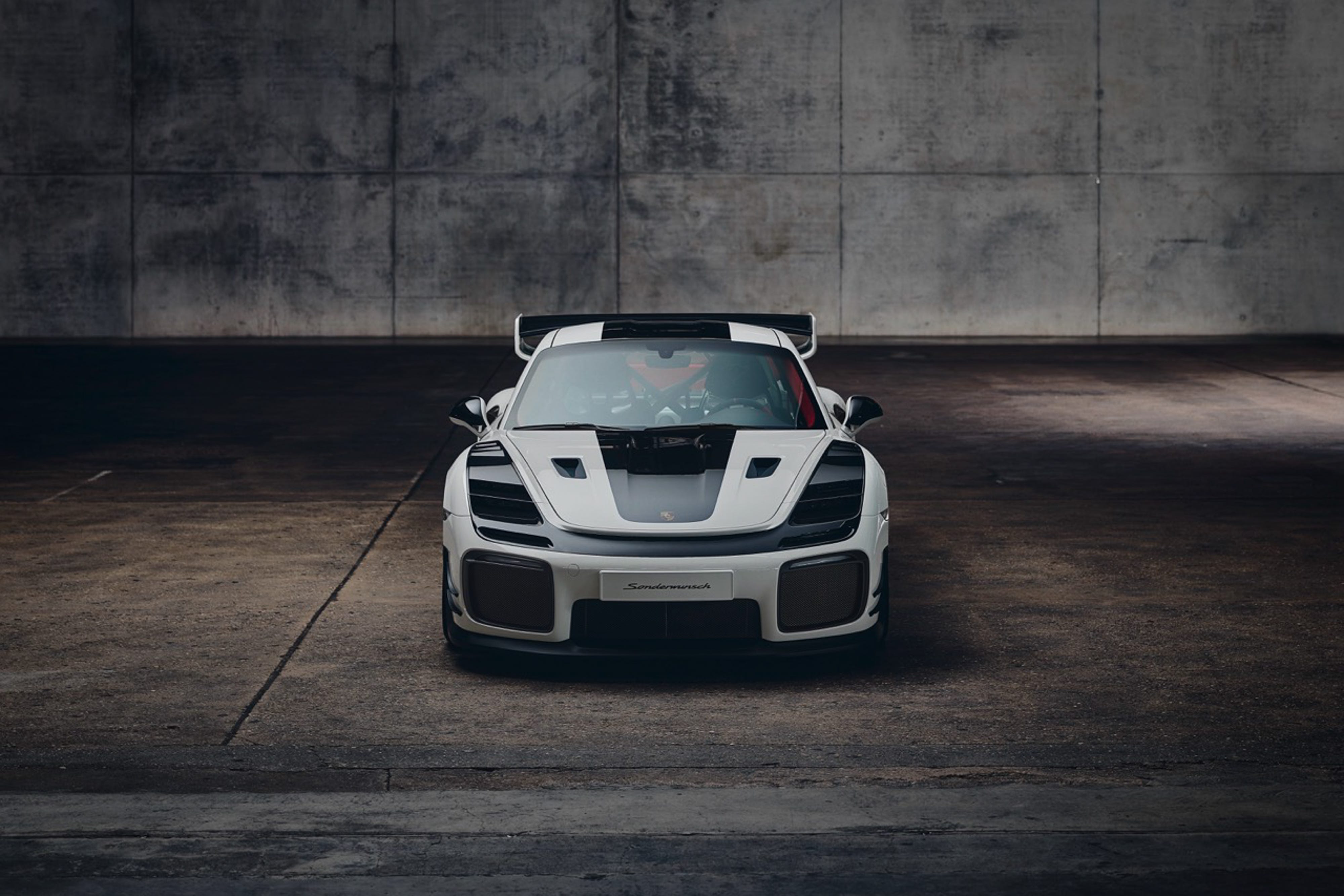
The financial engineering here is as aggressive as any mid-engined concept. Porsche wants to raise the average selling price of its top models by 20 percent. GT cars, which already command massive premiums, could eventually cost more than 200 percent above a base 911.
The current GT3 sits 53 percent higher than a Carrera. The GT3 S/C commands 95 percent more. Porsche sees room to push that ceiling dramatically.
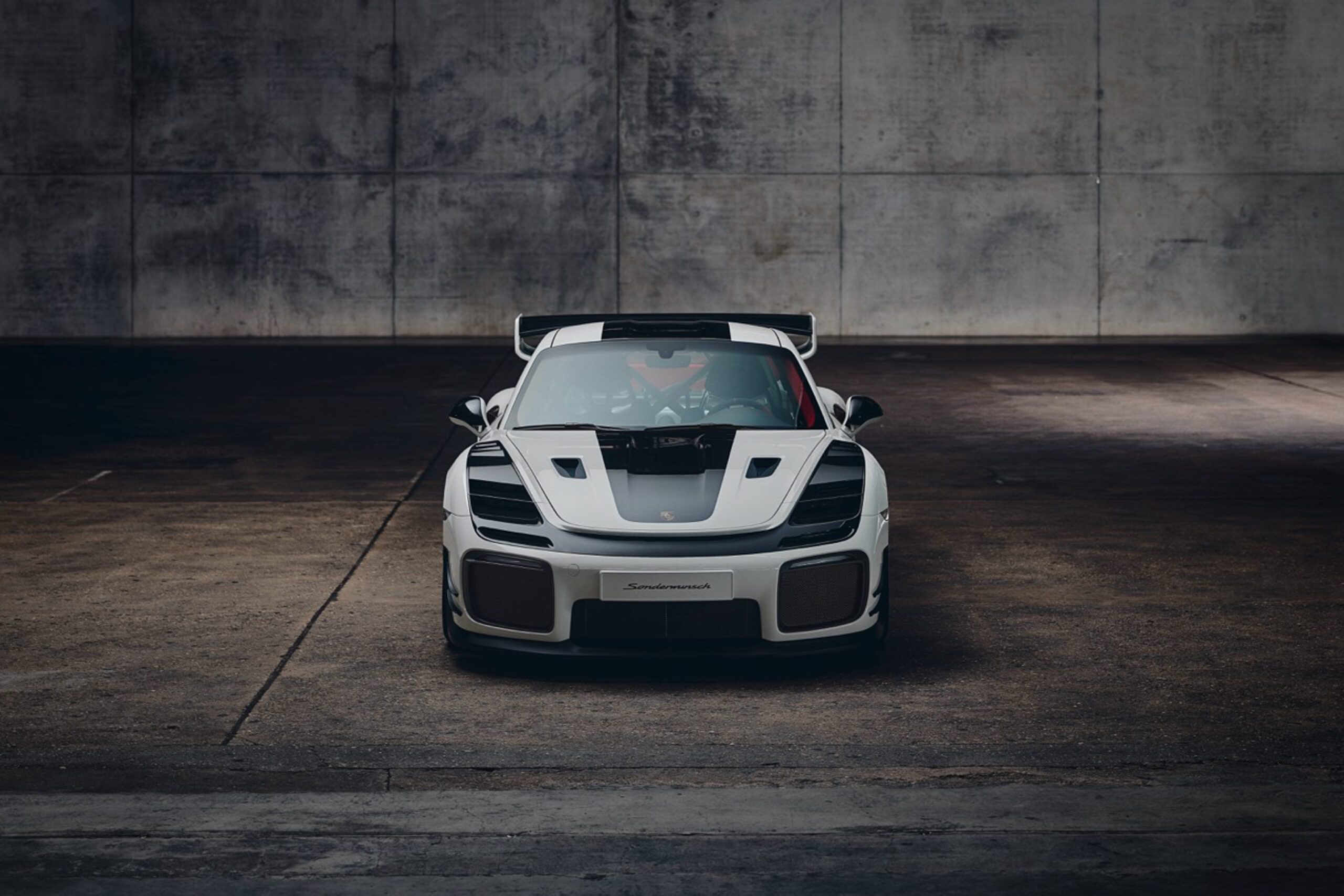
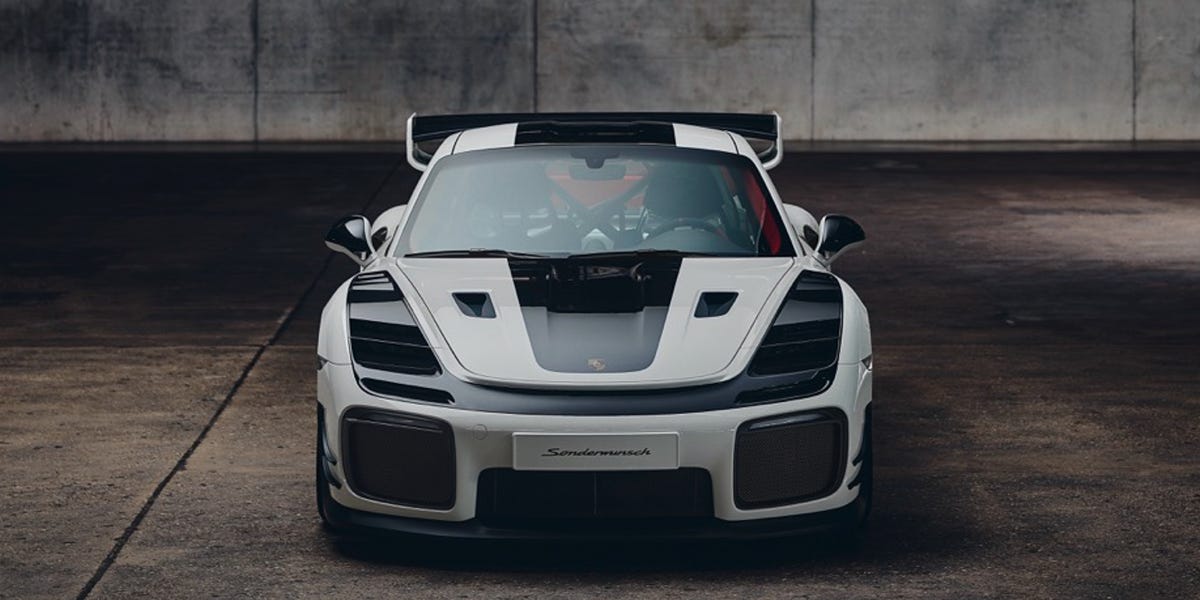
The Sonderwunsch bespoke program is being scaled up sixfold. Fifteen one-off projects are currently underway, priced between $1.8 million and $15 million each. Porsche is also recommissioning classic Carrera GTs at $500,000 to $845,000 per car, not including the cost of the donor vehicle itself.
Manthey Racing, the Nürburgring-based tuning partner, will see Porsche’s ownership stake rise to 67 percent. Manthey will begin producing limited-run vehicles, both street-legal and track-only, that go well beyond bolt-on aero kits.
All of this comes with brutal cost-cutting. Porsche plans to slash its workforce by 25 percent and management positions by 40 percent. Development costs for future models drop by 20 percent through more simulation work and increased parts-sharing within the Volkswagen Group.
Materials costs fall 10 percent. Marketing budgets shrink 20 percent. Model variants get trimmed by roughly a fifth.
The strategy amounts to a full reversal of the volume play Porsche ran for the past decade, when it flooded showrooms with SUV derivatives and bet billions on an EV transition that customers weren’t ready for. China’s market turned hostile. U.S. tariffs piled on.
Leiters is now betting that fewer Porsches, sold at much higher prices to wealthier buyers, can restore the profit margins that made the company the envy of the auto industry. The Mission S concept lands in eight days. Whether it previews a genuine product or merely a mood board for investors remains an open question.
Share this Story