


Boyd Butler built solid-rocket motors for NASA and the military at Hercules Aerospace. Then he quit to sell exhaust pipes. That career pivot gave NASCAR its most distinctive soundtrack for nearly a decade.
Butler started a company called Dr. Gas, specializing in X-pipe exhaust systems. The design merges and splits the exhaust flow from both cylinder banks, pulling spent gases out of combustion chambers more efficiently and making room for fresh air. More complete scavenging means more power. It also produces a sharper, higher-pitched wail compared to the traditional low burble of a stock car V8.
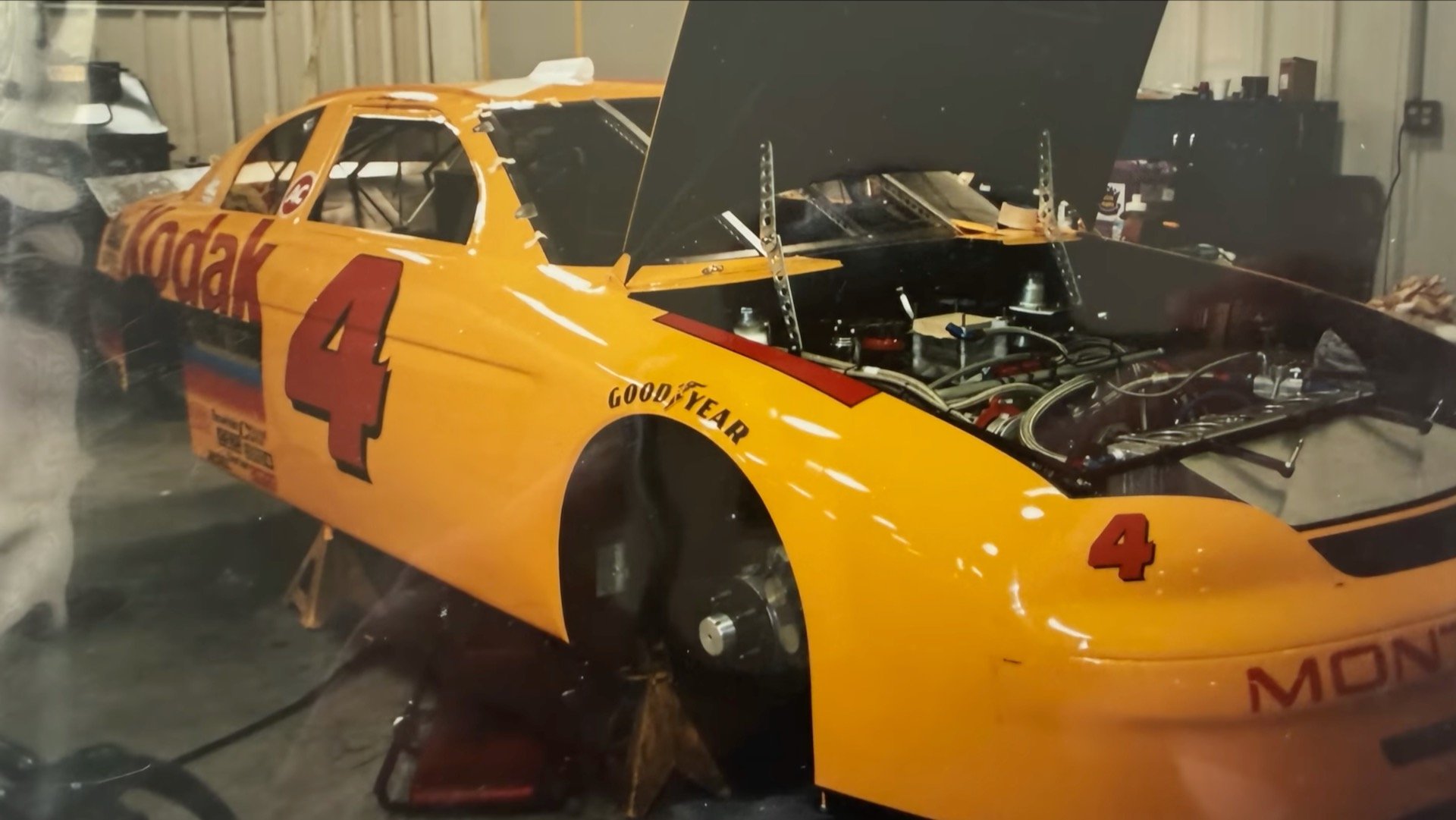
A magazine ad caught the attention of Mark Giles, a fabricator at Morgan-McClure Motorsports. The small Abingdon, Virginia team had just won the 1994 Daytona 500 with Sterling Marlin driving the bright yellow Kodak-sponsored No. 4 Chevrolet. Boss Larry McClure wanted every fractional advantage he could find for a repeat run in 1995.
The X-pipe delivered 4.5 extra horsepower. At Daytona, where cars run flat-out for 500 miles, that translated to roughly 1 mph of additional top speed. Over 200 laps, that kind of margin compounds.
Getting the system onto the car was not simple. Butler’s round tubing had to be reshaped into oval cross-sections for ground clearance, and Morgan-McClure’s fabricators struggled with the conversion. McClure told Butler to fly from Utah to Virginia and handle it personally. Butler packed exhaust tubing into scuba-gear bags, checked them as luggage, and spent two and a half days thrashing the installation together before the team loaded for Daytona.
The problem with a secret weapon that changes the sound of your car is that it announces itself to everyone in the grandstands and the garage. Marlin’s Chevrolet screamed differently from every other machine on track. Jack Roush suspected a trick exhaust system but never identified the X-pipe as the source.
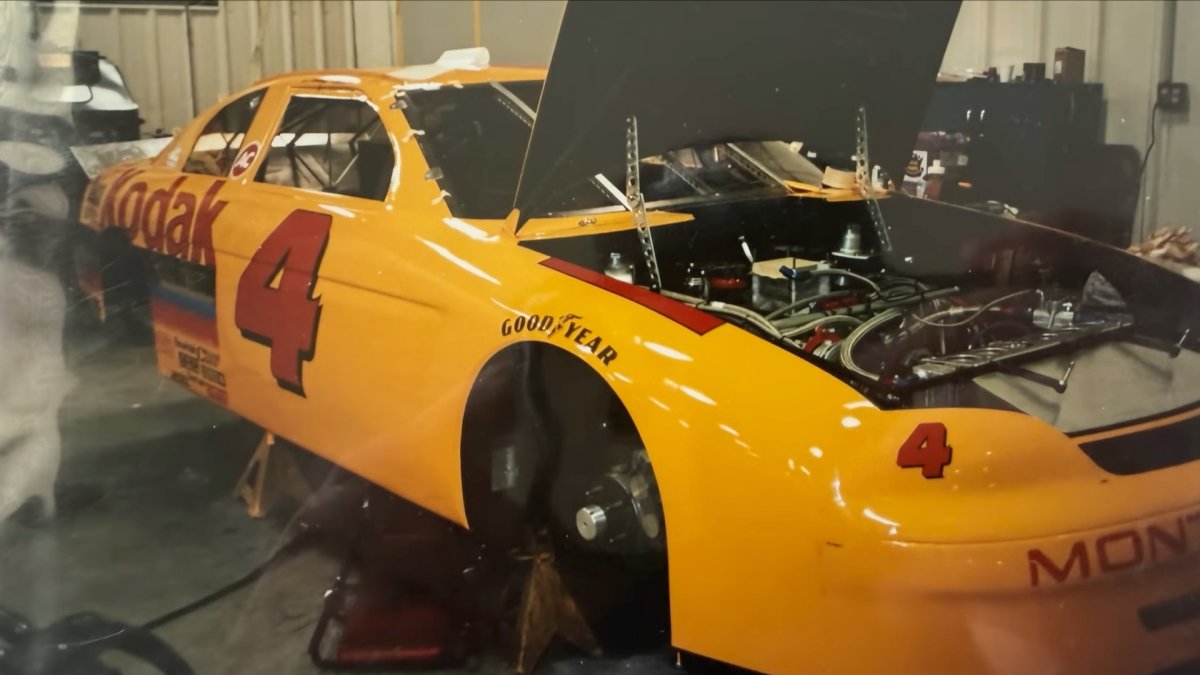
Marlin won the 1995 Daytona 500, giving him consecutive victories in the sport’s biggest race and validating the exhaust experiment completely. Morgan-McClure locked Butler into a one-year exclusive deal, keeping rival teams shut out for one full season. After that exclusivity expired, the floodgates opened.
Teams across the Cup Series and the IROC series adopted X-pipe systems. That piercing, metallic wail became the defining audio signature of late-1990s and early-2000s NASCAR, the era many fans still consider the sport’s peak. Television broadcasts from that period carry a visceral edge that later races simply do not match.
NASCAR killed the X-pipe when the Car of Tomorrow arrived for the 2008 season. Stricter component regulations followed in subsequent years, narrowing the engineering sandbox until creative wildcards like Butler’s exhaust design had no room left to exist. The series gained parity and control. It lost something harder to quantify.
Butler’s story, recently detailed in an interview with YouTuber Stapleton42, is a reminder of what stock car racing used to reward. A guy who built rocket motors saw an opportunity in exhaust tubing, ran a magazine ad, and ended up helping a small team win the Daytona 500. The technical freedom that made that possible has been closed off one regulation at a time, and whether the racing is better for it depends on what you think the sport is supposed to sound like.



Share this Story