
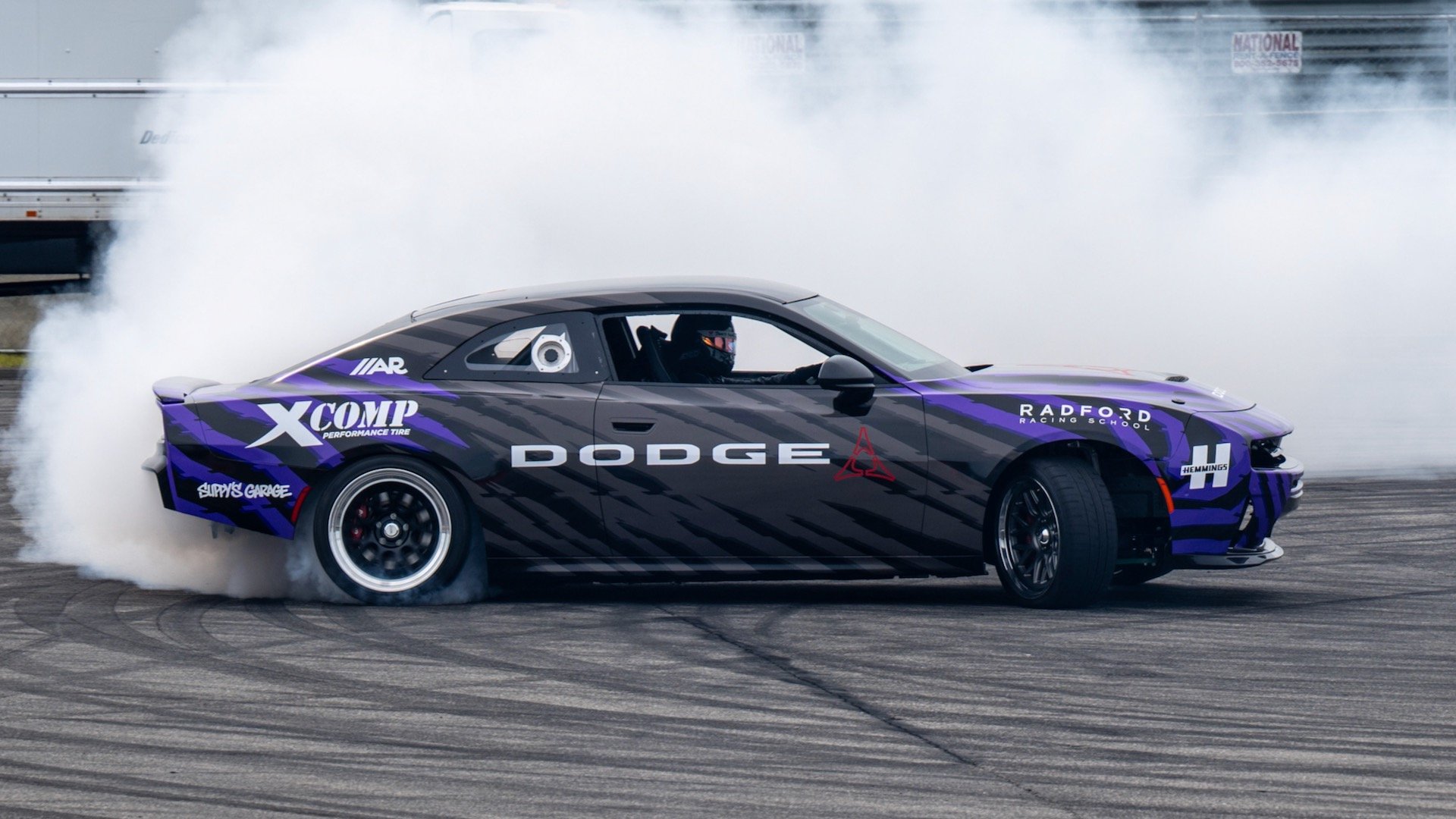


Stellantis just commissioned two drift-spec Chargers with 750 horsepower each, manual transmissions, and rear-wheel drive. They are, on paper, exactly the kind of cars Dodge fans have been screaming for since the new Charger launched to widespread indifference. There’s just one catch. Both still run the Hurricane inline-six.
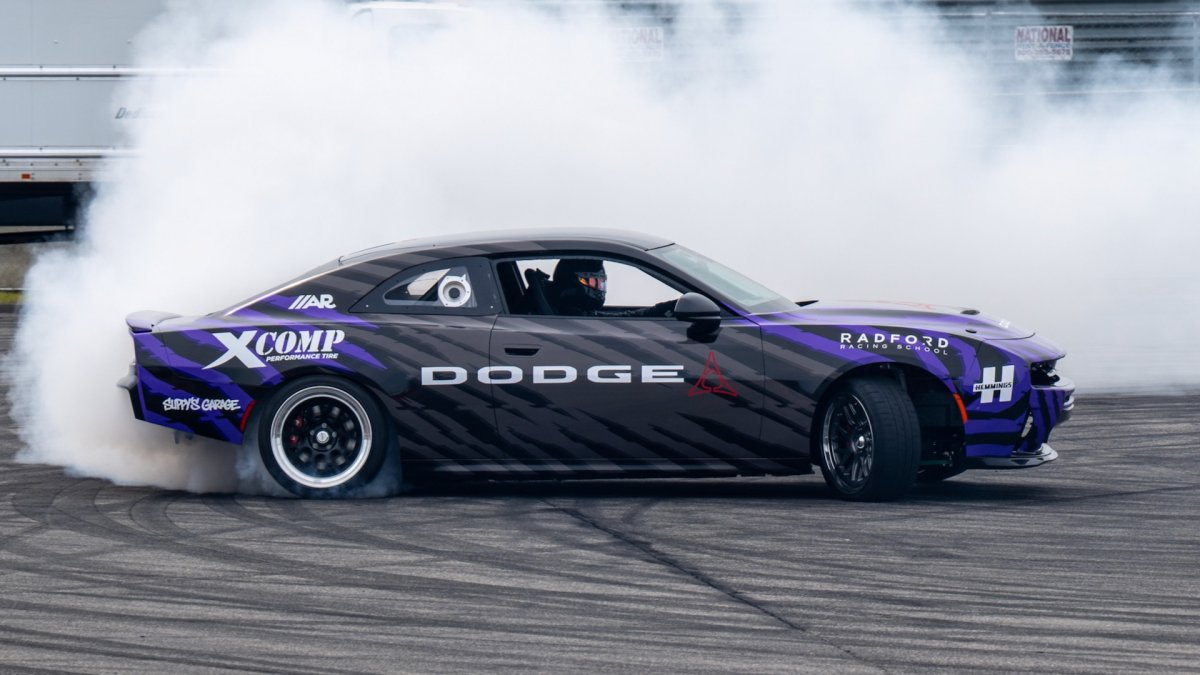
The two builds, a coupe called the Boost and a sedan called the RPM (Rapid People Mover, because it will give passenger rides at events), started life with the Sixpack H.O. version of the twin-turbo 3.0-liter inline-six, factory-rated at 550 hp and 531 pound-feet of torque. Aftermarket turbos, new intakes, and MoTec engine management pushed output to what Stellantis calls a “conservative estimate” of 750 hp. The coupe runs a single-turbo setup with a new exhaust, while the sedan got upgraded intercoolers and cooling hardware for repeated abuse.
Both cars had their eight-speed automatics ripped out and replaced with manual gearboxes. Both were converted to pure rear-wheel drive, eliminating the stock all-wheel-drive system and its front-axle disconnect. Roll cages, reinforced driveline components, and widened fenders round out the modifications.
They debut at Roadkill Nights in suburban Detroit, then head to Gridlife at Laguna Seca and FuelFest in Arizona.
This is a marketing campaign dressed up as a motorsports program. Stellantis knows it has a problem. New Charger sales have been dismal, and the company has been handing cars to content creators and YouTubers, trying to reframe the Charger as a tuning platform rather than a factory muscle car.
These drift builds serve the same purpose: proof that the new Charger can shred tires and slide corners and do the things Charger buyers actually care about. The trouble is that none of it addresses the core complaint.
The previous-generation Charger was not beloved because of its styling. Nobody pinned posters of it to their walls. It sold because it was cheap, rear-wheel drive, V8-powered, and available to anyone with a pulse and a loan approval.
It was democratic muscle. The new Charger replaced that formula with turbocharged six-cylinder power, standard all-wheel drive, and a price tag that starts higher and climbs fast. It is, by most objective measures, a better car.
It handles better, accelerates harder in certain configurations, and uses modern architecture. None of that matters to the people who made the old Charger a success.
Dodge can build all the drift cars it wants. It can film them sideways at every enthusiast event from Detroit to Laguna Seca. But the gap between a 750-hp show car doing burnouts at a festival and a V8 Charger sitting in a dealership lot for $38,000 is not a gap that YouTube views can bridge.
The Hurricane inline-six is a genuinely capable engine. In these drift builds, it clearly makes enough power to be entertaining. But muscle car culture has never been purely rational.
The V8 is the identity. The sound, the simplicity, the heritage. Dodge knows this, and the company has not denied that a V8 option could come, but it hasn’t confirmed one either.
Meanwhile, the showpiece drift cars will tour the country making noise and smoke, performing the role that actual production Chargers were supposed to fill on their own. Stellantis is spending real money to demonstrate what the new Charger could be, while selling a version of it that most enthusiasts still don’t want. The next stop is Laguna Seca, and the V8 question remains unanswered.

Share this Story