
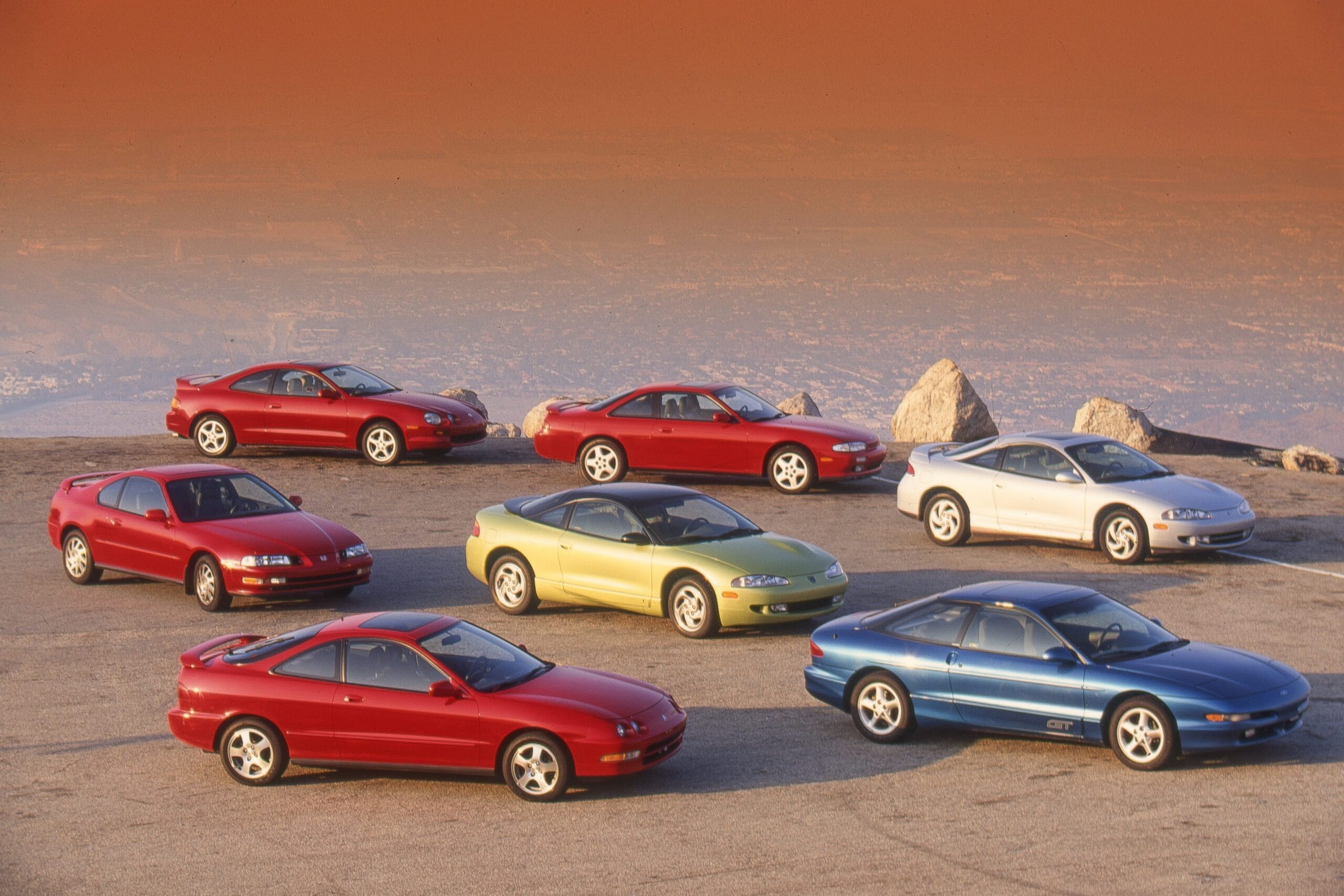


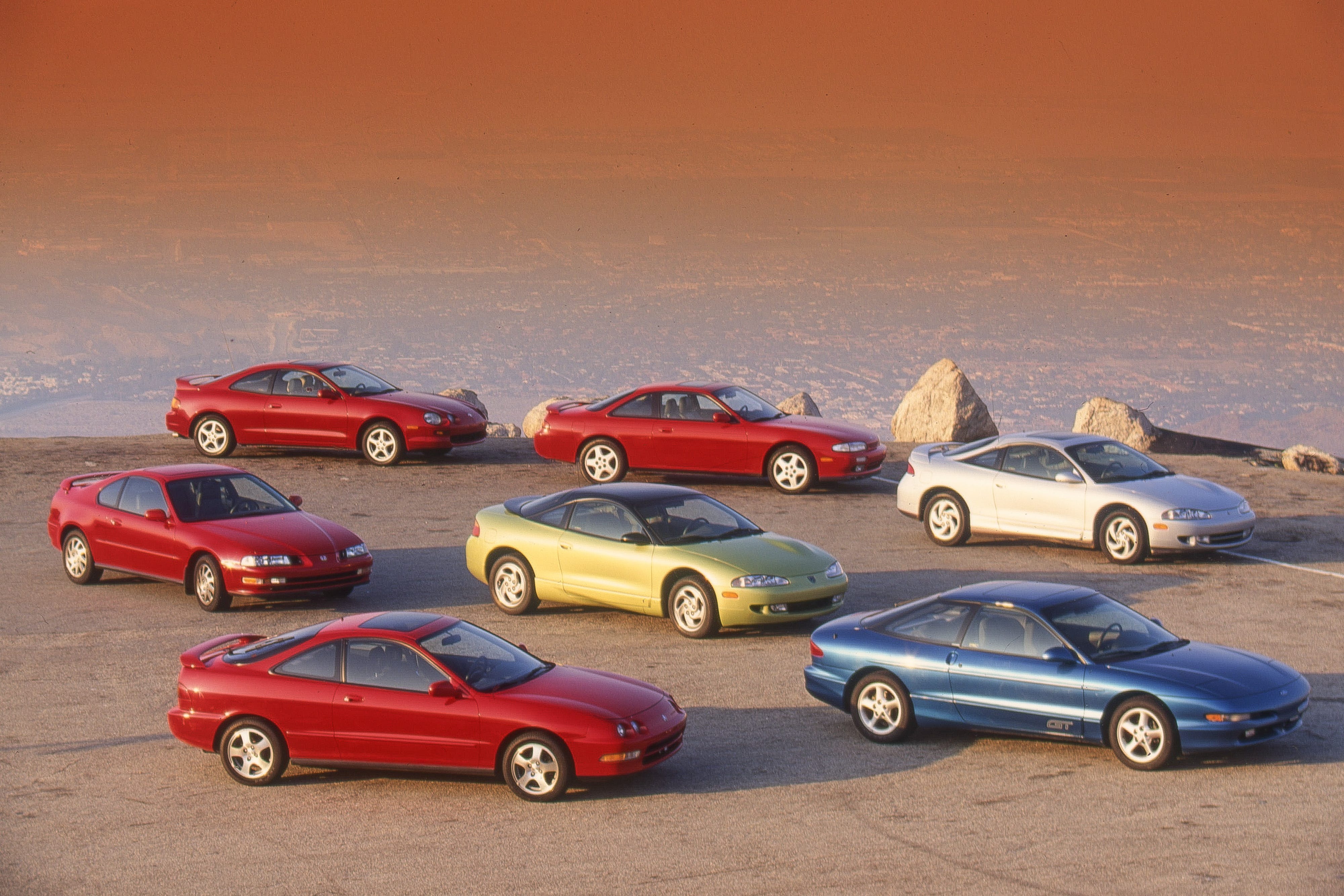
Thirty years ago, seven sport coupes lined up in Southern California with base prices clustered around $20,000, and every single one came standard with dual airbags, anti-lock brakes, and enough grip to embarrass cars costing twice as much. Four of them cracked 60 mph in seven seconds or less. Car and Driver’s June 1994 comparison test reads like a dispatch from a golden age that the industry has quietly abandoned.
The winner was the 1994 Acura Integra GS-R, a car whose 1.8-liter VTEC four-cylinder screamed to 8,100 rpm and produced 170 horsepower from an engine you could practically fit in a suitcase. It beat out the Honda Prelude VTEC, which took third, and the turbocharged, all-wheel-drive Eagle Talon TSi, which grabbed second. The margins were razor-thin, so close that the editors invoked JFK to describe the balloting.
What jumps off the page three decades later is the sheer density of engineering talent available for monthly payments that wouldn’t stress a young buyer’s checking account. The Ford Probe GT started at $16,445 and came with a Mazda-designed 2.5-liter V-6 that one tester called “a welcome break” from the field’s screaming four-cylinder sewing machines. Its brakes stopped from 70 mph in just 164 feet, it finished fourth, and that says everything about how stacked this field was.
The test route ran from Los Angeles to Mount Palomar, through Palm Desert and Palm Springs, then north along the San Andreas Fault to Rosamond in the Mojave, finishing with hot laps at Willow Springs Raceway. Four days, seven editors, seven cars. That kind of evaluation barely exists anymore, and neither does this class of vehicle.
Nissan’s 240SX SE finished dead last, a fall from grace that still stings. The previous model had placed fourth in a 1992 test, praised for its taut rear-drive chassis. For the redesign, Nissan softened the suspension to chase a broader audience and left the wheezy 155-horsepower engine untouched.
It posted the best skidpad number at 0.89 g but felt numb and disconnected on real roads. One editor’s verdict was surgical: “The sports coupe to buy for your niece.”
Toyota’s Celica GT landed sixth, hamstrung by its 135-horsepower four-cylinder despite having a chassis that dominated the high-speed lane-change test. The interior earned comparisons to Lexus. But at $25,459 as tested, the most expensive car in the group, it needed another 50 horsepower its engineers never delivered.
The Diamond-Star twins, Mitsubishi’s Eclipse GS-T and Eagle’s Talon TSi AWD, split the middle of the pack. Same platform, same 210-horsepower turbocharged 2.0-liter four, different drivetrains. The front-drive Eclipse smoked its inside tire under power and felt tricky at the limit, while the all-wheel-drive Talon put its power down cleanly and climbed to second place. The lesson was obvious then, and it still holds: turbo torque needs four driven wheels.
Try building this test today. A sport coupe with a manual transmission, a naturally aspirated engine revving past 8,000 rpm, real hydraulic steering, and a window sticker south of $25,000 adjusted for inflation. You can’t. The Integra GS-R’s spiritual successor, the 2025 Integra Type S, starts above $51,000.
These seven cars arrived at a moment when Japanese and American engineers were locked in an arms race over who could deliver the most driving pleasure per dollar. Every manufacturer in this test was trying to win young buyers with handling, power, and style rather than touchscreens and subscription services. The cars that lost this comparison would be treasured today. The car that won it sells for five figures at auction and climbing.
Share this Story