
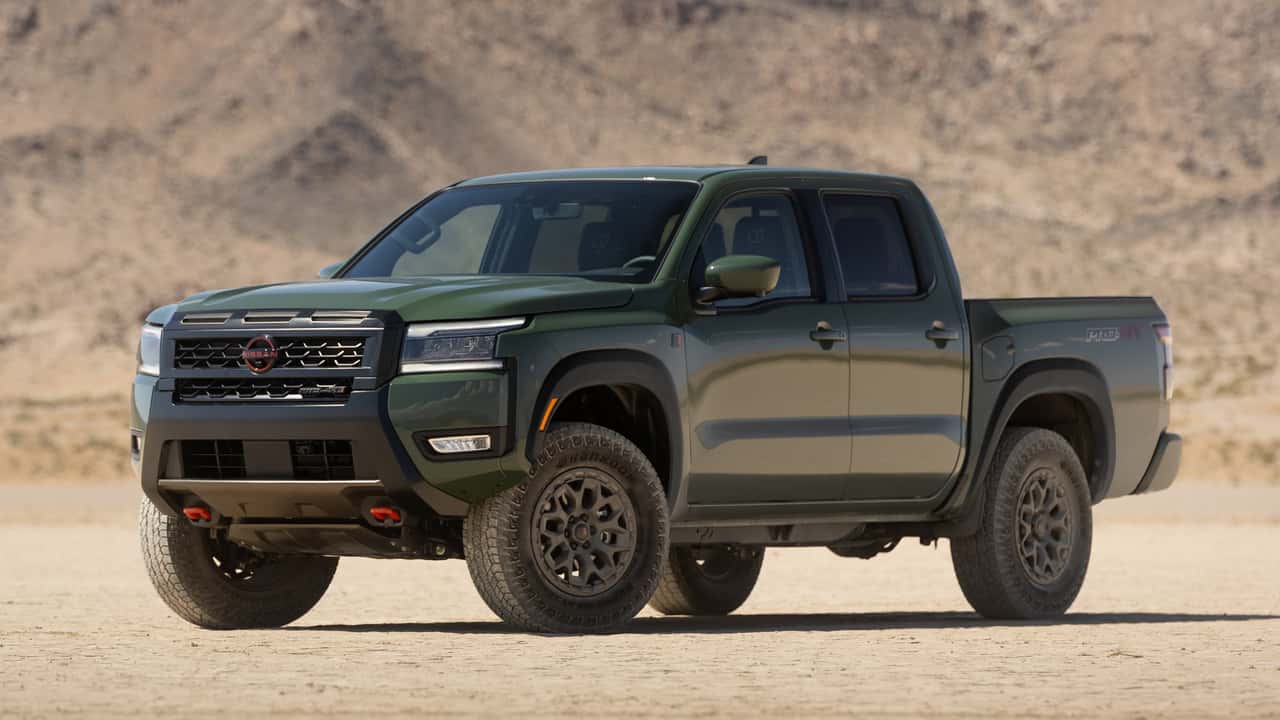


The Chevrolet Colorado runs a turbo-four. The Ford Ranger runs a turbo-four. The Toyota Tacoma, once a V6 stronghold, runs a turbo-four. In the 2026 mid-size truck market, Nissan’s Frontier is the last one standing with a standard V6 across every trim level.
Nissan’s Senior Manager of Product Planning, Brent Hagan, told Motor1 the company has adopted an internal rallying cry: “We’re too V6 to quit.” It’s cheeky, but it’s also a calculated market position. While competitors chase efficiency numbers and turbocharger boost curves, Nissan is betting that a chunk of truck buyers still want the mechanical simplicity and linear power delivery of a naturally aspirated six-cylinder.
The 2026 Frontier packs a 3.8-liter V6 producing 310 horsepower and 281 pound-feet of torque, mated to a nine-speed automatic. No turbo. No hybrid assist. No electrified anything. Available in rear- or four-wheel drive, it’s about as straightforward as a modern powertrain gets.
Hagan says the strategy is already pulling conquest buyers from other brands. “I see a lot of people posting recently saying, ‘I’m a Toyota guy, or I’m an XYZ company guy,'” he told Motor1. “‘They’ve gone away from V6s, and I really prefer V6. I prefer the linearity. I prefer the durability.'”
That’s a telling admission from inside Nissan, a company currently navigating financial turbulence and an uncertain corporate future after the collapsed Honda merger talks. Leaning into a legacy powertrain while the rest of the industry sprints toward electrification and downsizing is either stubbornly nostalgic or shrewdly opportunistic. Probably both.
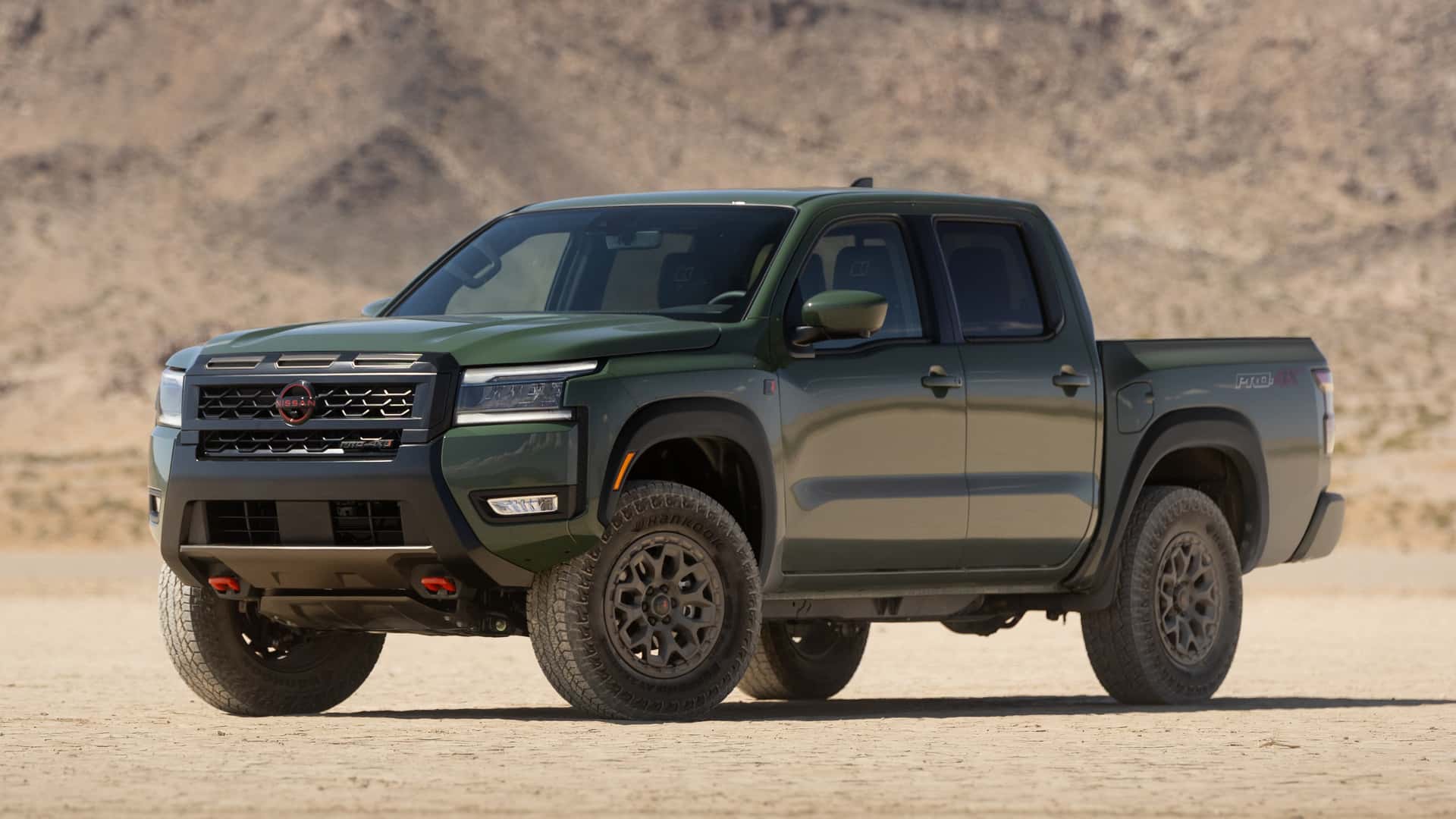
Mid-size truck buyers are a conservative bunch. They don’t want to be guinea pigs for first-generation turbo engines or untested hybrid systems. Toyota learned this the hard way when Tacoma loyalists revolted over the switch from the beloved 3.5-liter V6 to a turbocharged 2.4-liter four-cylinder for the 2024 redesign.
Forums lit up. Dealer lots got quieter.
Nissan even designated May 5 as “V6 Day,” a marketing stunt that would feel desperate from most brands but lands differently when you’re genuinely the last one doing it. The VQ-series engine family has powered everything from the GT-R to the Xterra, and the current VQ38 is built domestically in the United States. Hagan made sure to emphasize that point: “Made in America, by Americans, for Americans—and it has the Japanese quality and reliability.”
The Frontier lineup recently expanded with a new Sport trim, slotting below the hardcore Pro-4X with aluminum skid plates, 17-inch off-road wheels, and fog lights at a more accessible price. Every version, from the base S to the loaded Pro-4X, gets the same V6. There’s no stripped-down four-cylinder entry point designed to advertise a low starting MSRP that nobody actually buys.
One engine. One message. It’s a clean, honest approach to selling trucks.
The gamble is longevity. Emissions regulations tighten every year, and fuel economy standards keep climbing. A naturally aspirated V6 without electrification has a finite runway, and Nissan hasn’t publicly committed to keeping the architecture for the next-generation Frontier.
Hagan’s enthusiasm is real, but enthusiasm doesn’t write compliance paperwork.
For now, Nissan owns a lane that every other mid-size truck maker voluntarily abandoned. Whether that lane leads somewhere profitable or simply delays the inevitable depends entirely on how long regulators and customers stay patient. The customers, at least, seem willing.
Share this Story