
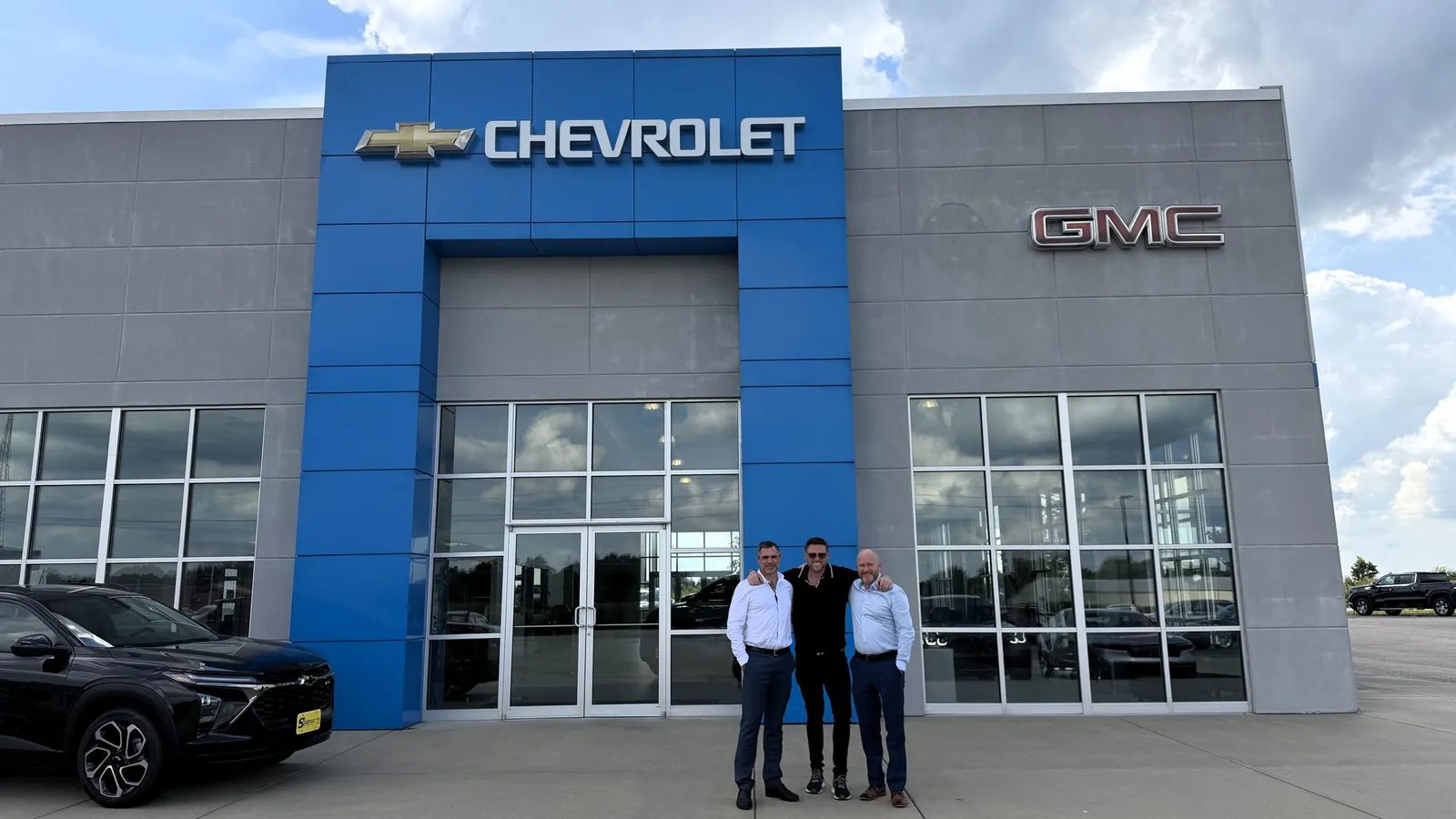


A broker told Alex Feldman and Michael Gitlevich that no manufacturer would ever approve them as franchise owners. Neither had run a dealership before. The broker ghosted them.
They bought one anyway.
Auto Exchange Chevrolet GMC in Sullivan, Indiana, opened under new ownership on July 7. The store, 90 miles southwest of Indianapolis, came with baggage. Its previous general manager was convicted of theft and forgery and sentenced to six years in prison.
The dealership was financially distressed, bleeding inventory and staff morale. That mess turned out to be the opening Feldman and Gitlevich needed. General Motors wanted the old operators out badly enough to take a chance on a pair of newcomers.
Feldman’s background is in commercial real estate and e-commerce. Gitlevich worked at dealerships in the Chicago area, specializing in inventory acquisition. They’d never owned a store.
Multiple brokers passed on them. Then Bob Wolfbauer at the Tim Lamb Group connected them with Barry Merrill, a former dealer who had sold his stores in 2021. Merrill agreed to serve as general manager, providing the operational credibility the pair lacked.
Even that wasn’t enough for Wolfbauer, who, according to Feldman, decided the group still didn’t have the credentials and stopped returning calls. Wolfbauer did not respond to a request for comment.
Feldman kept dialing. Tim Wild, another broker at the same firm, suggested the Sullivan stores as a target. The package included both a Chevy GMC franchise and a Stellantis point.
A previous buyer had already been approved by Stellantis but rejected by GM, making the deal tricky from every angle. Enter Biltmore Automotive Services, a consulting firm that specializes in guiding first-time buyers through the acquisition minefield.
Tim Devine, a Biltmore partner, said Feldman and Gitlevich had already “negotiated a heck of a deal” before bringing his team in. Biltmore’s job was to get them across the finish line without stepping on any of the procedural landmines that trip up newcomers.
GM approved them. Stellantis did not, objecting that Merrill was the general manager rather than an equity owner. Stellantis subsequently closed the Chrysler Dodge Jeep Ram point entirely.
The turnaround at the Chevy GMC store has been swift. Within three weeks of taking over, Feldman and Gitlevich had 150 vehicles on the lot, a stark contrast to the bare inventory the previous operation had limped along with. They kept all existing sales staff, gave everyone raises, and started hiring.
A business development center manager, a quick lube tech, additional service technicians, and several porters are being added. A car wash is being built on the lot.
The old CDJR building next door won’t sit empty. Feldman and Gitlevich plan to convert a structure behind it into a heavy-duty truck service center focused on fleet work. Two heavy-duty lifts have already been ordered.
The building itself was already image-compliant with GM standards, sparing the new owners a capital expense that can run into the millions for first-time buyers at other brands.
Feldman has his eye on more stores. A Ford franchise tops the list, followed by Kia or Hyundai. Honda and Toyota, he concedes, are out of reach for now. The ambition is to grow Auto Exchange Group into a multi-franchise operation.
Sullivan is a town of roughly 4,200 people in rural southwestern Indiana. It is not the kind of market that attracts bidding wars from publicly traded dealer groups. That anonymity gave two outsiders a path that wouldn’t exist in a metro market, where established operators and private equity money crowd out anyone without a track record.
Whether Feldman and Gitlevich can sustain the early momentum will depend on execution in a small market with thin margins. The former GM of the store they just bought is serving six years. The bar for improvement was already on the floor.


Share this Story