
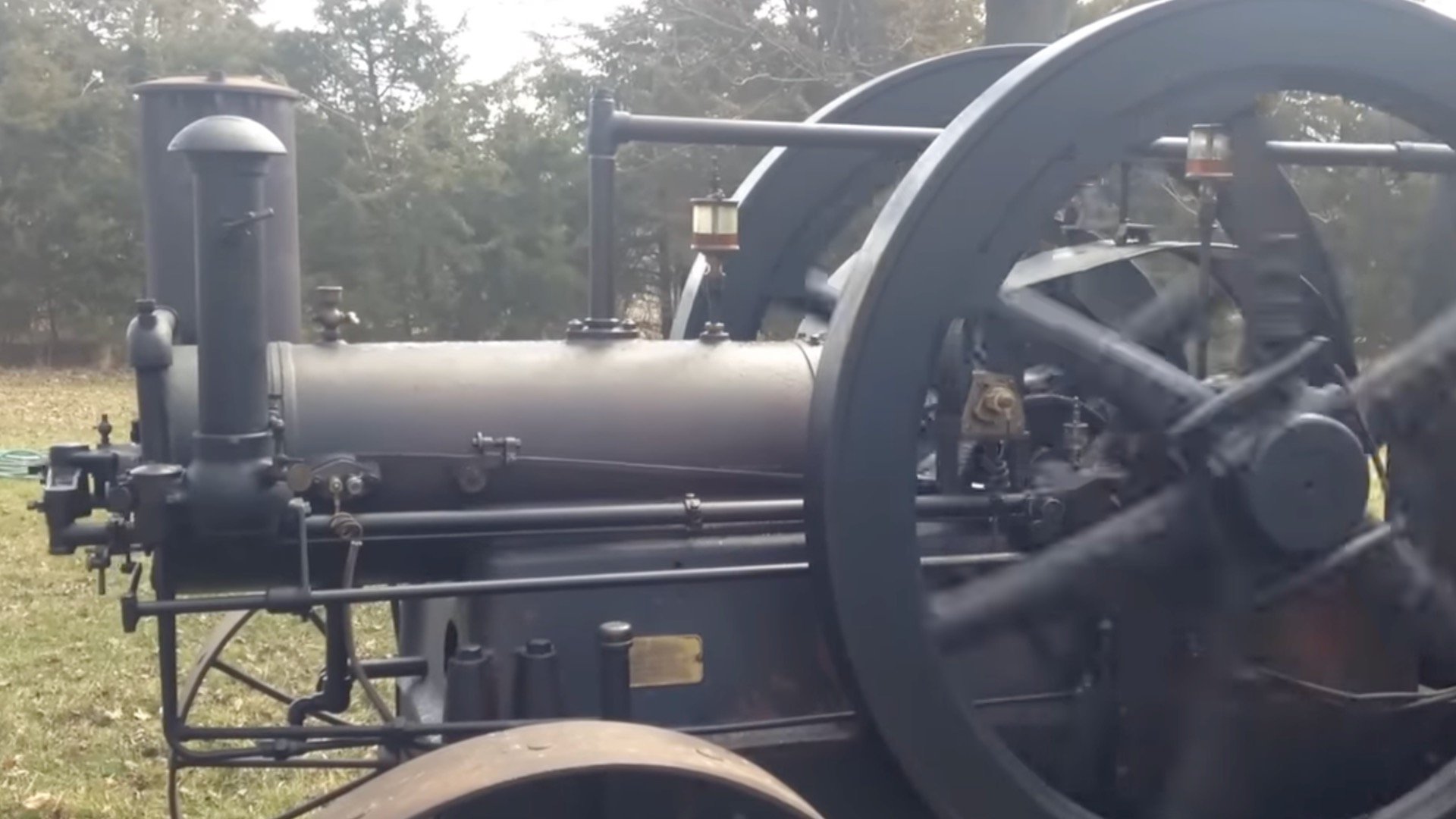


A single-cylinder engine with 1,100 cubic inches of displacement, roughly 18 liters, producing just 25 horsepower. That ratio sounds absurd by modern standards. But in 1915, International Harvester considered it a perfectly viable piece of industrial machinery.
One of those engines, believed to be among only three still in existence, recently surfaced in a video from the YouTube channel Antique Tractor Life. Its backstory is a better lesson in engineering history than most textbooks offer.
The engine is a “hit-and-miss” design, a name derived from its crude but effective operating principle. When the engine reaches a target speed, ignition fires. When it doesn’t need to, the cycle simply skips.
A governor holds the exhaust valve open to regulate speed, and the intake valve operates purely on the suction created by the combustion chamber. No electronic fuel injection. No variable valve timing. Just mechanical logic, bolted together from cast iron and stubbornness.
International Harvester built these engines in Milwaukee from 1904 to 1917. The lineup started with 6-, 8-, and 15-hp gasoline models. The 25-hp variant entered production in 1910.
By 1913, the company was already pivoting to kerosene-fueled versions because booming automobile production had driven gasoline prices higher. Early energy politics, it turns out, are not so different from modern ones.
The engines were sold in horse-portable, wagon-portable, and stationary configurations. Farmers used them for belt-driven equipment. Mills and shops used them as primary power sources in the years before electrical grids reached rural America. They were simple, fixable, and cheap to run compared to the steam engines they often replaced.
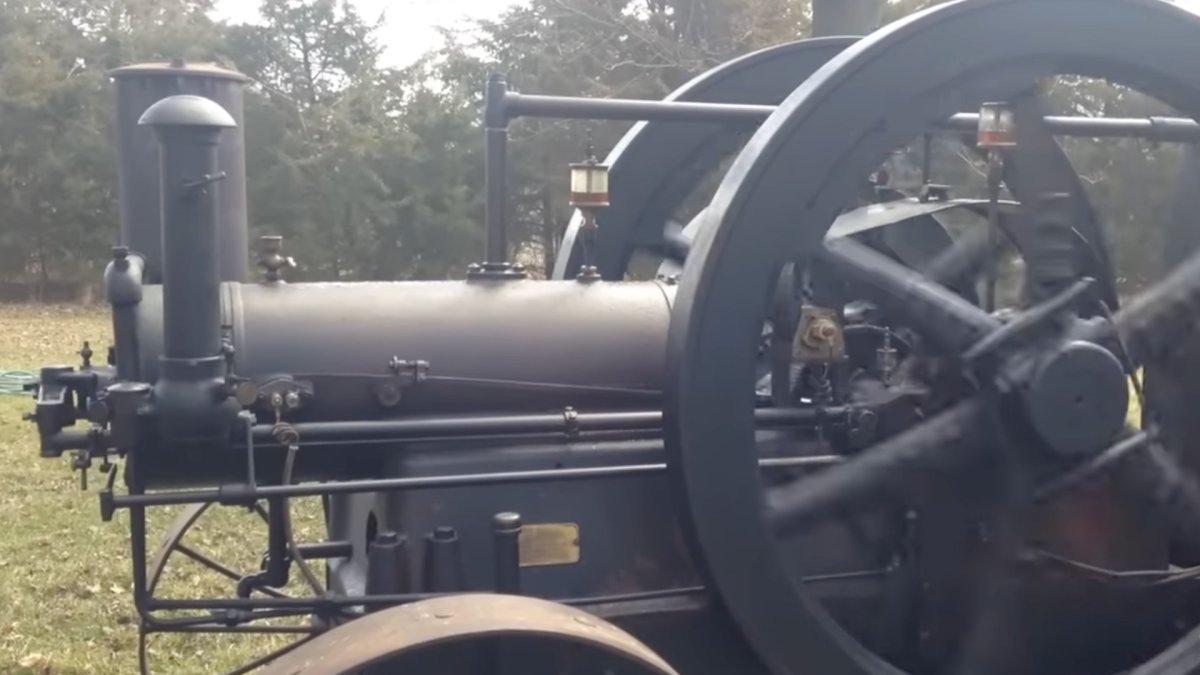
This particular unit was originally built on a wheeled chassis but spent the vast majority of its life bolted to the floor of a planing mill in Pennsylvania. It wasn’t even the mill’s first choice. A fire destroyed the steam engine that had powered the operation, and the Great Depression made buying new equipment out of the question.
The hit-and-miss engine had already been sent to a scrap yard. Someone pulled it back, installed it, and it ran the mill from 1935 until the operation was sold at auction in 1997.
Sixty-two years of continuous industrial service from a machine that was considered obsolete before World War II started. A thick coating of oil and sawdust acted as an unintentional preservative, keeping the engine in remarkably original condition through decades of daily use.
Some mechanical work was needed after it left the mill, but the engine runs today. It stands as a physical reminder that early internal combustion was not the refined, efficient technology we know now. It was messy, oversized, and wasteful.
These were engineering dead ends that worked just well enough to keep the lights on, sometimes literally.
International Harvester stopped making hit-and-miss engines in 1917. Most were scrapped, melted down, or simply abandoned as electrical power and more advanced engines took over. That only three of the 25-hp models are believed to survive says everything about how disposable this technology was considered even by the people who depended on it.
The fact that one of them outlasted the company that built it, running daily in a sawmill while International Harvester itself was broken up and sold off in 1985, is the kind of irony that only real history delivers.





Share this Story