
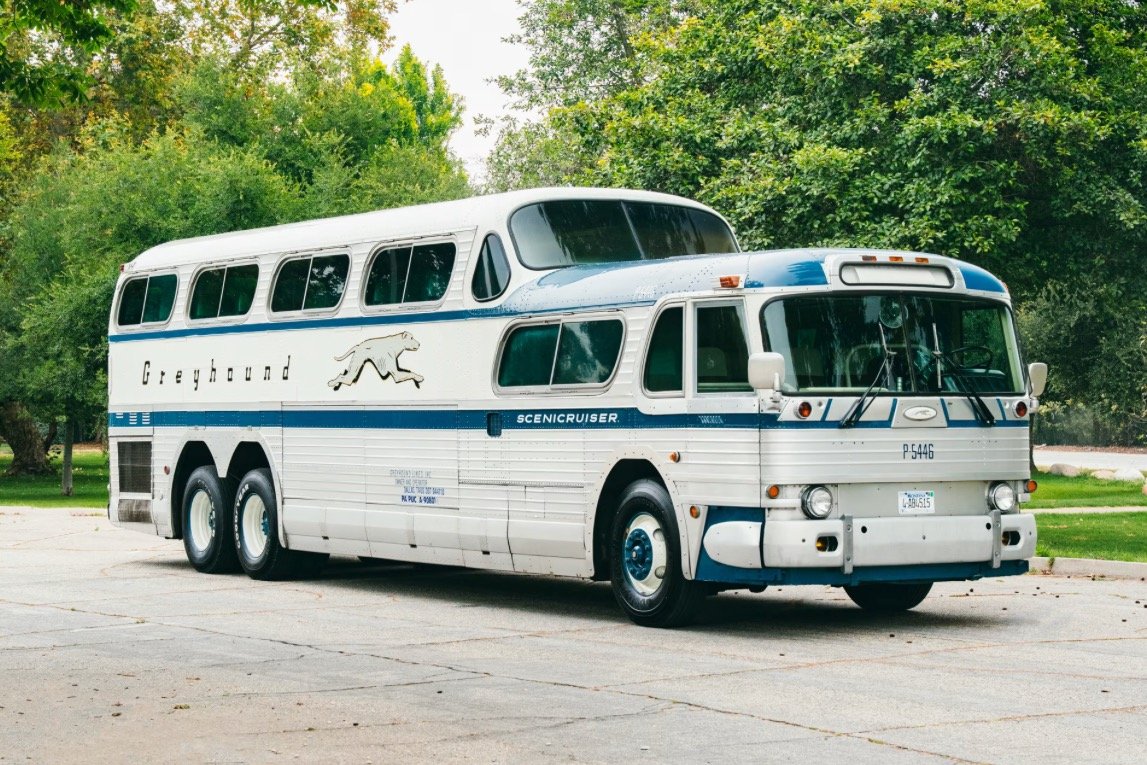


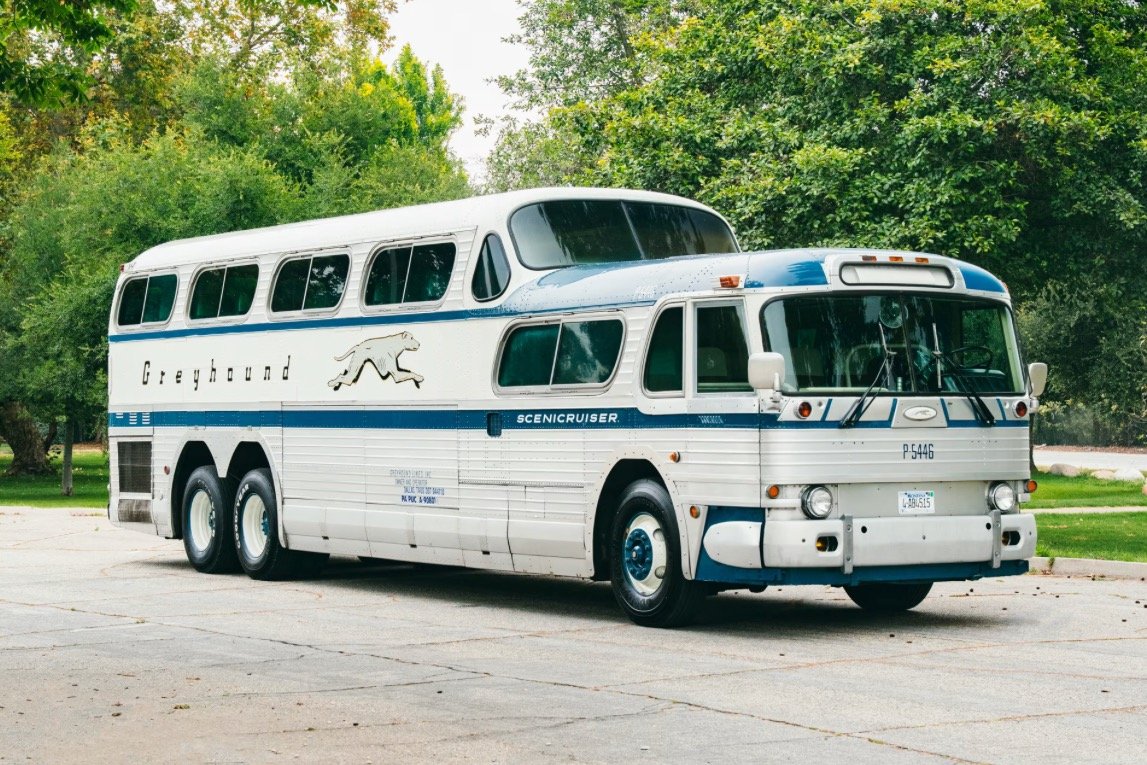
A 1954 Greyhound Scenicruiser, serial number one off the production line, will cross the block at Mecum’s Las Vegas auction on November 14. It is the first of roughly 1,000 PD-4501 Scenicruisers that General Motors built exclusively for Greyhound between 1954 and 1956, and it looks like it just rolled out of the factory.
That alone would make it a curiosity. What makes it a time capsule is the world it came from.
The Scenicruiser was GM’s attempt to make bus travel glamorous, or at least aspirational. Its split-level design borrowed the domed silhouette of luxury railroad passenger cars, giving riders elevated sightseeing seats while tucking luggage below. Aluminum paneling caught the sunlight the way Detroit wanted everything to catch the sunlight in those years.
It was a vehicle that belonged on Route 66 alongside the Bel Airs and Roadmasters, a machine that told you traveling by bus was a real experience, not a concession. Compare that to today’s intercity coaches, which are utilitarian slabs engineered for cost efficiency and nothing else. Nobody photographs a modern Greyhound because nobody wants to remember one.
The Scenicruiser’s beauty came with headaches. GM couldn’t source a suitable V8 diesel at the start of production, so each bus ran on a pair of four-cylinder engines, doubling the maintenance burden. Greyhound mechanics learned the hard way what prototype-level engineering felt like spread across a thousand vehicles.
The fix came eventually. Detroit Diesel’s 8V-71 replaced the twin-engine setup, and that is what powers this particular bus now, mated to a four-speed manual transmission. Greyhound kept Scenicruisers in revenue service into the 1970s, a two-decade run that speaks to the soundness of the concept once the teething problems were ironed out.
GM never produced a true successor. The later Buffalo Bus line carried some of the Scenicruiser’s styling DNA but was sold to multiple operators, not just Greyhound. The exclusivity, the drama, the sense that a bus company and a manufacturing giant had conspired to build something singular, that died with the PD-4501.
About 200 Scenicruisers are believed to survive. Most sit in various states of decay on rural properties or in the hands of conversion enthusiasts who gut the interiors for RV builds. A fully restored, first production example is a different animal entirely.
Mecum hasn’t published a pre-auction estimate, which usually means the consignor has ambitious expectations. For context, an unrestored Scenicruiser surfaced on Craigslist in 2024 with a $50,000 asking price. A frame-off restoration on a 40-foot bus is not cheap work, and the provenance of being chassis number one will add a premium that is hard to predict.
The practical question for any buyer is storage. You need a lot of concrete to park a 40-foot, split-level monument to mid-century optimism. The deeper question is whether anyone still values the idea that public transportation could be beautiful, that getting from Chicago to Los Angeles by bus was once something you might actually look forward to.
Bidding opens November 14. The parking problem is yours to solve.



Share this Story