


A bipartisan House committee voted 48-1 in May to advance the Motor Vehicle Modernization Act of 2026, and the aftermarket coalition that’s supposed to be celebrating is furious instead. The bill that cleared markup is, by the admission of its own original sponsor, a shell of what was intended.
Rep. Neal Dunn, the Florida Republican who introduced the standalone REPAIR Act in early 2025, has publicly said the committee version doesn’t capture his original intent. When the author of a bill calls it inadequate before it hits the floor, you don’t need a lobbyist to tell you something went sideways.
Here’s what happened. The House Energy and Commerce Committee took Dunn’s bill, stripped out the provisions covering telematics, wireless vehicle data, and software access, then folded what remained into a larger legislative vehicle. What survived codifies a 2014 voluntary agreement between automakers and the aftermarket — a handshake deal that predates the connected car as we know it.
That 2014 memorandum said nothing about ADAS sensors, calibration procedures, radar, cameras, or the oceans of diagnostic data modern vehicles beam wirelessly to their manufacturers. It couldn’t have. Tesla was barely shipping cars. Over-the-air updates were a novelty. Today they’re the architecture.
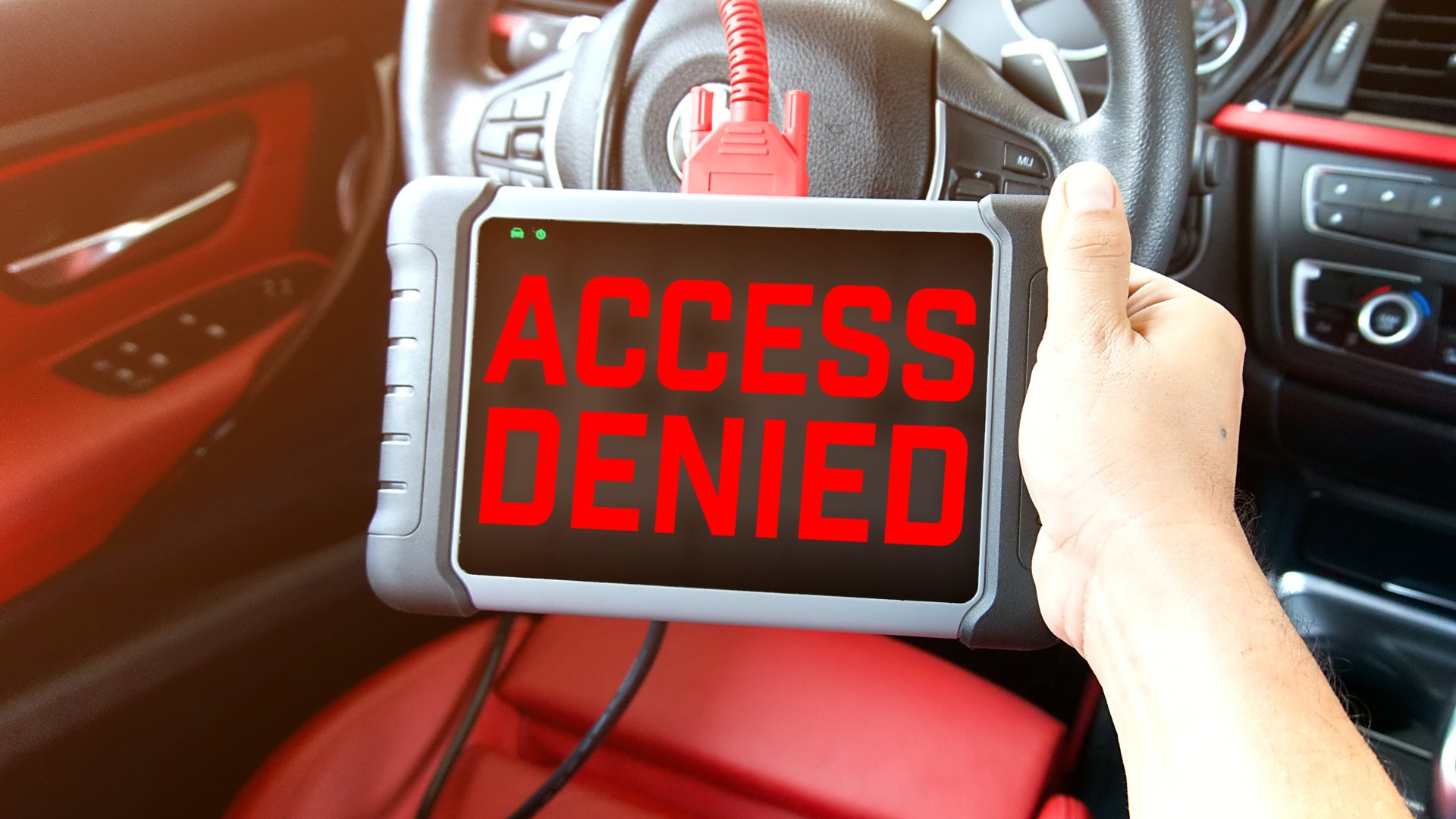
CAR Coalition executive director Justin Rzepka didn’t mince words, arguing that codifying a 12-year-old agreement does nothing to expand consumer choice and instead hands automakers a monopoly over an increasingly expensive repair ecosystem. The real chokepoint has migrated from physical parts to software authorization. Your independent mechanic can buy a scan tool. What she can’t buy is the manufacturer’s blessing to access the data stream her diagnosis depends on.
Automakers have their counterarguments lined up like talking points at a quarterly earnings call. Cybersecurity risk. Intellectual property. ADAS calibration precision. Consumer data protection. Every one of those concerns has some surface legitimacy, and every one of them conveniently routes more repair dollars back through the dealership service bay.
A bipartisan group of senators, citing FTC findings, has called the cybersecurity objection largely pretextual. That’s particularly damning given that these same manufacturers sell vehicle data to insurers and third-party brokers without much consumer transparency at all.
Then there’s the White House entry. On June 29, President Trump issued a memo titled “Lowering the Cost of Living by Promoting the Freedom to Fix.” It sounds muscular. It isn’t.
The memo directs the EPA to ease restrictions on aftermarket emissions parts. That’s a deregulation play dressed in right-to-repair clothing. It doesn’t touch diagnostic data access, telematics, or software — the actual battlefield.
The legislative path forward runs through the highway bill. H.R. 7389 is expected to merge with the BUILD America 250 Act, a $580 billion surface transportation reauthorization that must be signed before current authorities expire on September 30. That hard deadline is both leverage and risk. Right-to-repair language could get strengthened in floor negotiations, or it could get horse-traded away entirely in the rush to fund highways.
Committee chair Brett Guthrie has committed to continued negotiations on the repair provisions before a floor vote. No date is set. The Senate is working on its own version, complicated by midterm election politics that make courage expensive.
This fight polls well everywhere — red states, blue states, suburbia, rural America. People understand intuitively that if they bought a car, they should get to choose who fixes it. But intuition doesn’t write legislation. Automakers have lobbyists. Consumers have phone calls to their representatives and a narrow window before September forces everyone’s hand.
The aftermarket coalition — the Auto Care Association, CAR Coalition, SEMA — is the closest thing car owners have to organized representation in this fight. They’re not perfect proxies, but their business model depends on the same open access consumers need.
Twelve years ago, the industry declared the repair debate settled. The cars moved on. The agreement didn’t. Now the question is whether Congress will catch up to the dashboard or keep legislating for the glove box.




Share this Story