
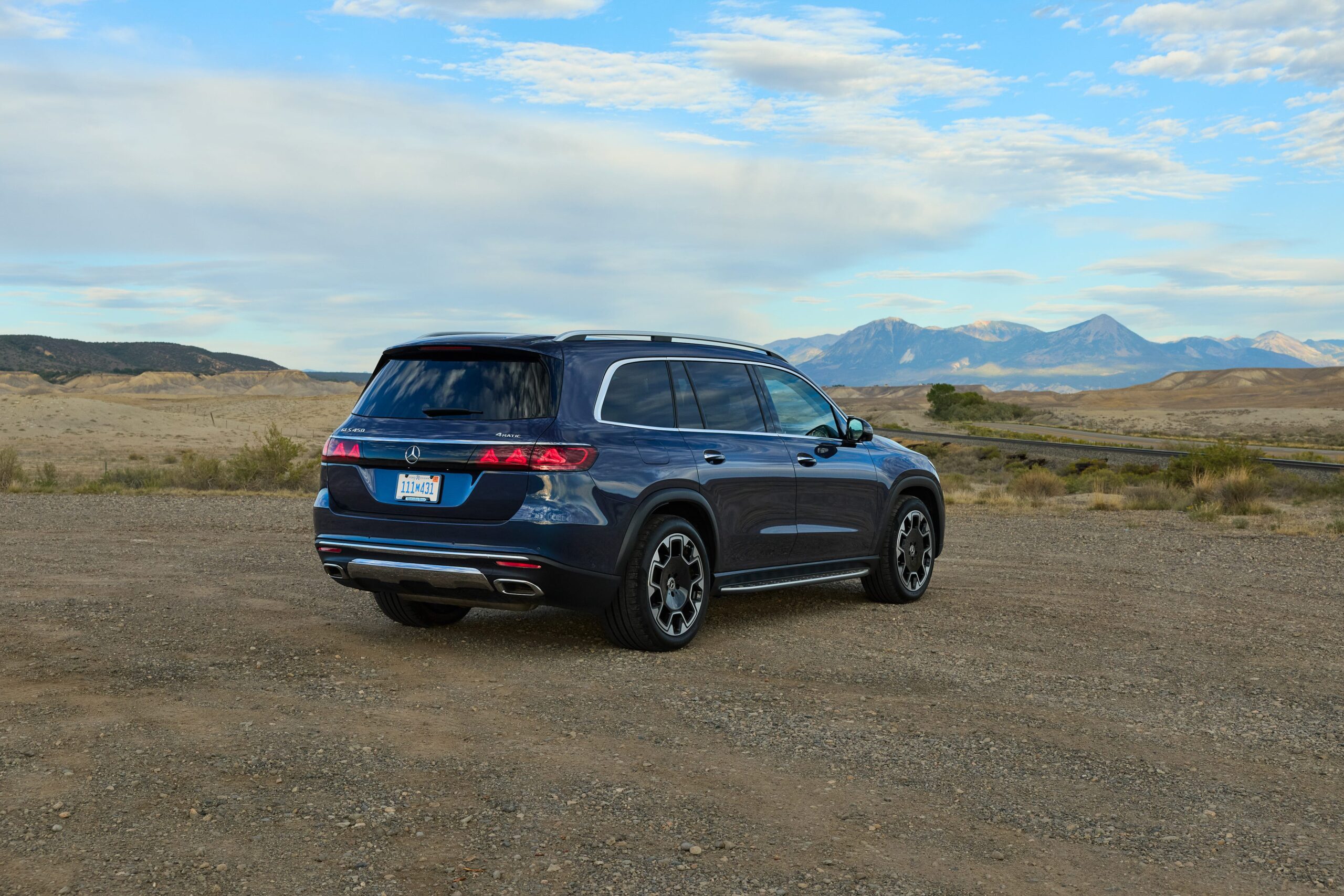


Mercedes-Benz has swapped a flat-plane crankshaft into the twin-turbo 4.0-liter V-8 powering its updated 2027 GLE and GLS SUVs, then spent considerable engineering effort making sure nobody notices.
That’s the peculiar contradiction sitting at the heart of what Mercedes calls the second major update for these aging SUV platforms. Flat-plane cranks are the domain of Ferrari V-8s and Ford’s Voodoo engine, prized for their high-revving scream and reduced rotational inertia. Mercedes took the architecture and deliberately tuned the result to feel and sound like the cross-plane engine it replaces.
The technology changes. The character doesn’t. It’s a strange flex for a company that could have used the switch as a marketing weapon.
The engine trickles down from the updated S-class, which means Mercedes’s flagship sedan is now setting the powertrain agenda for its largest SUVs. That’s a reversal from a decade ago, when SUV-specific engineering drove the bus. Now the S-class hands down its V-8, and the GLE and GLS gratefully accept.
Beyond the engine swap, the GLE’s powertrain lineup gets a broader overhaul. Most variants see more power, and the previous inline-four plug-in hybrid is replaced by a six-cylinder PHEV. Ditching the four-cylinder in a vehicle this heavy always made sense. It just took Mercedes a product cycle to admit it.
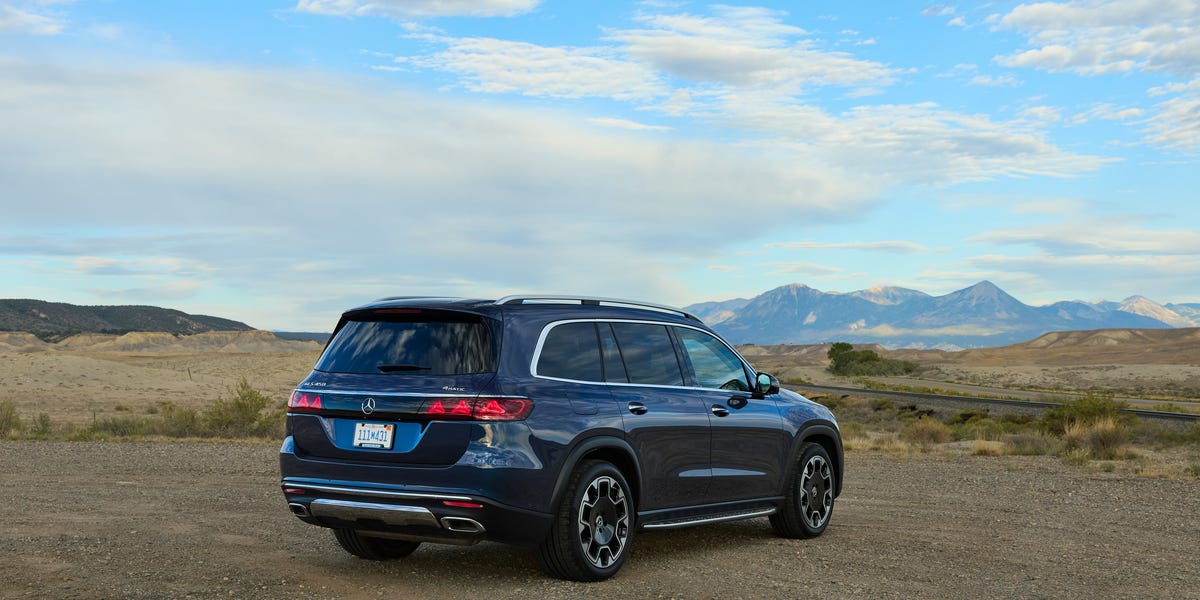
The GLS receives the same V-8 treatment. Both SUVs get resurfaced front bumpers and grilles packed with rows of tiny three-pointed star emblems, a design motif Mercedes has been spreading across its lineup like confetti. It reads as busy up close but photographs well from a distance, which may be the entire point.
Suspension tuning has been revised across the range. The more interesting development is that Mercedes’s E-Active Body Control system now pulls data from the cloud to anticipate potholes before the wheels hit them. The car reads the road ahead using information beamed from other vehicles and connected infrastructure.
That sounds like science fiction until you remember that predictive suspension tech has been creeping into luxury cars for years. Mercedes is simply adding a networked layer.
Hands-free driving hardware is baked into every new GLE and GLS, though the software won’t be ready at launch. Mercedes says it will arrive later via an over-the-air update, a promise the industry has made before with mixed results. The sensors are there, but the capability is not, and buyers are being asked to pay for potential.
These are not new-generation vehicles. The GLE has been on the W167 platform since 2019, and the GLS on its X167 since the same year. Six years is a long time in a segment where BMW’s X5, the Audi Q7, and now a wave of electric competitors are circling. Mercedes is doing what it can with what it has, layering in S-class tech and fresh powertrains to buy time before a full replacement arrives.
The flat-plane V-8 is the most technically fascinating piece of this update, and the fact that Mercedes deliberately suppressed its natural character tells you something about the brand’s priorities right now. The company doesn’t want excitement. It wants seamlessness. Whether that strategy holds against rivals selling drama remains an open question.

Share this Story