
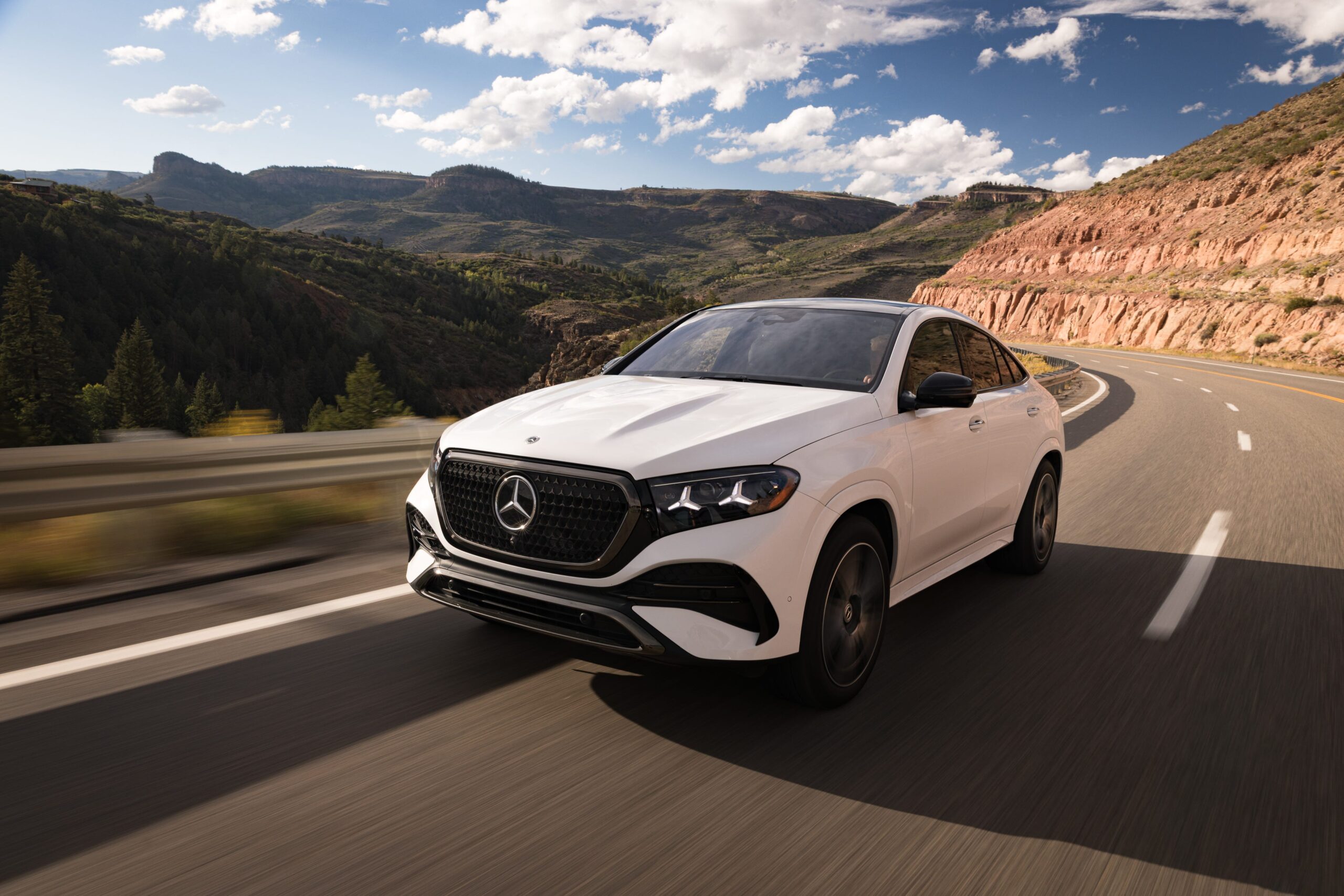


The 2027 Mercedes-Benz GLE now starts at $69,850. That’s after the cheapest rear-drive model got axed entirely, making all-wheel drive the only option and pushing the floor price up by several thousand dollars. Welcome to the cost of keeping old bones moving.
Both the GLE and GLS just received their second mid-cycle refresh, a level of cosmetic and mechanical intervention that speaks volumes about how long Mercedes plans to milk these platforms. The GLE is wrapping up its fourth generation. The GLS is stretching its third.
The real story isn’t the new grilles festooned with tiny three-pointed stars or the headlight designs that require a decoder ring to tell the two models apart. It’s what happened underneath.
Mercedes dropped in the S-Class’s electrical architecture, giving both SUVs the hardware backbone for over-the-air updates, an AI assistant that lives as a blob on the center screen, and the sensor suite needed for hands-free driving in highway and city settings. One catch: those driving features aren’t actually turned on yet. They’ll arrive via software update “at some point in the future,” which is Mercedes-speak for “when we’re ready.”
The powertrain shuffling is more immediate. The base 2.0-liter four-cylinder in the GLE350 now gets an electric compressor to fill the gap while the turbo spools. The 3.0-liter inline-six in the 450 models picks up 44 pound-feet of torque.
The plug-in hybrid GLE500e swaps its old four-cylinder for a reworked six, jumping to 429 horsepower and 502 pound-feet with an estimated 52 miles of electric range.
Then there’s the V-8. The GLE580 and GLS580 inherit the S-Class’s 4.0-liter twin-turbo M177 Evo with a flat-plane crankshaft, an unusual choice for a luxury SUV. Mercedes then spent considerable effort hiding the fact it made that choice, adding balance shafts and tweaking exhaust cam timing so the engine wouldn’t sound like something from Maranello. The flat-plane layout buys efficiency and lower emissions, not character.
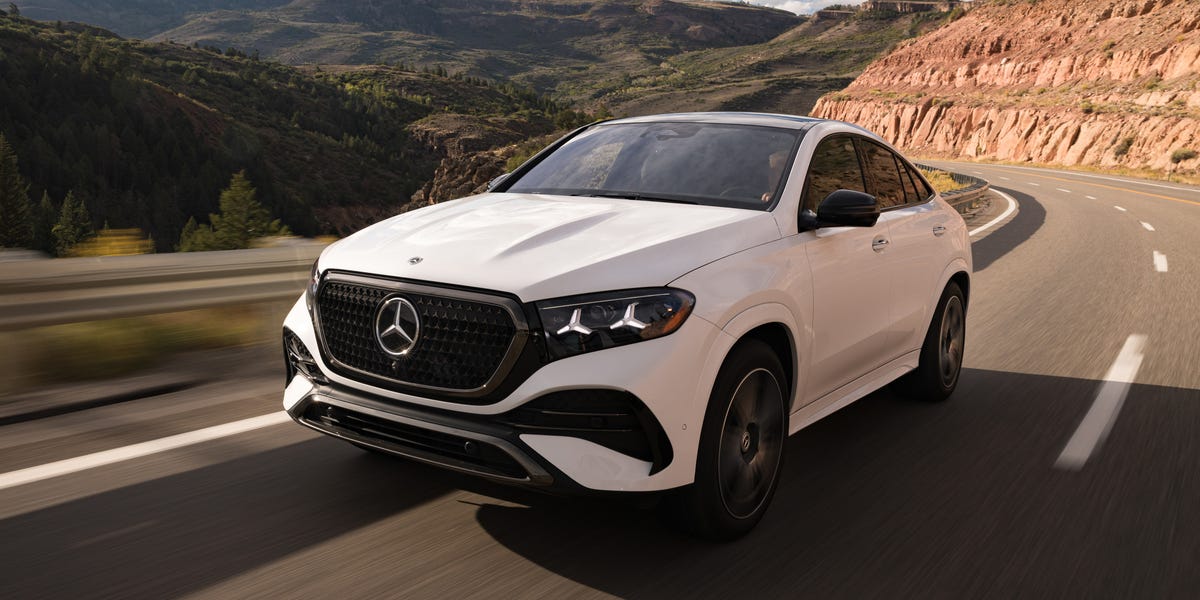
On the road, the theme is suppression. The integrated starter-generator’s initial push blends into the electric compressor’s contribution, which blends into mechanical turbo boost, which blends into shifts from the nine-speed automatic that are heard more than felt. You have to concentrate to notice any of it happening. That’s the point, and it’s executed well.
The chassis got attention too. All three available suspension setups per model have been retuned. Cloud-based predictive damping now supplements the existing camera-based system, reading the road ahead to prep the dampers before a pothole arrives.
The active air suspension still performs its party trick of leaning the vehicle into corners like a motorcycle, an effect that impresses the body but unsettles the brain.
Steering lost some of its trademark syrupy weight, which is an improvement. The GLE Coupe gets stiffer tuning and quicker ratios than the standard SUV, though it remains hard to justify the premium when you’re also giving up cargo space.
Pricing across the board reflects the S-Class hardware migration. The GLE450 SUV sits at $76,250. The plug-in GLE500e starts at $82,450, an $8,850 jump partly blamed on the bigger engine. The GLE580 hits $97,750.
Over in GLS territory, the 450 starts at $95,500 and the 580 commands $122,500.
A triple-screen cockpit is now standard on both models, adding a 12.3-inch passenger display to match the driver and center screens. Mercedes also relented on the widely criticized touch-sensitive steering wheel controls, swapping in a physical roller for volume and a rocker for adaptive cruise. The directional pad remains capacitive touch, because apparently some customer complaints land harder than others.
Mercedes is betting that transplanting its flagship’s organs into decade-old body structures can hold the line until next-generation replacements arrive. The price of that bet keeps climbing.
Share this Story