
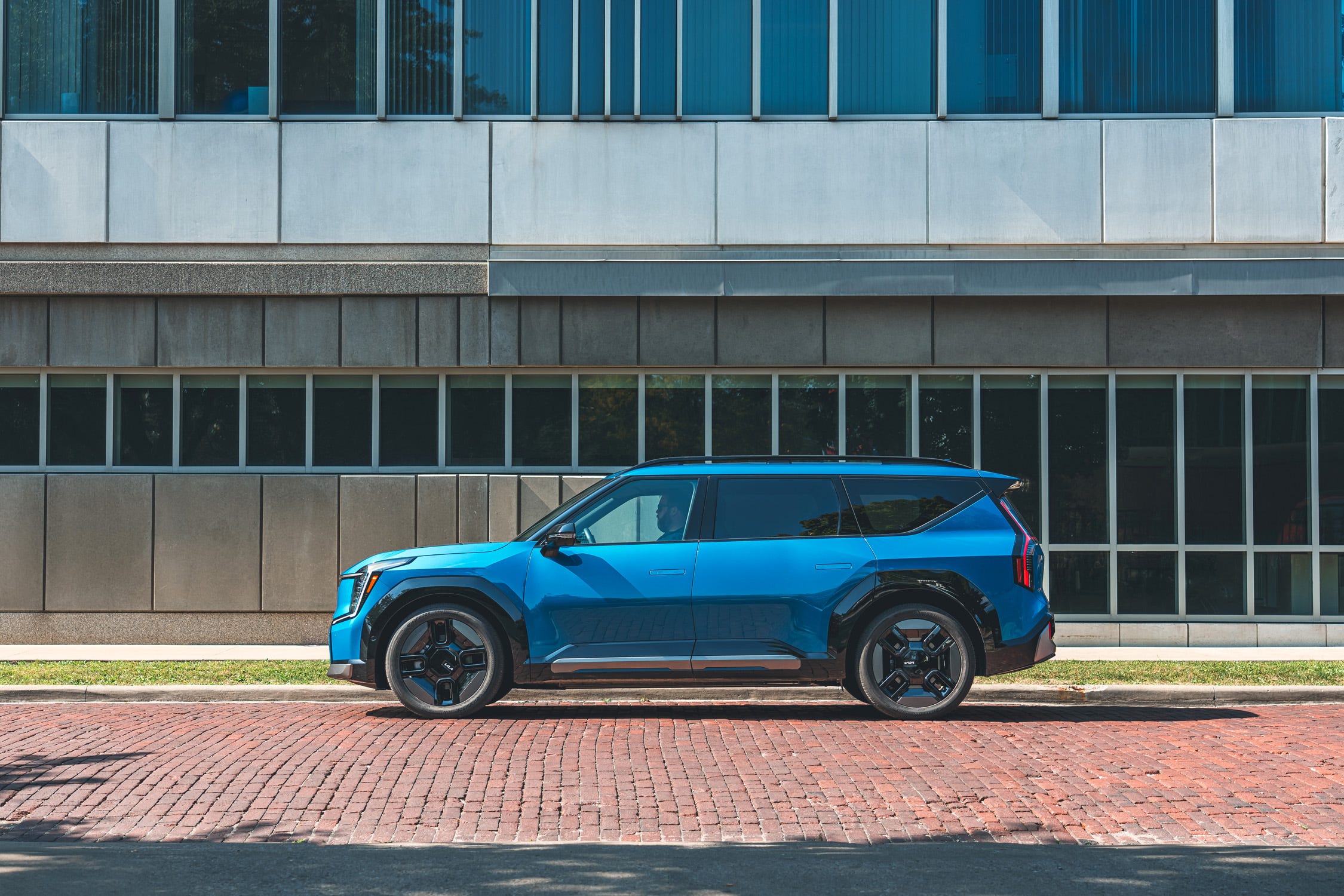


A supplier’s sloppy routing of a sensor tube under the front passenger seat has forced Kia to recall 21,290 EV9 electric SUVs. The vehicles may fail to detect a child or child seat and properly disable the front airbag. That is not a minor software glitch — it is a federal safety compliance failure involving the most vulnerable occupants.
The recall covers all 2025 and some 2026 EV9 models assembled at Kia’s plant in Georgia between May 17, 2024, and May 13, 2026. The problem traces to the Occupant Detection System mat bladder tube, which sits beneath the front passenger seat cushion. When the seat is raised to its highest position, the tube can get pinched due to improper routing.
Over time, repeated height and tilt adjustments can damage the ODS to the point where it stops working entirely. An airbag that deploys when it shouldn’t can kill a child in a rear-facing car seat. The whole point of the ODS is to prevent exactly that scenario, and when it fails, the vehicle no longer complies with Federal Motor Vehicle Safety Standard No. 208.
Two warning signs may tip off owners. The airbag warning light on the instrument panel could illuminate, and the passenger seatbelt chime might activate with nobody in the seat. If either crops up, don’t ignore it.
Kia says it has already notified its dealer network, and letters to affected owners will go out starting October 20. The fix involves inspecting the ODS and, where damage is found, replacing the detection system and seat cover with correct tube routing. Owners who want to check sooner can look up their VIN on the NHTSA recall website beginning September 4.
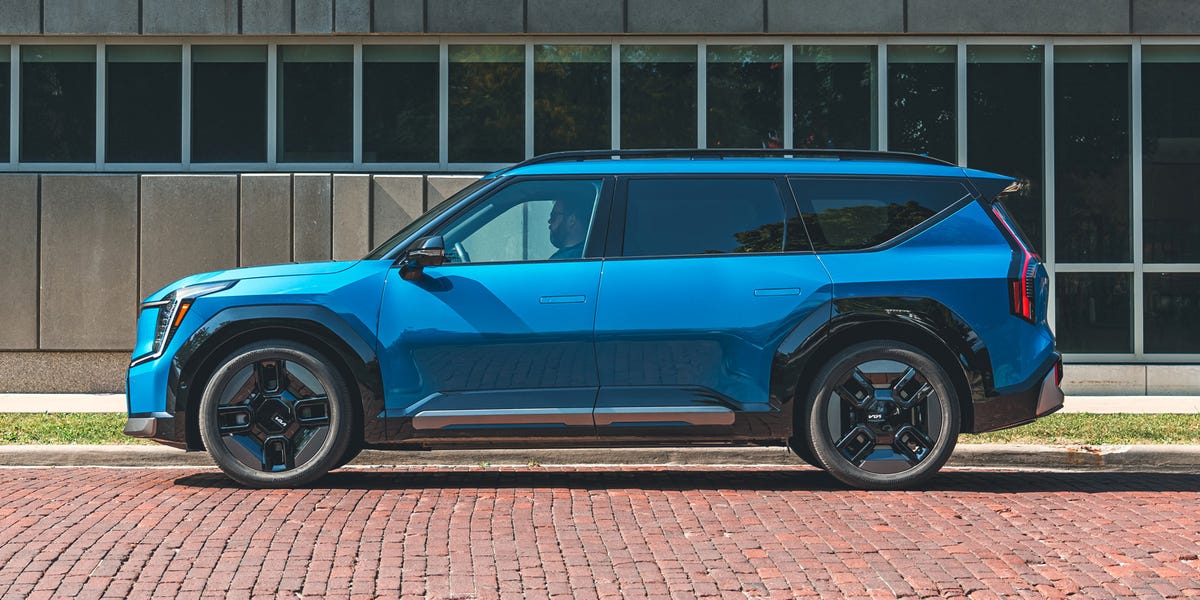
The Georgia factory is Kia’s first dedicated EV production facility in the United States, and the EV9 is one of its flagship models. The three-row electric SUV starts around $56,000, seats up to seven, and has earned praise across the industry for its packaging and ride quality. It is the kind of vehicle families buy specifically because they need the space for car seats and kids.
That makes this particular failure land harder. A $56,000 family hauler built in a brand-new American factory should not have a supplier routing problem that compromises child safety across two model years and more than 21,000 units. The issue apparently persisted in production for over two full years before the recall was filed.
The duration of the production window, stretching from mid-2024 through mid-2026, raises fair questions about how quickly the defect was identified. It remains unclear whether quality checks at the Georgia plant caught it or whether field complaints forced the issue. The recall documents filed with NHTSA do not clarify that timeline.
Owners who have already noticed phantom seatbelt chimes or unexplained airbag lights now have their answer. The rest should check their VINs in September and not wait for the October letter.

Share this Story