
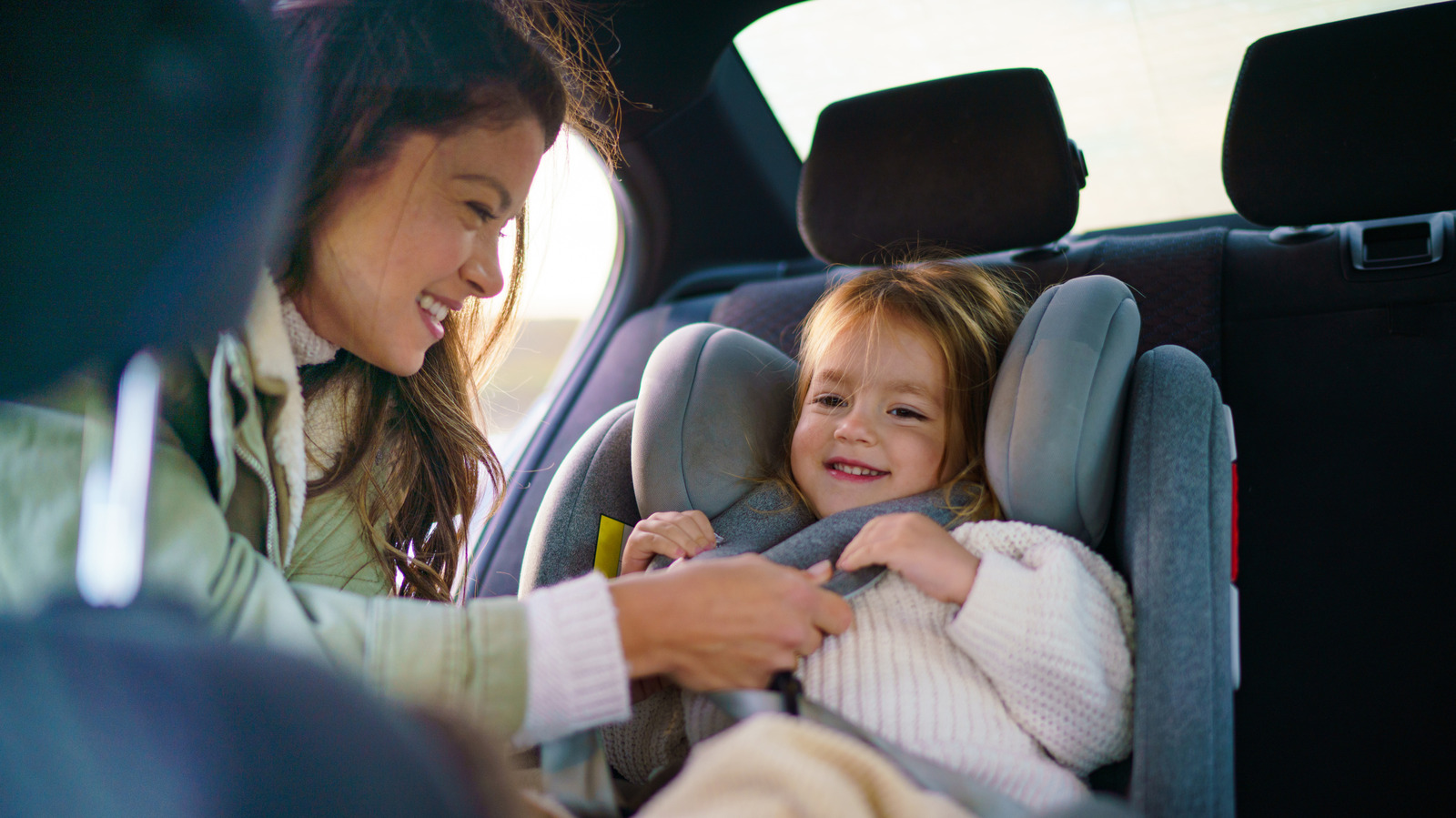


The crash test dummy sitting in the federally mandated simulated back seat used to evaluate child car seats has been living in the 1970s. That changes this December, when two new federal standards finally drag child restraint testing into the modern era.
FMVSS 213a and 213b replace the aging FMVSS 213, a standard that has been patched and updated over the years but never fundamentally rethought. The most significant addition is a side impact protection requirement, something the National Highway Traffic Safety Administration first proposed in 2014. Twelve years to write a rule that the European Union has enforced for years — that timeline tells you everything about the pace of U.S. child safety regulation.
Under 213a, manufacturers must test car seats for children up to 40 pounds against a simulated door intrusion from the side, mimicking the ugly physics of a real T-bone crash. The goal is straightforward: reduce the chance of a child’s head slamming into a door panel or interior structure, and limit chest forces that a small body simply cannot absorb the way an adult’s can.
Many seats already sold in the U.S. offer side impact features because they’re built to satisfy European standards. But offering protection voluntarily and being required to prove it under a federal test protocol are very different things. The new rule closes that gap.
Emily A. Thomas, associate director of auto safety at Consumer Reports, put a fine point on the reasoning. “This regulation aims to provide side impact protection for harnessed kids who won’t benefit as much from the vehicle’s side impact crash interventions, such as the side curtain airbag,” she said. The safest spot for a child seat remains the center of the back seat, away from either door. Any parent with two kids knows that’s a luxury, not a standard configuration.
The companion rule, 213b, modernizes frontal impact testing in ways that sound almost embarrassing when you hear what it replaces. The simulated back seat bench used for testing will now reflect a modern vehicle interior. Lap-and-shoulder belts become the standard test configuration, because lap-only rear belts have essentially vanished from production cars.
Weight thresholds for transitioning between seat types also jump. Children must now weigh at least 26.5 pounds before moving from rear-facing to front-facing, up from 20 pounds. Booster seat eligibility rises from 30 to 40 pounds. Crash test dummies across multiple age categories have been updated for more realistic size and weight profiles.
Both rules were supposed to arrive on different timelines. The side impact standard was originally slated for June 2025 but got pushed back to give manufacturers breathing room. Since 213b was already locked in for December 2026, NHTSA aligned the two deadlines.
The delay is frustrating but predictable. Rulemaking at NHTSA has never moved at the speed of engineering. The agency proposed side impact testing requirements when the Obama administration was in its second term. Children born that year are now in middle school.
Still, the destination matters more than the route. When these rules take effect, every child car seat sold in the United States will have to prove it can protect a small body from the kind of crash that actually kills and injures kids. Not just the kind that was common when bench seats and chrome bumpers ruled the road. The test bench finally catches up to the cars it’s supposed to represent.
Share this Story