
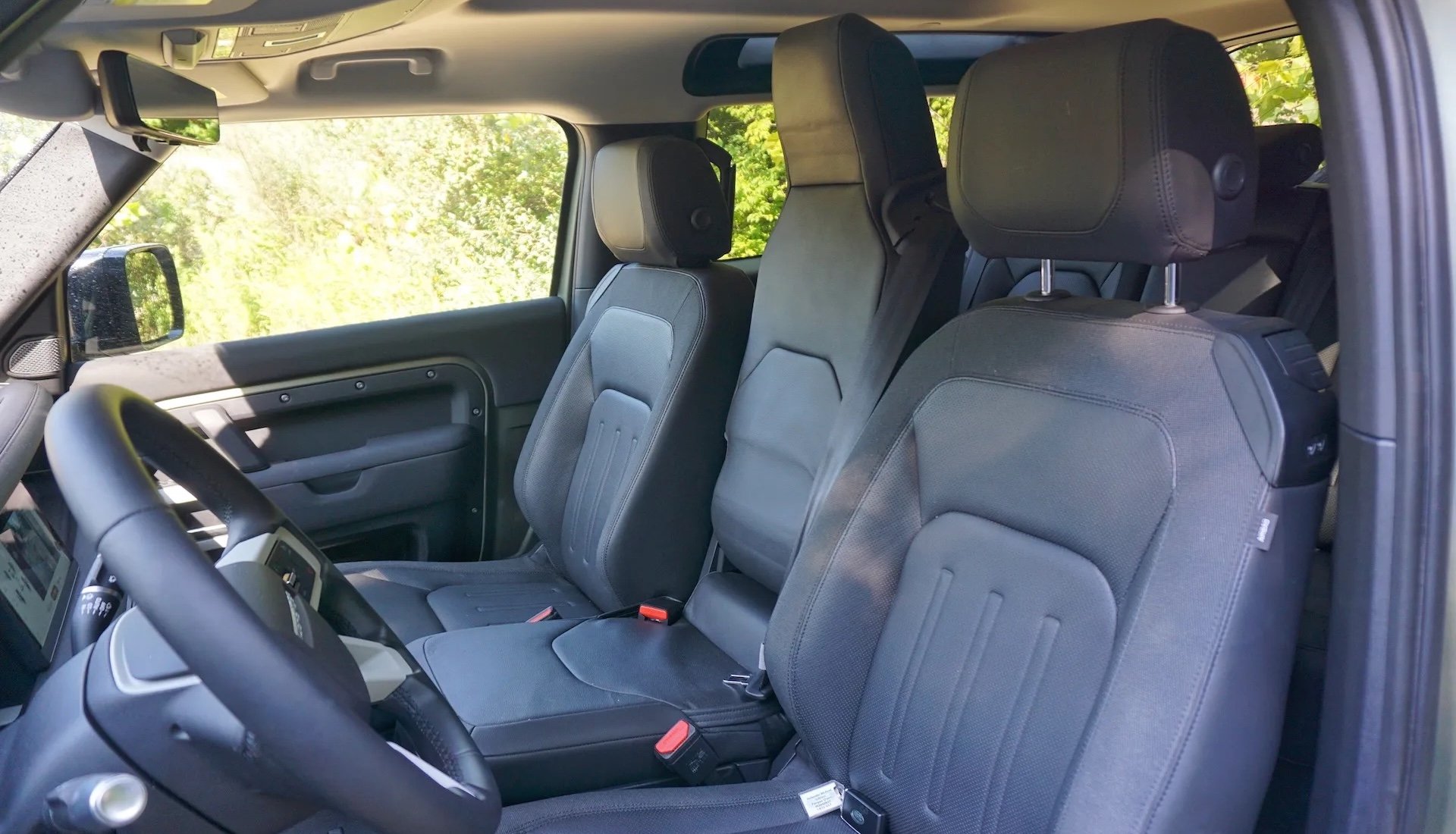


Six people in a two-door Land Rover Defender. That was the promise of the front bench seat, and it was glorious — until JLR quietly killed the option in the U.S. about two years ago. Now a handful of startups and legacy trucks are keeping the configuration alive, and the question is whether anyone beyond enthusiasts actually cares enough to drive a real revival.
The bench seat never fully disappeared from American roads. Chevrolet still offers one in the Tahoe, Suburban, and Silverado. Ram keeps it in the 1500 and HD.
Ford bolts one into the F-150. These are workhorses, though, and the bench exists there for utilitarian reasons — fleet buyers, job sites, the kind of customers who value a warm body in the middle over a leather-wrapped center console with USB-C ports.
The interesting development is who else wants in.
REO Industries, a Texas startup chasing the “affordable American truck” white whale, plans to drop a front bench into its boxy, gas-powered, body-on-frame pickup. Smart, operating in a completely different universe of small European city cars, intends to give its upcoming #2 model a bench to make the cabin feel more spacious. And Scout Motors, Volkswagen’s ambitious electric offshoot, is building benches into both the Terra and the Traveler.
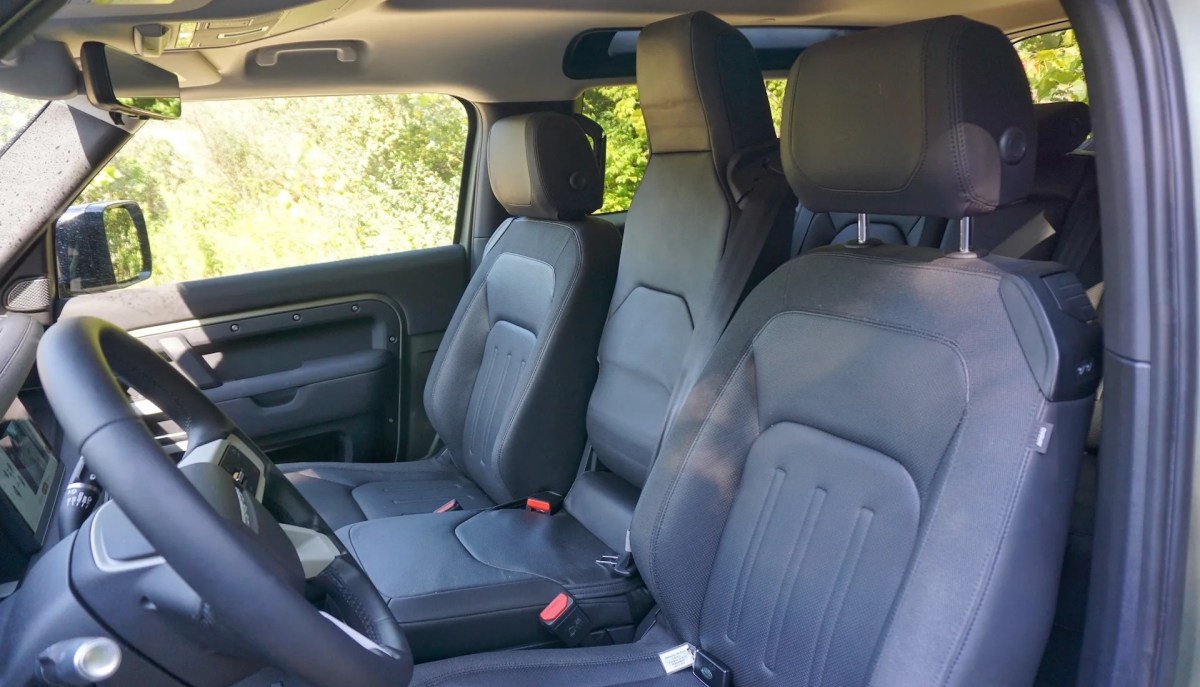
Three very different companies. Three very different market segments. All arriving at the same conclusion: maybe two bucket seats and a massive center console isn’t the only answer.
Scout’s timeline is the most telling. Those vehicles won’t hit the road until sometime in 2028, which means the bench seat commitment was baked into the design philosophy early. This wasn’t a last-minute accessory decision.
Scout is betting that buyers drawn to its retro-flavored electric trucks will respond to a cabin layout that feels deliberately old-school. Whether VW’s patience — and wallet — holds out long enough for that bet to pay off is another matter entirely.
The engineering reality is messier than the nostalgia. Modern crash structures, side-impact airbag systems, and seatbelt pretensioner packaging all complicate a three-across front row. A folding center armrest with integrated storage sounds simple until you have to pass federal motor vehicle safety standards with a middle occupant seated inches from the dashboard.
Every automaker offering a bench today has spent serious money solving those problems. That’s partly why the option has shrunk to a handful of full-size trucks and SUVs where the sheer width of the cabin gives engineers room to work.
Startups like REO don’t have decades of crash-test data to lean on. They’re building from scratch, which is both an advantage and a risk. Smart’s approach is different — it’s using the bench to maximize interior volume in a small footprint, a clever packaging trick that sidesteps the question of whether anyone actually needs to seat three adults across the front of a subcompact.
A handful of models does not constitute a movement. The trucks that offer benches today sell them primarily to commercial and fleet buyers who spec the cheapest possible interior. The romance of the front bench — date night, three friends across, your dog sprawled in the middle — lives mostly in memory and on Instagram.
But the fact that new companies are choosing this layout voluntarily, without fleet-sales pressure, suggests something shifted. Buyers tired of identical cockpit-style interiors might actually check the box.
The bench seat isn’t roaring back. It’s creeping back, quietly, through startups bold enough or naive enough to try. Either way, it beats another cupholder.

Share this Story