
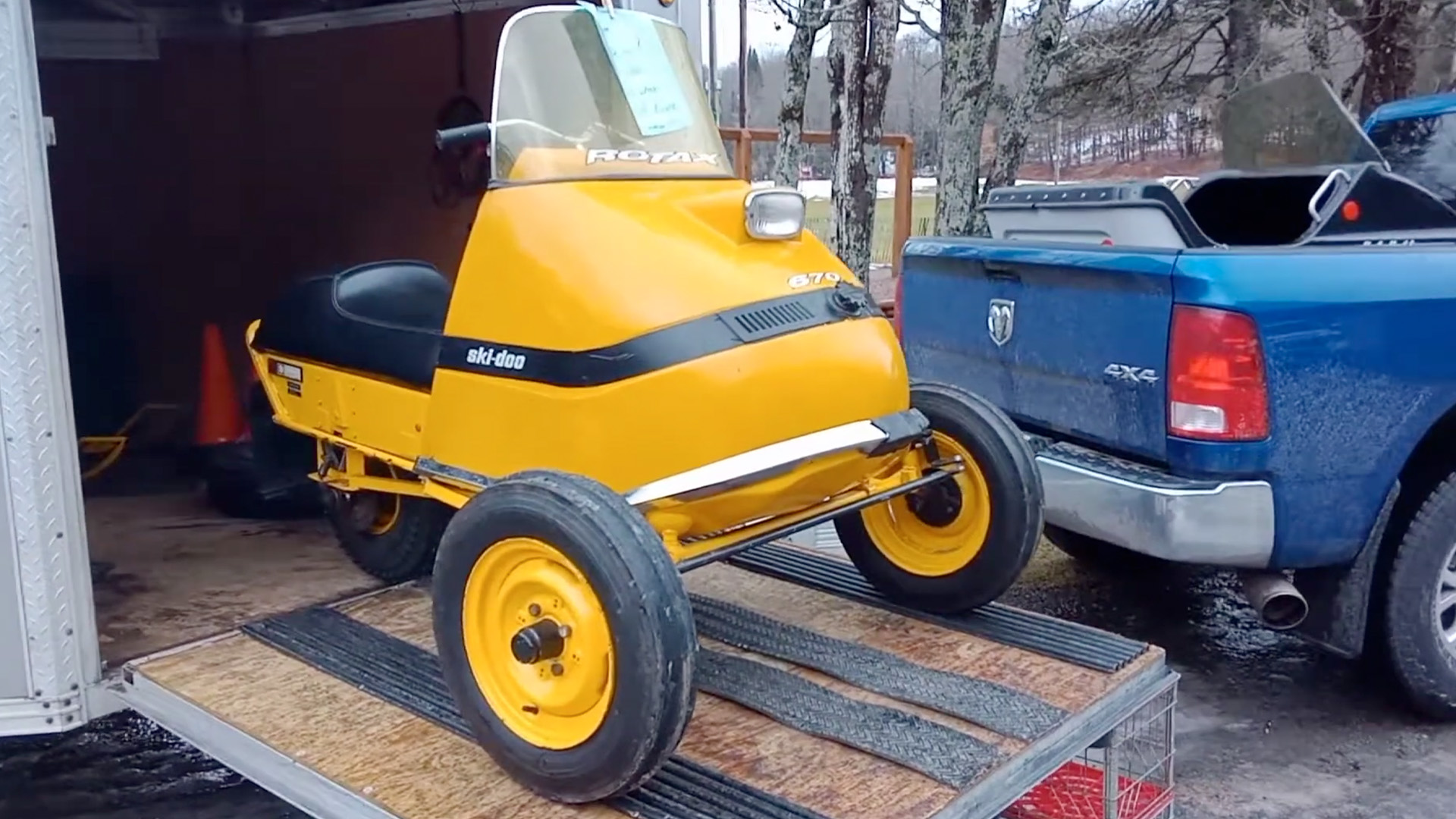


Exactly 1,751 kits. That’s how many Wunder Wheels conversion sets rolled out of a small shop in Tillsonburg, Ontario, before the whole idea quietly died. The concept was beautifully simple and perfectly nuts: bolt a steel frame with three wheels under your snowmobile, and ride it year-round.
In the late 1960s, a Canadian entrepreneur named Andry Balazs founded Forward Ideas Limited with the kind of mission statement you don’t hear anymore — he wanted to hire an inventor to make something cool. He found British inventor Donald Sessions, who designed a steel subframe that slid beneath a snowmobile chassis, adding steering gear for two front wheels and a chain-driven single rear wheel. Just like that, your winter sled became a summer trike.
Balazs wasn’t alone. A company called Skat Trak, which started life in 1952 under the name Acricast, offered its own take on the conversion. Rather than a full separate frame, Skat Trak used independent front suspension that bolted directly to the snowmobile’s existing ski pickup points. Simpler, lighter, arguably more elegant.
Skat Trak also sold paddle tires that could transform a snowmobile into something resembling a sand rail, which is the kind of product diversification that makes Silicon Valley’s pivot culture look downright timid.
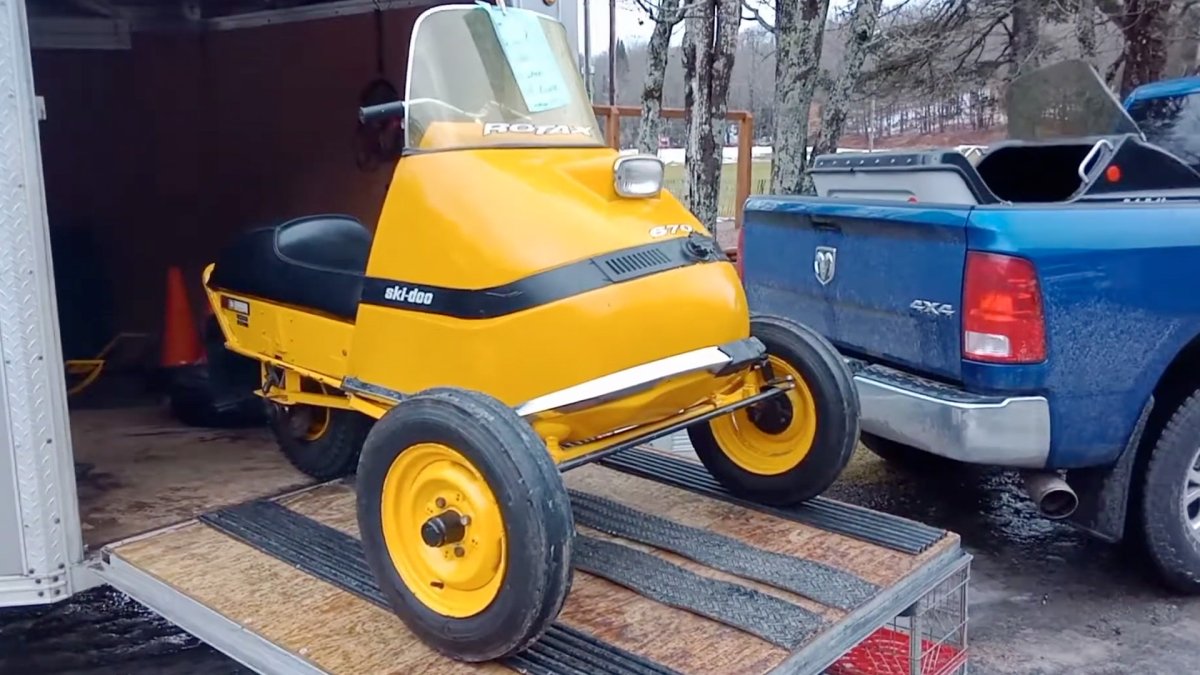
The appeal was pure pragmatism. Snowmobiles are expensive machines that, for most owners, sit idle half the year or more. A conversion kit meant your Ski-Doo or Arctic Cat earned its keep twelve months running.
In Canada, converted snowmobiles could even be driven on some public roads at the time, giving these contraptions a legitimacy that today’s side-by-side owners can only dream about in most jurisdictions.
But the market window slammed shut fast. Purpose-built ATVs arrived in the 1970s — Honda’s three-wheelers, then the four-wheel quads that followed — and suddenly, buying a dedicated off-road vehicle for summer use made more sense than wrenching your snowmobile apart twice a year. The conversion kit was a bridge technology, and once the other side of the bridge got built, nobody needed the crossing anymore.
The history survives almost entirely through a Facebook group called the Wunder Wheels/Skat Trak Registry and Help Line. It’s a handful of enthusiasts trading period newspaper clippings, photos of surviving machines, and hard-won details gleaned from conversations with people who were actually there. The group functions as both museum and repair manual for a product category that barely existed long enough to leave a paper trail.
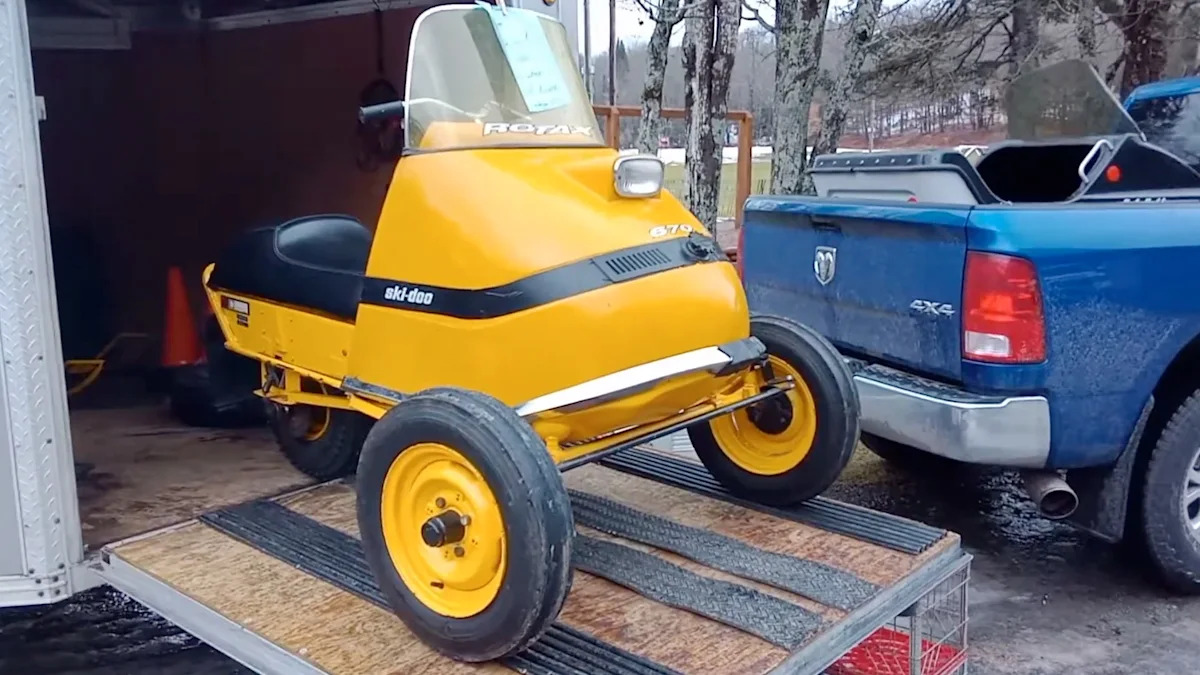
Finding a surviving kit today borders on impossible. With fewer than 1,800 Wunder Wheels units ever made, and Skat Trak’s production numbers apparently lost to time, these things are rarer than most collector cars. Skat Trak’s paddle tires are supposedly still available, though the company’s website is currently down — which tells you something about the state of the business.
What sticks with you isn’t the engineering, which was clever but not revolutionary. It’s the business instinct. Balazs and his competitors saw a seasonal problem and attacked it with metal and sprockets. No venture capital. No app. No platform. Just a guy in Ontario who figured that if you already owned a perfectly good engine strapped to a track, you ought to be able to use it in July.
That kind of thinking built the automotive aftermarket. Small shops solving real problems for real people, one kit at a time. The fact that purpose-built machines eventually rendered the idea obsolete doesn’t diminish what it was — a pure expression of mechanical resourcefulness from an era that rewarded it.




Share this Story