
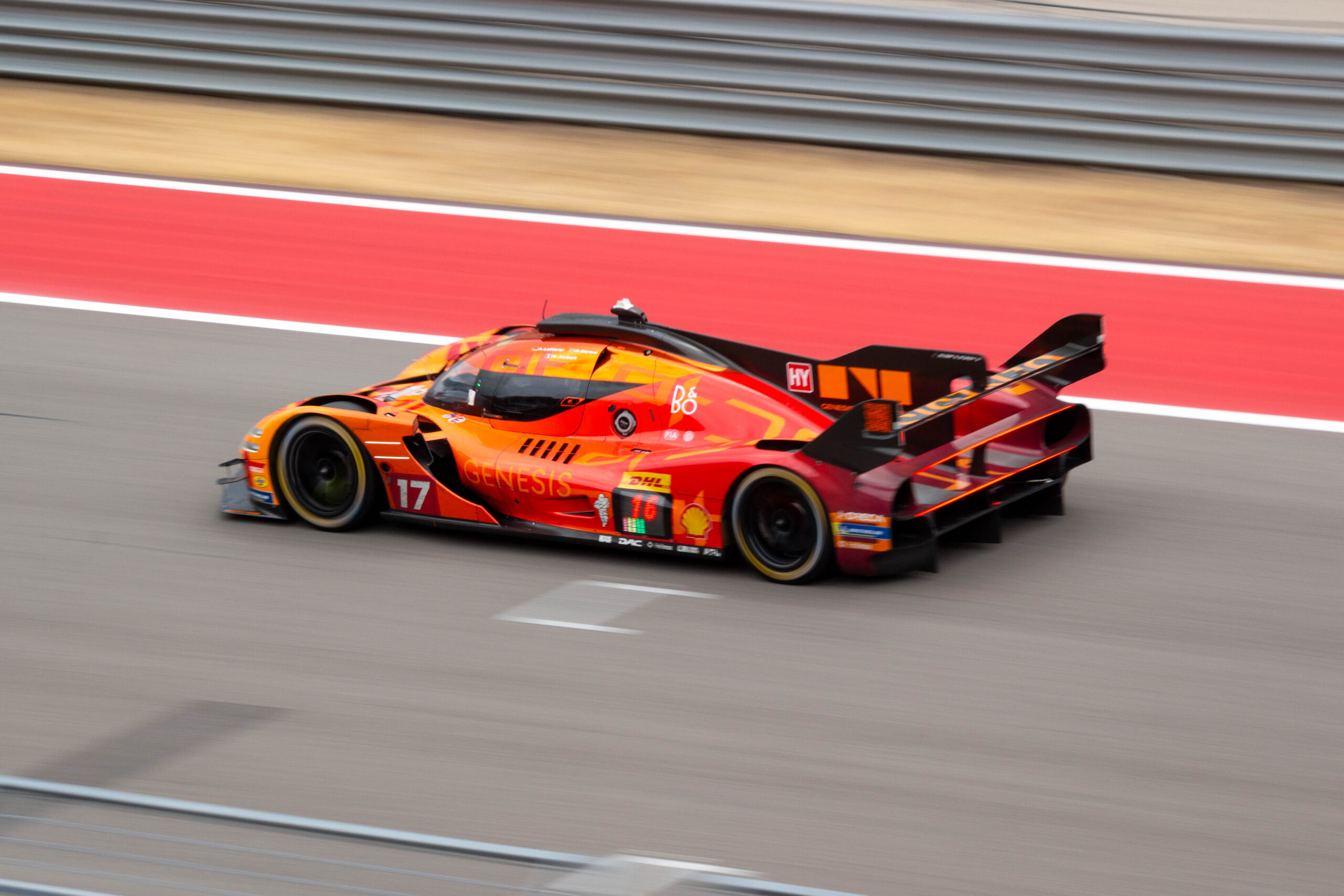


Five races. That’s all Genesis Magma Racing has under its belt in the World Endurance Championship, and already the Korean luxury brand is treating the paddock like a showroom floor.
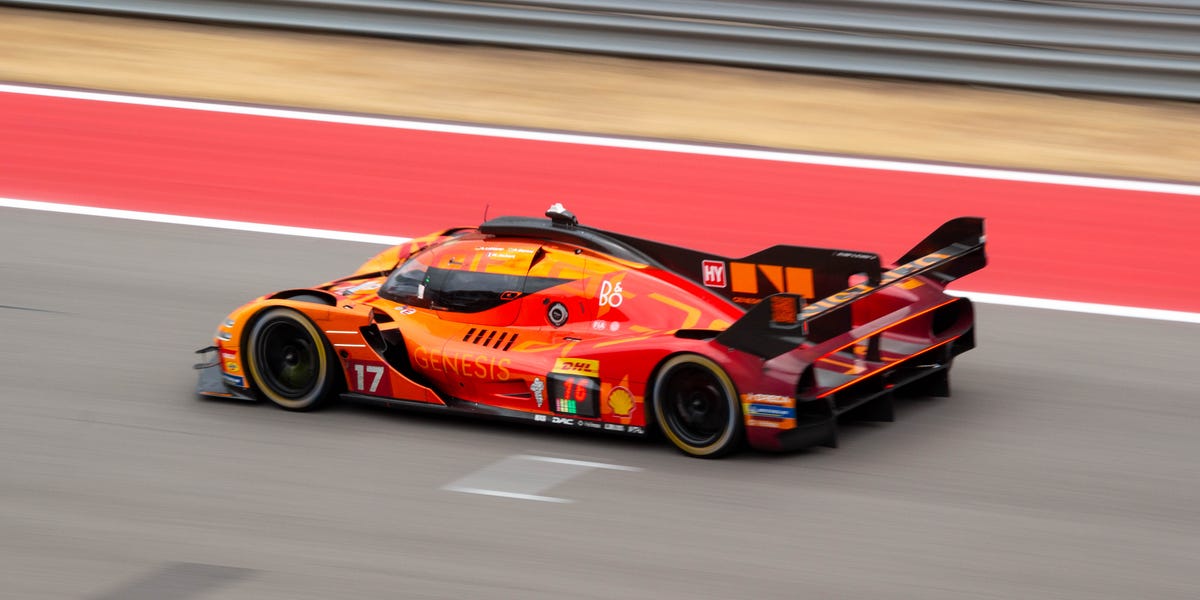
At the Circuit of the Americas this past weekend, the team’s number 17 car clawed from the back of the Hypercar field to finish seventh, banking six championship points. It was only the team’s second top-10 result since debuting in April, and it happened in a country currently neck-and-neck with South Korea as the brand’s largest market.
The math here is straightforward. Genesis doesn’t race to develop technology. It races to sell cars.
“This is a huge opportunity for us to increase brand awareness, globally and within key markets, like here in the U.S.,” Genesis representative Amanda Niklowitz said in Texas. Having a car circulate at Le Mans for 24 hours in front of a global audience is cheaper per eyeball than almost any ad campaign. The company is expanding aggressively into European markets too.
Genesis hit 1 million global sales in 2023, claiming to have reached that milestone faster than any other luxury brand. It has since passed 1.5 million. But against Mercedes-Benz, BMW, and Porsche, companies with motorsport legacies stretching back half a century or more, Genesis is still the kid at the table trying to get a word in.
The Magma subbrand, announced in March 2024, is the sharp end of that effort. Its first product, the electric GV60 Magma, is only now reaching dealerships in California, New York, and New Jersey. No national rollout, no volume targets.
It’s about creating a certain halo for the brand that elevates our entire product portfolio,” said Genesis rep Jarred Pellat. Build the image first, chase the sales later. Porsche did it with the 917, Ferrari built an entire mythology on it, and Genesis is attempting the same playbook in compressed time, going from announcement to first race in just 499 days.
The brand itself only split from parent company Hyundai in 2015. It entered the U.S. market for 2017. The pace of its ambitions keeps outrunning its history.
What sits behind the racing effort is a product pipeline that could get far more interesting. Niklowitz hinted that future Magma models won’t all be electric. We will expand the lineup, and it could be ICE or EV,” she said.
Last year’s Magma GT concept sounded distinctly like a V-8, and this year’s Magma GT3 concept pointed toward an eventual expansion of the racing program into WEC’s GT3 class. The team is also eyeing an IMSA entry for 2028, which would put Genesis on track at the 24 Hours of Daytona and directly in front of American sports car fans every other weekend.
Twenty-one-year-old driver Mathys Jaubert delivered the Texas result with a composed drive through traffic in the closing hour, picking off GT3 cars and rival Hypercars with what the team described as perfectly timed aggression. For a squad with less than a year of competition under its belt, it was a legitimate performance.
Jacky Ickx, the six-time Le Mans winner serving as brand ambassador, put it plainly: “We are in to win one day. It’s a long story in front of us and the mountain we have to climb.”
The mountain is real. The Hypercar class is stacked with Ferrari, Toyota, Porsche, Cadillac, BMW, and others who have spent years and hundreds of millions refining their programs. Genesis is spending heavily to catch up, and there is no shortcut in endurance racing. You either do the laps or you don’t.
Whether the racing investment translates into showroom traffic remains an open question. Genesis is betting that Americans shopping for luxury cars care about performance credentials, and that a scrappy WEC campaign can provide them. The data will take years to confirm. The spending is happening now.

Share this Story