
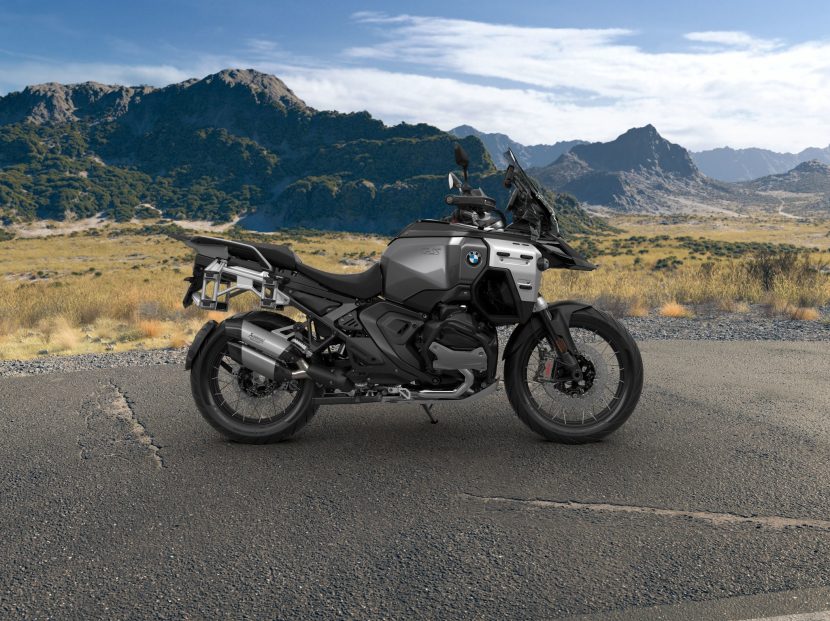


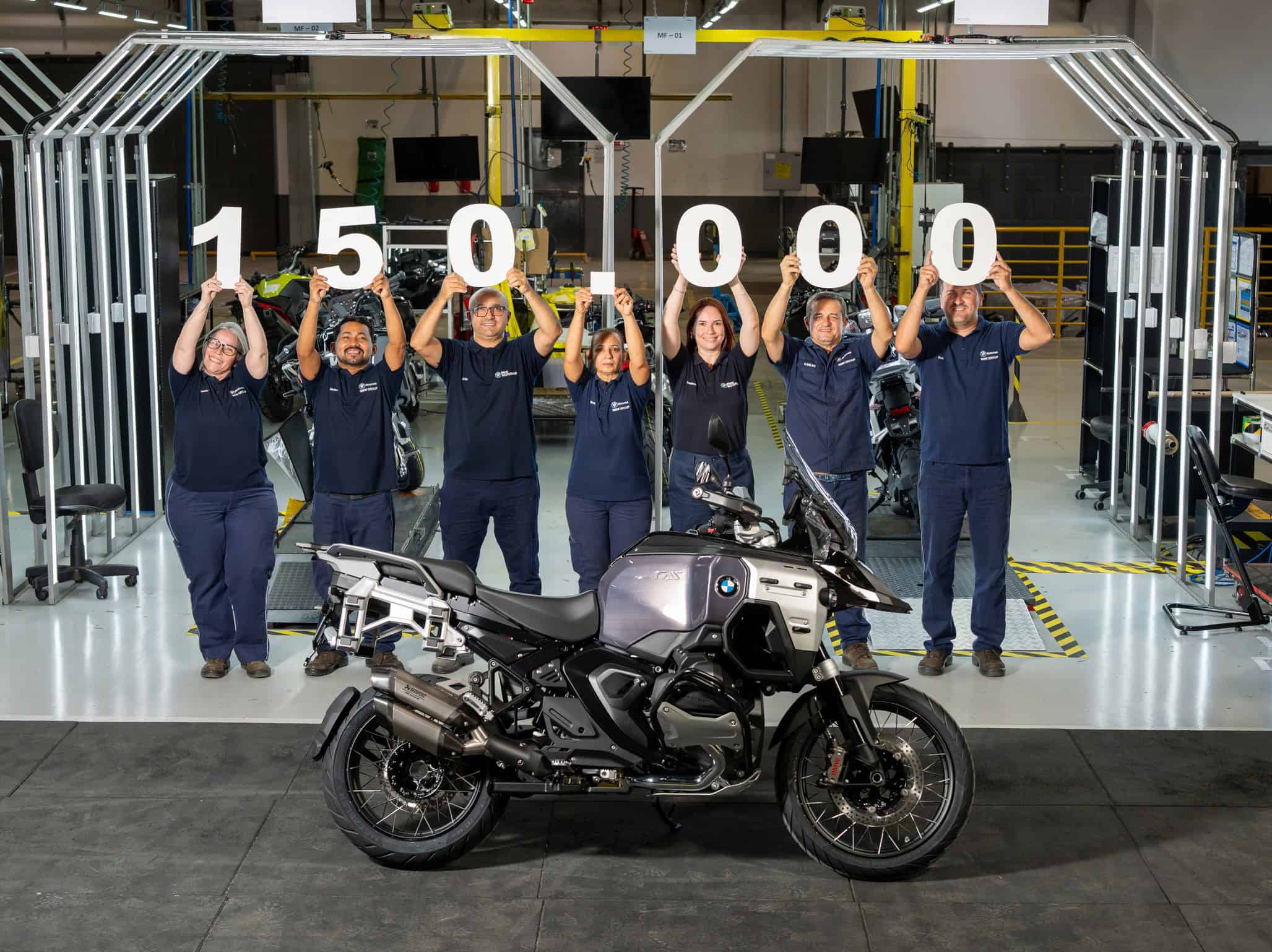
BMW Motorrad just rolled its 150,000th motorcycle off the line at its Manaus plant in Brazil, a factory that didn’t exist a decade ago. The milestone bike, an R 1300 GS Adventure in Triple Black trim, came together at what is now the company’s only dedicated motorcycle production facility outside of Germany.
The timing is conspicuous. Manaus is growing while the broader BMW Motorrad business is shrinking.
Production across the two-wheeled division fell 7.4 percent in 2025, dropping to 199,736 units. Sales slipped 3.7 percent to 202,563 units. The first half of 2026 offers no relief, with shipments down another 2.9 percent, landing at 102,847 motorcycles and scooters through June.
So why celebrate a factory milestone in the middle of a sales downturn? Because Manaus represents a bet BMW placed in 2016 that still looks smart, even if the macro numbers don’t cooperate.
The plant assembles 13 different models for the Brazilian and regional markets. It sits in the country’s seventh-largest city, deep in the Amazon basin, inside a free trade zone that has drawn manufacturers for decades with its tax incentives. BMW has continued investing in retooling the facility with updated equipment throughout the 2020s, treating it less like a satellite operation and more like a second pillar of its motorcycle production network.
Germany remains the center of gravity. The Berlin plant handles motorcycles, scooters, and component manufacturing. In Thailand, the Rayong facility produces BMW, MINI, and Motorrad products for Southeast Asian markets, but shares its lines across the entire brand portfolio. Manaus is the only site outside Germany where motorcycles are the sole focus.
That distinction matters when you consider BMW’s position as the largest premium motorcycle and scooter producer in the world, operating through roughly 1,300 dealers across about 100 countries. Scale requires regional manufacturing. Shipping finished bikes from Berlin to São Paulo was never going to be a long-term strategy in a market where import duties eat margins alive.
BMW’s motorcycle heritage predates its cars by six years. The R 23 arrived in 1923, and the first BMW automobile didn’t appear until 1929. That history gives the Motorrad division a certain internal weight that sales figures alone don’t capture.
But history doesn’t fix the current trajectory. BMW has already delayed its electric motorcycle program, essentially admitting the market isn’t ready. The Vision DC Roadster concept from 2019 remains exactly that, a concept, while conventional bike demand softens across premium segments globally.
Manaus keeps building. Fifteen thousand units a year, on average, for a decade straight. The question is whether BMW’s broader motorcycle ambitions can match the pace of a factory that hasn’t stopped accelerating since the doors opened.
The next 150,000 will tell a different story, one way or another.
Share this Story