
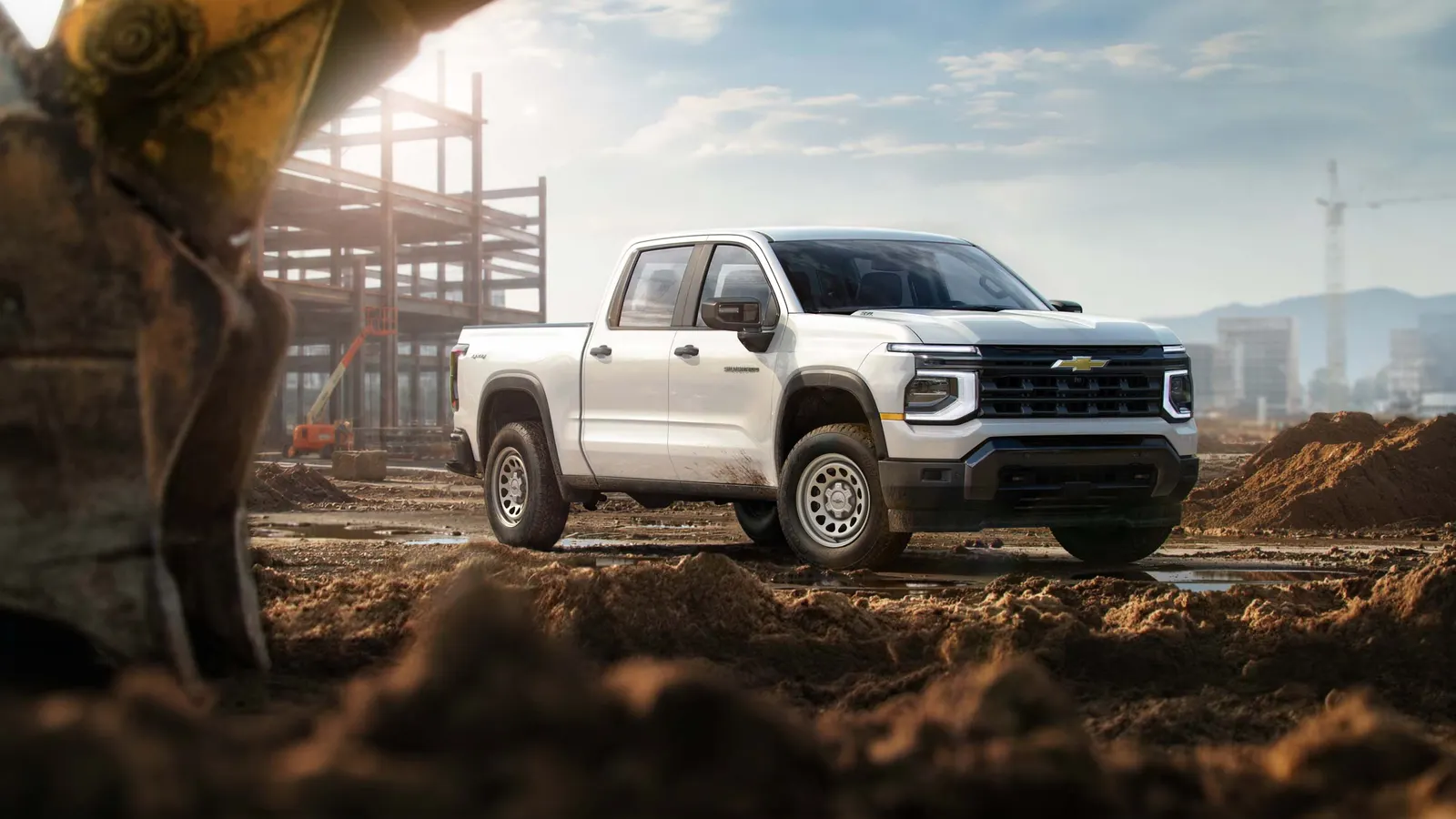


Unifor’s 4,600 GM workers in Ontario ratified a three-year labor deal on August 30 with overwhelming support. The contract locks in more than CA$1.4 billion in investment, next-generation Sierra Heavy Duty production at Oshawa, and a new transmission line at St. Catharines. On paper, it looks like stability, but the ink dried on a deal whose economics could shift with a single tariff announcement from Washington.
The timing was almost theatrical. GM and Unifor announced a tentative agreement on August 22, one day after Canada’s government pulled its negotiators from trade talks with the U.S. The sticking point: new American demands that Canadian-built pickups sold stateside would face tariffs, which directly threatens Oshawa’s Chevrolet Silverado line and the rationale for building trucks in Canada at all.
Ratification votes split along predictable lines. The mothballed CAMI Assembly plant in Ingersoll approved at 96.5%, which is what you get when workers have nothing to lose. The three active facilities voted 80.5% in favor, a strong but not euphoric margin that suggests members understand the deal’s limits.
Pay terms mirror the pattern Unifor set with Ford in July: 3% annual wage increases across three years. Laid-off CAMI workers get income maintenance through May 2028. GM promised not to close or sell CAMI during the contract, which is less a commitment than a holding pattern.
The best hope for the plant rests on a Canadian government promise to consider it first for armored military vehicle production, a contract that does not yet exist.
Ross McKenzie, formerly of the Waterloo Centre for Automotive Research, captured the mood. “It’s easier to predict the weather with a weathervane than predict the future of U.S. and Canadian trade policy,” he told WardsAuto.
Unifor president Lana Payne sits on Prime Minister Mark Carney’s Advisory Committee on Canada-U.S. Economic Relations, which gives the union a direct line into trade intelligence. That proximity to policy didn’t prevent Carney from sounding exasperated at an August 22 press conference about the last-minute pickup tariff changes. “No rationale, just for exclusion,” he said.
Greig Mordue, a former Toyota Canada general manager now at McMaster University, offered a sharper read. He said the deal “probably provides an out for Unifor and GM” at CAMI if the military vehicle contract never materializes. His advice: both sides should be upfront about the future rather than let hope substitute for strategy.
Mordue floated an idea that deserves more attention. If Canada allowed vehicles built to UN World Forum safety regulations alongside those meeting U.S. NHTSA standards, Canadian plants could produce for European and Asian export markets without redesigning architecture. Shipping costs to Europe via Halifax would run CA$1,500 to $2,000 per vehicle, a viable number.
That kind of regulatory flexibility could also help Stellantis, whose Brampton Assembly Plant faces possible sale or closure. Unifor opened talks with Stellantis on September 1, and Brampton will be the hardest conversation in the room.
Barrie Kirk of the Canadian Automated Vehicle Initiative suggested idle capacity could serve autonomous vehicle R&D for trucking, defense, and logistics. “We need synergies. You need a strategy,” he said.
Mordue is not optimistic about Washington softening its stance, even if Republicans lose the midterms. “They know the popularity of their approach and haven’t altered it,” he said.
So GM workers in Ontario have a contract, a billion-dollar investment pledge, and product commitments that depend on trade conditions nobody in Ottawa or Detroit can control. The deal buys time. Whether three years is enough depends entirely on decisions being made in a capital where Canada has no vote.
Share this Story