
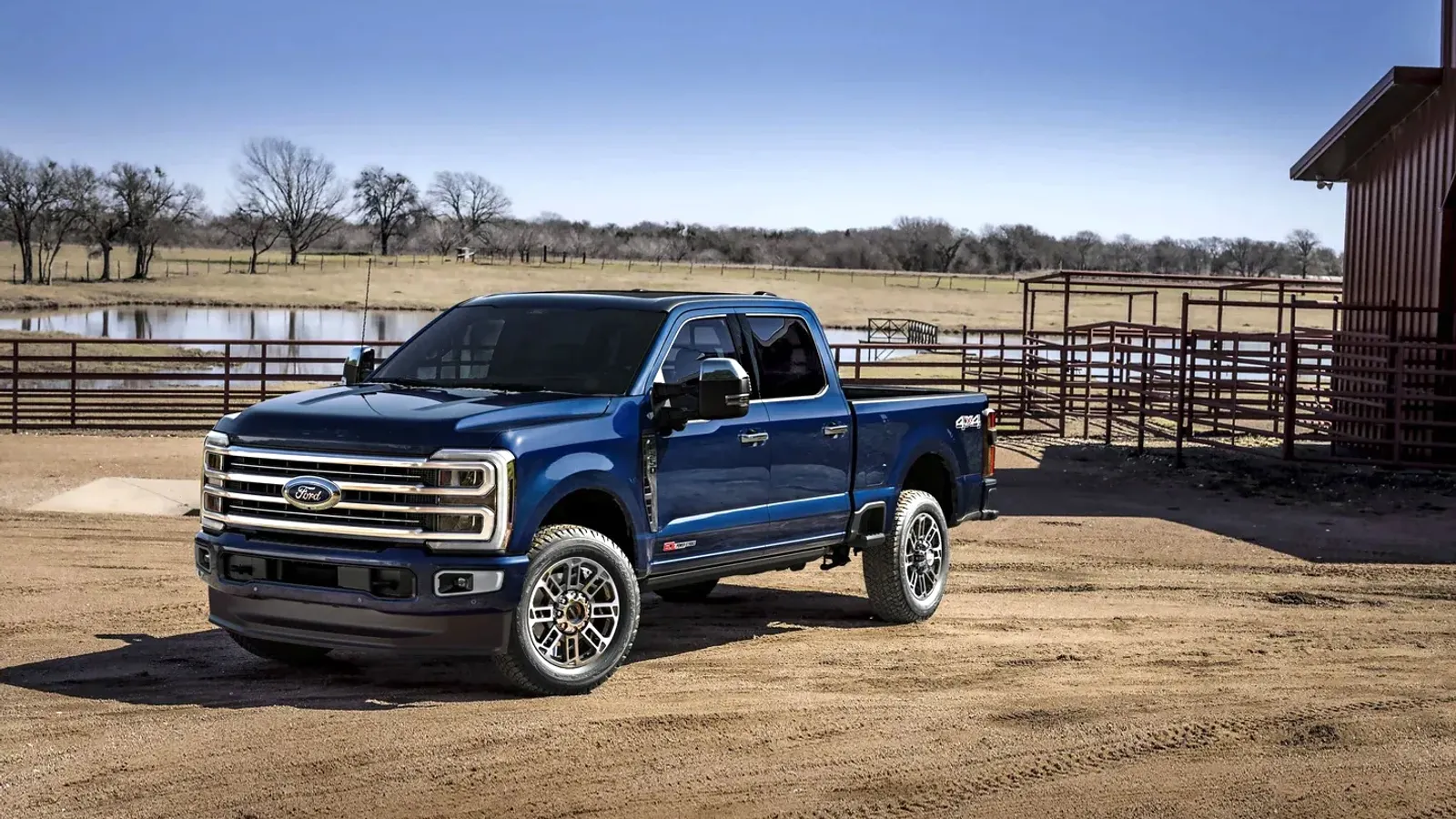


Ford Motor Co. just sweetened its commitment to building Super Duty trucks in Canada by another $400 million, layered on top of an already massive $3 billion investment announced in 2024. The money is part of a freshly ratified three-year labor deal with Unifor, Canada’s largest private-sector union. It signals that Ford is doubling down on heavy-duty pickups at exactly the moment cross-border manufacturing feels most precarious.
Unifor members voted 74% in favor of the agreement Monday. It covers workers at Ford’s Oakville Assembly Complex, the Windsor Engine Plant, and the Essex Engine Plant, running from September 2026 through September 2029.
The deal’s headline numbers are generous. Annual wage increases of 3%, cost-of-living adjustments, a new productivity and quality bonus, bumps in retiree healthcare, and a pathway back to full employment for workers laid off from Oakville. Skilled trades workers will top out at CA$62.71 per hour by the end of the contract.
Full-rate production workers hit CA$50.20. At current exchange rates, that translates to roughly US$44.60 and US$35.71 respectively. Those figures matter because Unifor claimed during its 2023 agreement that Ford’s Canadian hourly workers already earned 35% more than their American counterparts. This new contract widens the gap further.
Ford clarified that the $400 million is not a repackaging of previous commitments. It stacks on top of the C$5 billion already earmarked to transform Oakville into a Super Duty assembly hub, complete with the company’s first-ever Canadian stamping operations. The Windsor operations get $500 million, and a third shift at the Essex plant is anticipated for 2029.
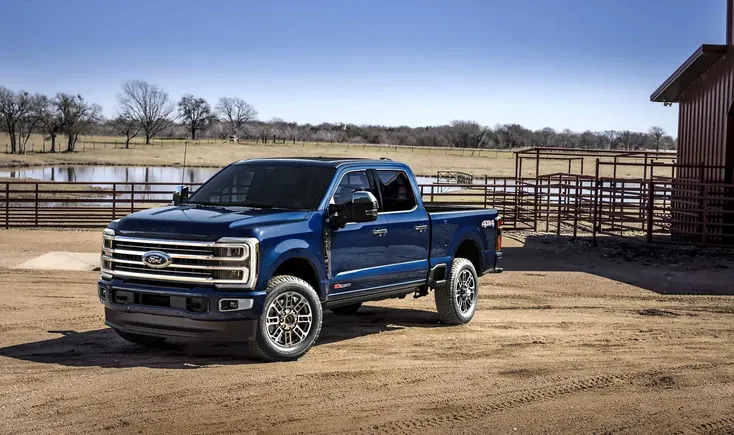
The Oakville plant’s journey to this point has been anything but linear. Ford originally tapped it to build a three-row electric SUV before abandoning that plan and pivoting to heavy-duty pickups. The automaker still talks about the plant’s “flexibility” for electrified vehicles down the road, but the investment dollars are flowing exclusively toward the trucks that actually print money right now.
Nobody in Dearborn is confused about which bet pays the bills. Unifor’s leadership framed the deal in bluntly political terms. “There are many who counted us out, who wrote our industry, our autoworkers, and our union off,” said National President Lana Payne. “Those who said we should just accept Trump’s goal of eliminating us. This contract shows we refuse to be counted out.”
The bravado isn’t unfounded but it isn’t bulletproof either. USMCA review negotiations are ongoing, and the tariff landscape between the U.S. and Canada remains fluid. Ford is building trucks in Canada that it sells overwhelmingly to American buyers, which means every customs shift hits the economics of this deal directly.
A no-closure agreement from a union contract doesn’t override trade policy math. Analysts expect this agreement to serve as the template when Unifor sits down with GM and Stellantis. That puts additional pressure on both companies to match Ford’s investment commitments and wage trajectory at a time when GM is rationalizing its own Canadian operations and Stellantis is bleeding market share globally.
Ford’s calculus is straightforward. Super Duty trucks are the most profitable vehicles in its lineup, and Oakville gives it added production capacity to meet demand that has consistently outstripped supply. Paying Canadian workers a premium over their U.S. peers is a cost Ford can absorb when each truck rolls off the line carrying five- and six-figure transaction prices.
The union got job security and raises. Ford got labor peace and production certainty for its most important product line. Whether the trade environment lets both sides enjoy those gains for the full three years is a question neither Unifor nor Ford can answer alone.




Share this Story