
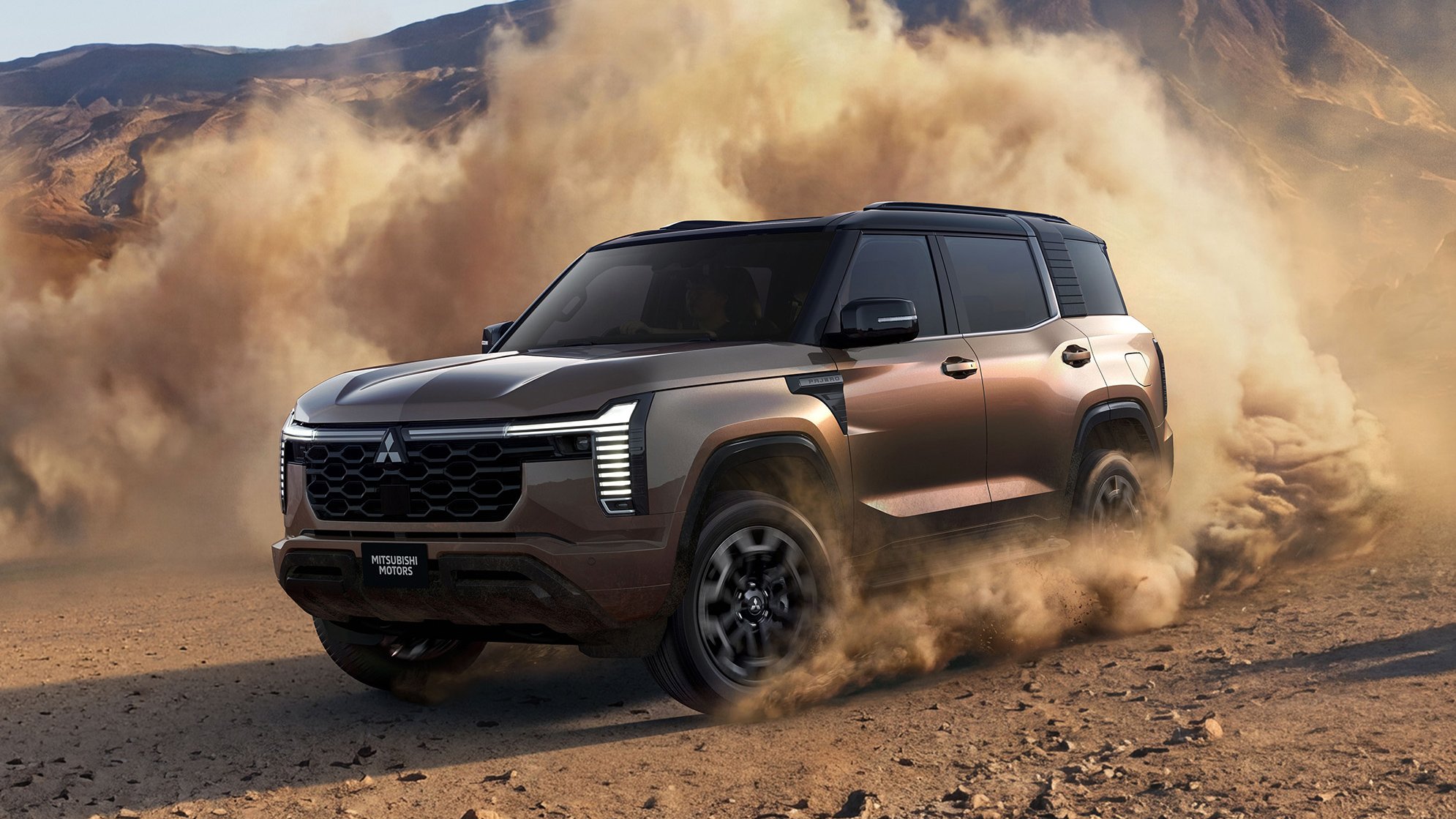


Mitsubishi has pulled the sheet off a new Pajero, and it’s the first clean-sheet version of the company’s flagship off-roader in two decades. Ladder frame. A 2.4-liter turbodiesel under the hood. Super Select 4WD with four modes, including a locking center differential. This is the truck Mitsubishi diehards have been begging for since the old one quietly disappeared from most global markets.
The design is purposeful without trying too hard. The cabin splits the difference between utilitarian and upscale, which is exactly where a proper off-road SUV should live. Thailand gets it first, followed by Japan, Australia, the Middle East, and Latin America.
The U.S. question, though, is the interesting one.
Mitsubishi has not confirmed whether this Pajero, sold as the Montero in North America historically, will be the truck Americans can buy. There’s a real possibility that whatever lands on U.S. dealer lots will be a different vehicle altogether, one more closely tied to an existing Nissan platform already in the American lineup. That’s the Renault-Nissan-Mitsubishi alliance math at work, where shared architecture often trumps heritage.
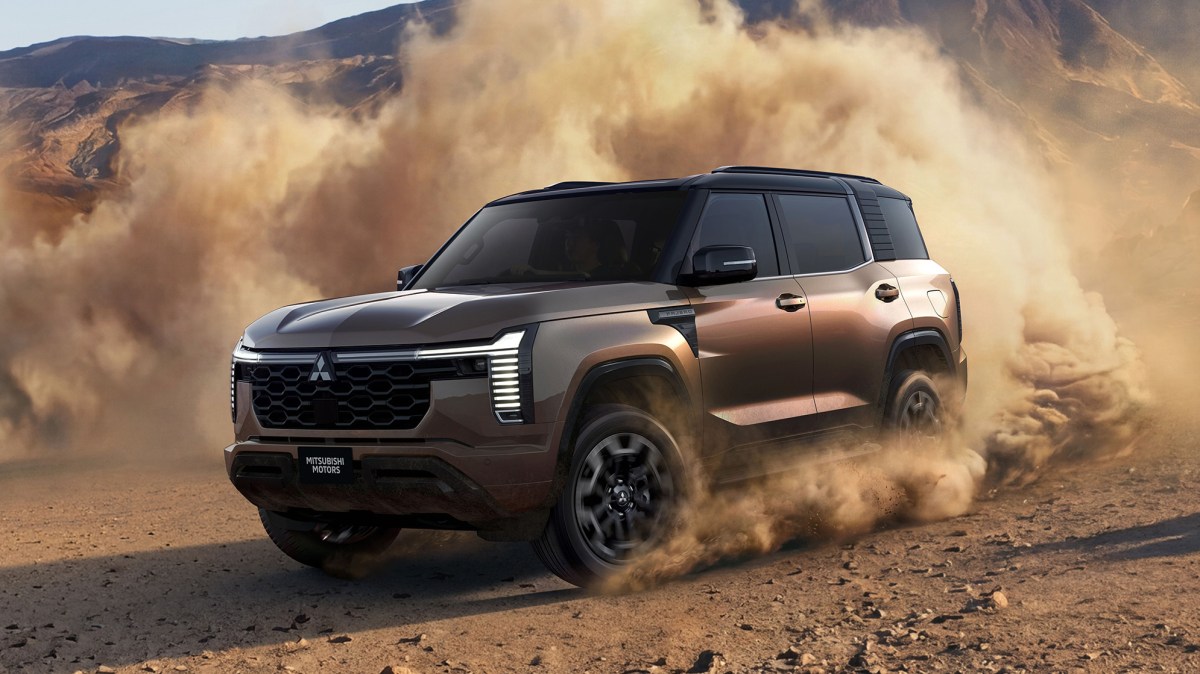
For a company that built its global reputation on machines like the Pajero, Shogun, and Montero, this reveal carries weight. Mitsubishi’s U.S. presence has shrunk to near irrelevance, propped up by the Outlander, which rides on Nissan bones, and the aging Mirage. A body-on-frame SUV with genuine off-road credentials would be the sharpest statement Mitsubishi could make in a market drowning in crossovers that couldn’t climb a gravel driveway.
But building a rugged truck for Thailand and Australia, where demand for diesel-powered off-roaders remains strong, is one thing. Justifying the homologation costs, emissions certifications, and dealer investment needed to bring a turbodiesel ladder-frame SUV to the U.S. is something else entirely. The business case gets complicated fast when your American dealer network is a fraction of what Toyota or even Subaru operates.
The timing of the Pajero reveal also coincides with Nissan fast-tracking its next-generation Rogue to the U.S., importing high-trim units from Japan months ahead of a planned mid-2027 launch. Nissan is clearly feeling urgency in the American market. Mitsubishi, as a junior partner in the alliance, will benefit or suffer depending on how those priorities shake out.
If the U.S. Montero ends up being a rebadged Nissan product with some cosmetic differentiation, it would follow a pattern Mitsubishi has already established with the Outlander. Functional, maybe even competitive, but not the truck sitting in those reveal photos.
The Pajero that just debuted looks like it was designed by people who actually care about off-roading. Whether that truck ever touches American soil, or whether the name gets stapled onto something safer and more committee-approved, is a story that hasn’t been written yet. Mitsubishi has the product. The question is whether it has the nerve.

Share this Story