
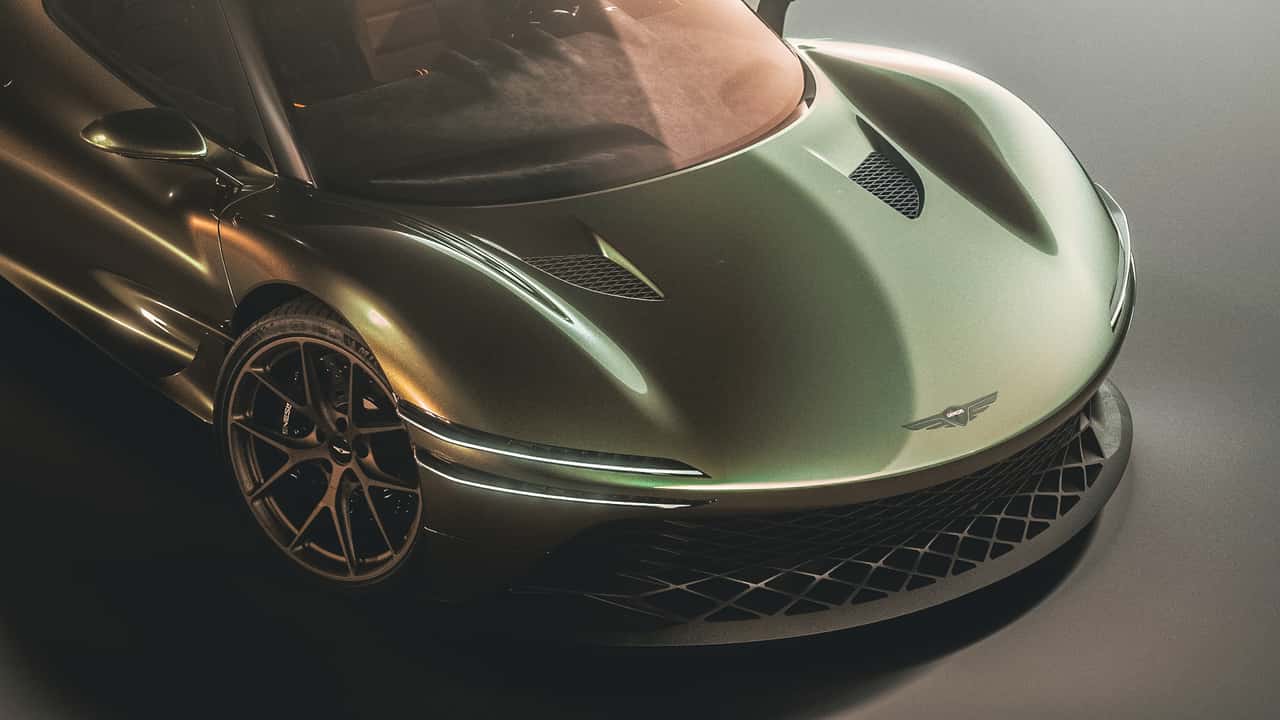


Two GMR-001 prototypes tore around Le Mans in their first-ever 24-hour race while a grand touring concept sat gleaming in the hospitality suite nearby. Genesis, the Korean brand most Europeans still can’t name, is spending serious money to change that. The strategy reveals just how brutal the premium car business remains for outsiders.
Charles Fuster, Genesis Brand Director for Italy and France, didn’t sugarcoat it during the race weekend. Every day, when you tell people you work for Genesis, the response is, ‘I don’t know it,'” he said. That kind of candor is unusual from a brand executive. It’s also the only honest starting point when you’re trying to crack a market the Germans have owned for a century.
The motorsport program is no weekend hobby. Genesis hired Cyril Abiteboul, who won championships with Renault. Gabriele Tarquini, a Formula 1 veteran. Lothar Collatz, a Le Mans winner. Ambassador Jacky Ickx needs no introduction. Drivers Daniel Juncadella and André Lotterer bring top-tier credibility. This is an organization built to win, not to parade around the back of the grid collecting Instagram content.
But the tension at the heart of Genesis’s European push isn’t on the racetrack. It’s in the showroom, or rather, the handful of showrooms that exist. Padua opened in June. Rome comes in October. Milan won’t arrive until 2026. That’s three stores to cover Italy, a country where brand loyalty runs deep and skepticism toward non-European luxury runs deeper.
Worse, Genesis entered Italy with an all-electric lineup in a market that remains stubbornly resistant to EVs. Fuster acknowledged this head-on, calling it “a fair question” before pivoting to the real news: a hybrid GV70 arrives in 2027, and a dedicated multi-energy platform lands in 2028, capable of running everything from full hybrid to range-extender to plug-in. “We put on the road the products customers want, not what someone tells us we have to build,” he said. Translation: the EV-only strategy didn’t survive contact with European buyers.
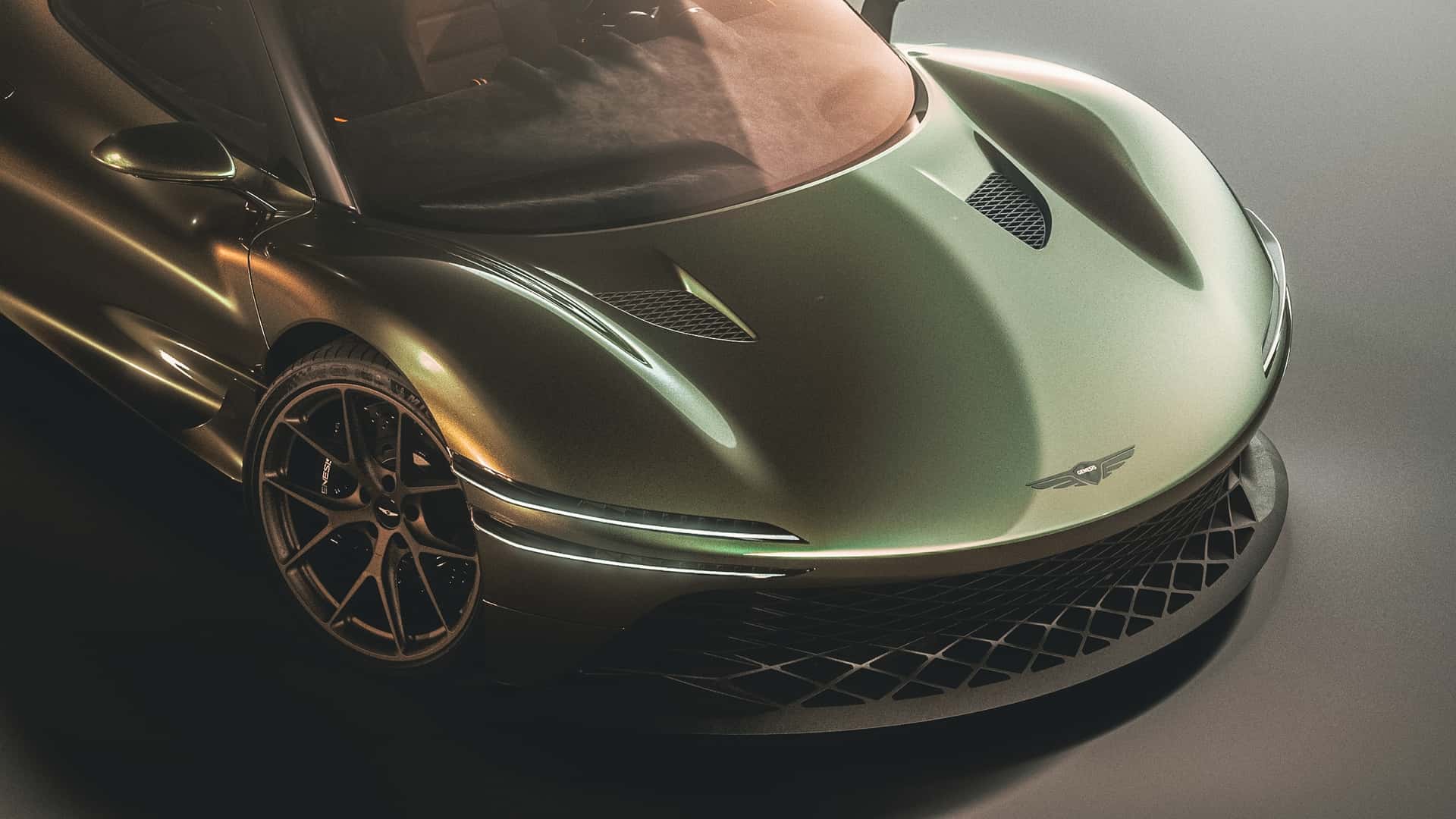
The Concept GT unveiled at Le Mans serves a different purpose entirely. Fuster described it as “an industrial demonstration of what we’re capable of,” the kind of halo car that reframes everything else in the showroom. He wouldn’t commit to a production date but noted the speed of development between the first version shown last November and the Le Mans iteration. “The day after tomorrow, let’s say,” he offered. That’s not a timeline. That’s a wish.
Then there’s Magma, the performance sub-brand Genesis wants applied across every model. Fuster initially compared it to AMG or BMW M, only to be corrected internally. Magma is supposed to represent the pinnacle of each model — materials, aerodynamics, craftsmanship — not just horsepower.
The distinction is subtle enough that Fuster himself admitted “the risk of confusion exists.” If your own brand director gets it wrong on first impression, good luck explaining it to a customer in Padua who’s cross-shopping a BMW X3.
Genesis leans hard on its separation from parent Hyundai. Dedicated showrooms, no co-branding, no shared retail space. Fuster compared the arrangement to Lexus and Toyota, then immediately conceded that Lexus “had more time ahead of them.” That’s the crux of it. Lexus spent decades building its reputation in Europe and still gets dismissed by German-brand loyalists. Genesis is attempting the same climb in a fraction of the time, in a market that’s fragmenting faster than ever.
The pieces are individually impressive: a legitimate racing program, a GT concept that turns heads, a pragmatic pivot away from EV-only orthodoxy. Whether they cohere into something that moves the needle in a continent where premium loyalty is practically hereditary is another question entirely.
Fuster’s most revealing line wasn’t about product or performance. It was about patience. “The Germans took a hundred years,” he said. “We were born in 2015.”
That’s not humility. That’s arithmetic.

Share this Story